Pages

Monday, November 13, 2017

November 13, 1999: Le Prophete in Vienna

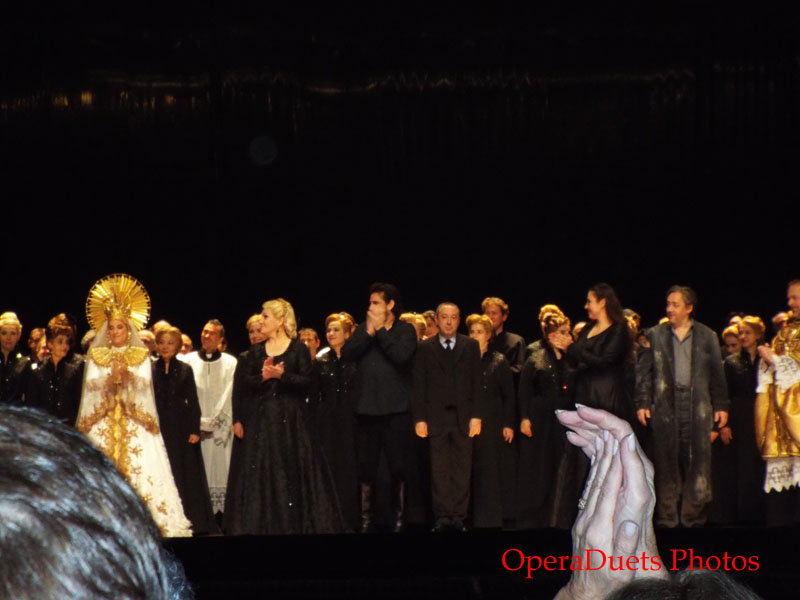
1999-11-13 Le Prophète (G. Meyerbeer), Wiener Staatsoper

Fidès = Agnes Baltsa
Jean de Leyde = Janez Lotric
Berthe = Simina lvan
Le Comte d'Oberthal = lstvan Gati
Zacharie = Peter Köves
Mathisen = David Cale Johnson
Jonas = Torsten Kerl

Marcello Viotti, conductor


Le Prophete. The Anabaptist revolt, because of the unfair conditions that the country people live under. Their Overlord is harsh and unfriendly. The sect of the Anabaptist, is against the Church. Unfortunately the violence remains. In this situation we find Berthe, an orphan, and Count of Oberthal decides instead of accepting that Berthe can marry Jean, he wants her himself. The mother of Jean, Fides, who has come to fetch Berthe, is also seized. Jean finds out about Berthe, in his hatred he becomes the Prophet...
This was the second time I saw Le Prophete, and Hans Neuenfels ideas about this opera, irritated me even more. Agnes Baltsa was great. Janez Lotric was brave to sing this role after Plácido Domingo. Simina Ivan was a good Berthe. The three Anabaptist were weaker than before.
But Giacomo Meyerbeer's music is still GREAT no matter what the director does.
Only one thing I want to tell the opera directors, let opera unfold to tell the story. Just open it up, new and fresh. (like one did with La Juive)

Wiener Staatsoper
samstag, 13. november 1999
15. Aufführung in dieser Inszenierung

Le Prophète
Oper in fünf Akten von Eugène Scribe Musik von Giacomo Meyerbeer

Musikalische LeitungMarcello Viotti
InszenierungHans Neuenfels
Bühnenbild und
Kostüme Reinhard
von der Thannen
ChoreinstudierungErnst Dunshirn
Einstudierung der TänzeRenato Zanella
., .

OffizierAlexander Pinderak
Bürger Johannes Gisser
Anabaptist Martin Thyringer
BallerinaPatricia Sollak
., .
Orchester der Wiener Staatsoper
Bühnenorchester der Wiener Staatsoper Wiener Staatsopernballett Eleven der Ballettschule der Wiener Staatsoper Amadeus Knabenchor Bewegungschor

OD Travel

For more reviews from my travels, see www.operaduetstravel.com
If you want to see more photos from my OperaDuets Travels, go to www.operaduetsphotos.com
Sunday, November 12, 2017

November 12, 1999: La Juive in Vienna

1999-11-12 La Juive (L. Halèvy), Wiener Staatsoper

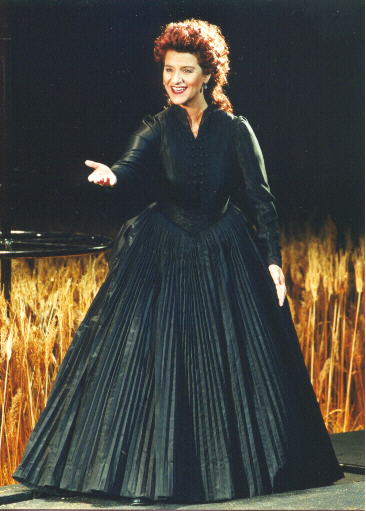
Eléazar = Neil Shicoff
Rachel = Soile Isokoski
Prinzessin Eudoxie = Regina Schörg
Kardinal Brogni = Alastair Miles
Léopold = Zoran Todorovich
Ruggiero = István Gáti
Albert = Janusz Monarcha

Simone Young, conductor


Neil Shicoff in the role of his life as Eleazar.
La Juive, Christians and Juive separated in one city. The production shows the segregation with colors, White for Christians, Black for Jews. The colors are not saying that the Christians are innocent in the hatred and violence. The stage is also segregated. It is beautiful music and a production that make you think.

Only one thing I want to tell the opera directors, let opera unfold to tell the story. Just open it up, new and fresh. (like one did with La Juive)

Wiener Staatsoper
freitag, 12. november 1999
6. Aufführung in dieser Inszenierung

La Juive
Oper in fünf Akten Textbuch von Eugène S'cribe
In französischer Sprache mit deutschen Übertiteln
Musik von Promental Halévy

Musikalische Leitung, Simone Young
Inszenierung Günter Krämer
Bühnenbild und
Kostüme Gottfried Pilz und
Isabel Ines Glathar
Choreinstudierung Ernst Dunshirn


1 Bürger Hacik Bayvertian
2 Bürger Martin Thyringer
OffizierMartin Müller
-
Orchester und Chor der Wiener Staatsoper Bühnenorchester der Wiener Staatsoper Eleven der Ballettschule der Wiener Staatsoper

OD Travel

For more reviews from my travels, see www.operaduetstravel.com
If you want to see more photos from my OperaDuets Travels, go to www.operaduetsphotos.com
Thursday, November 9, 2017

November 9, 2013: Otello in Berlin

2013-11-09 Otello (Verdi), Deutsche Oper Berlin

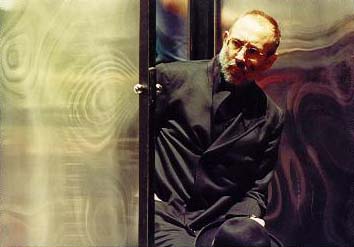
Otello = José Cura
Desdemona = Barbara Frittoli
Jago = Marco Vratogna
Emilia = Katarina Bradic
Cassio = Matthew Newlin
Rodrigo = Clemens Bieber
Lodovico = Seth Carico
Ein Herald = Andrew Harris

Donald Runnicles, conductor

Director - Andreas Kriegenburg
Stage-design - Harald Thor
Costume-design - Andrea Schraad
Dramaturgie - Katharina John
Choir Conductor - William Spaulding
Children's Choir - Christian Lindhorst
Choreography - Zenta Haerter

I had forgotten how much I disliked this production when I saw it at the premiere, 30.05.2010. I felt no outrage this time just boredom. It was the female ballet dancer in the back of the stage that annoyed me. The dancing was as a comment to Jago's narration of the Cassio's dream. In one way a good idea. But the placement of the dancer in the stage room meant that I could either watch the dancer or the singers, and that made it a bad execution of an idea that could have been good. I wanted to see and understand the dynamics between Jago and Cassio but the movement of the dancer forced my eyes away from my goal. Putting distractions onstage is not good theatre. And do untimately this is the failing of the director Andreas Kriegenburg, the production itself works as a distraction against Verdi's Otello.

In midst of it all, here comes Otello, Jose Cura. Placido Domingo used to be the ultimate Otello, now we have Cura. From the moment Jose Cura comes in it becomes a better show, finally it is possible to throw oneself into the work. I have seem him several times as Otello before and in different productions but this was the best performance with the most beautiful and sublime phrased singing and a overwhelming acting. He was good before too but here is the matured Otello, the excellence that comes from being Otello in so many different productions.

In one way we could say Cura singlehandedly a dull production to an exciting experience. To be fair I must say that Donald Runnicles conducting was a great part of the success. Marco Vratogna was singing and acting as if the role of Jago was tailormade for him. Barbara Frittoli was excellent as Desdemona, so warm. The vibrato was heavy in the first minutes but then the nervousness left and the lush, warm tones shone from Barbara Frittoli. Katarina Bradic sang and acted Emilia wonderfully. She made fine portrait of her role. Matthew Newlin made an excellent debut as Cassio. He was a joy to see and listen to.

After such a fine opera evening what can be better than to meet afterwards "backstage" with fans from  the Nordic Countries, Germany, Austria, Hungary, France, USA to name a few places. I guess Marco Vratogna was the MC-guy, Barbara Frittoli was also soon off. Jose Cura talked to his fans while the photos was flashing.

OD Travel & Photos
Original blog post

For more reviews from my travels, see www.operaduetstravel.com If you want to see more photos from my OperaDuets Travels, go to www.operaduetsphotos.com
November 9, 2002: Jose Cura in Aalborg

2002-11-09 Opera Concert, Aalborg Kongress & Kultur Center

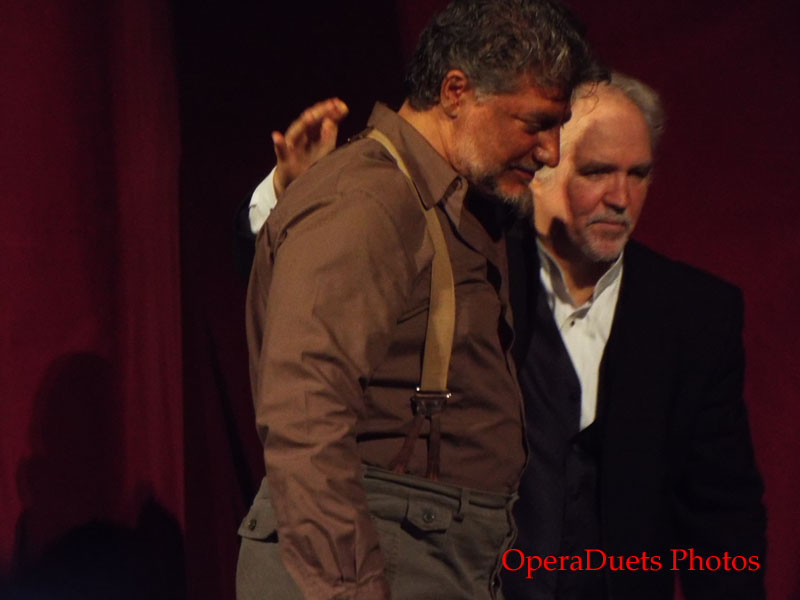
José Cura, tenor & conductor
Giuseppina Trotta, mezzo
Aalborg Symphony Orchestra
Fernando Alvarez, conductor


CONCERT WITH THE TENOR JOSÉ CURA
with AALBORG SYMPHONY ORCHESTRA under the baton of Fernando Alvarez. Guest soloist: mezzosoprano GUISEPPINA TROTTA in Aalborghallen, Aalborg Kongres & Kultur Center, at 20hrs.


PROGRAM
Giuseppe Verdi
LA FORZA DEL DESTINO - Ouverture, Cura conducts
He still thinks conducting is about the exact notes. So this ouverture is not alive, his excact movements, makes it fuzzy.
Il CORSARO - Ah si, ben dite - Tutto parea sorridere Cura sings
He sings wonderfully, but he does have a cold. He moves too much, what was cute in the DVD Passion for Verdi is not cute in Aalborg.
IL TROVATORE - Madre, non dormi Duett: Cura/Trotta
The mezzo is to young to give Azucena the drive she needs, but she tries to be real even if this is a concert. Cura is his usual Manrico

Pietro Mascagni
CAVALLERIA RUSTICANA- Voi lo sapete, o Mamma Trotta
This aria is like exam for the mezzo, does Trotta pass the Santuzza test. Well, there is a great promise in her rendition.

Amilcare Ponchielli
LA GIOCONDA Cielo e mar Cura sings
A wonderful rendition of Cielo e mar.

Giacomo Puccini
MANON LESCAUT Intermezzo Cura conducts
He starts the intermezzo by nodding to the cellist, and slowly he builds up this intermezzo, and what a wonderful building it is. BRAVO Cura and Aalbirg Symphony Orchestra

Giacomo Meyerbeer
L'AFRICAINE O, paradiso Cura sings
This time Cura sings it better, but still the prononciation could and must be improved
Cura speaks.Oh new world you belong to me Cura (Vasco da Gama) sang in L'Africaine, and in Aurora, the new world have got it freedom.
Hector Panizza
AURORA Cancion de la Bandera Cura sings
Spendid rendition of this Argentine aria

Intermission

Camille Saint-Saëns
SAMSON ET DALILA Bacchanale Cura conducts
Cura conducts a wonderful bacchanele
Mon coeur s'ouvre à ta voix Trotta / Cura
When Cura comes and sings the Samson lines, it is perfect

LE CID O souverain, o juge, o père Cura sings
Wonderful aria sung perfectly

Georges Bizet
CARMEN Prelude Cura conducts
Wonderful prelude by Cura and Aalborg, going directly to the Habanera. Trotta is going onto the stage during the predude
Habanera Trotta, Cura conducts
Cura conducts Trotta, and Trotta sings Carmen. She is not a full-borne Carmen, yet.
La fleur que tu m'avais jetée Cura sings
A magical Flower-song by Jose Cura
Entr'acte, act 4
Alvarez conducts the Entr'acte, wonderful
C'est toi, c'est moi Trotta / Cura
Wonderful and dramatic Carmen Duet.

EXTRA
Addio, fiorito asil (MADAMA BUTTERFLY) Cura
Seguedilla (CARMEN) Trotta / Cura
Nessun dorma (TURANDOT) Cura

When Cura errs in Nessun dorma it only makes
this opera night more magical.

OD Travel

For more reviews from my travels, see www.operaduetstravel.com
If you want to see more photos from my OperaDuets Travels, go to www.operaduetsphotos.com

Tuesday, November 7, 2017

November 7, 1992: Carmen in Bergen

1992-11-07 Carmen (Bizet), Opera Bergen

Carmen = Petra Malakova
Micaela = Lynda Russell
Don Jose = Mario Carrara
Escamillo = Anooshah Golesorkhi
Zuniga = Knut Jørgen Moe
Frasquita = Kirsten Landmark Mæland
Mercedes = Tone Kvam Thorsen
Remendado = Svein Erik Sagbråten
Dancaire = Oddbjørn Hanto
Morales = John Magnusson

Vladimir Giaurov, conductor


OD Travel

For more reviews from my travels, see www.operaduetstravel.com
If you want to see more photos from my OperaDuets Travels, go to www.operaduetsphotos.com

Monday, November 6, 2017

November 6, 2005: Le Villi in Vienna

2005-11-06 Le Villi (Puccini), Wiener Staatsoper

Roberto = José Cura
Anna = Krassimira Stoyanova
Guglielmo Wulf = Franz Grundheber

Simone Young, conductor


Le villi
(6. Aufführung in dieser Inszenierung)

Dirigentin: Simone Young
Inszenierung: Karoline Gruber
Ausstattung: Johan Engels
Licht: Patrick Woodroffe
Bewegungsregie: Beate Vollack
Choreinstudierung: Ernst Dunshirn


Karoline Gruber makes this opera into a kitchy Tirolean story. Very much about women doing the housework and men drinking beer. Luckily it is not totally ruined thanks to Cura, Stoyanova and Grundheber. One good idea the use of the Villis is very effective. Puccini's music is much better than this so-called inszenierung makes it.

OD Travel + Photos

For more reviews from my travels, see www.operaduetstravel.com
If you want to see more photos from my OperaDuets Travels, go to www.operaduetsphotos.com
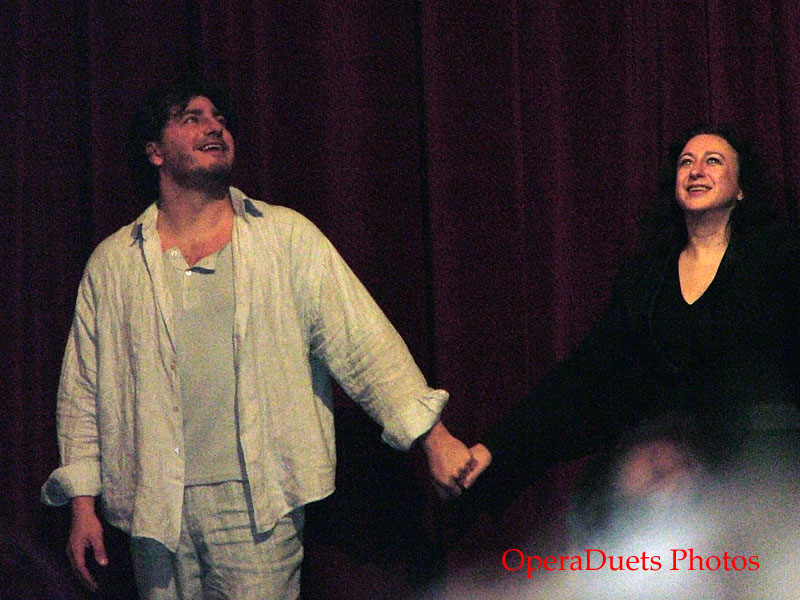
November 6, 2004: La Forza del Destino in London

2004-11-06 La Forza del Destino (Verdi), Royal Opera House London

Don Alvaro = Salvatore Licitra
Leonora = Violeta Urmana
Don Carlo di Vargas = Ambrogio Maestri
Padre Guardiano = Ferruccio Furlanetto
Preziosilla = Marie-Ange Todorovitch
Fra Melitone = Roberto de Candia
Marchese di Calatrava = Brindley Sherratt
Mastro Trabuco = Peter Bronder
Curra = Liora Grodnikaite
Alcalde = Jonathan May

Antonio Pappano, conductor


The Royal Opera 2004 - 2005
La forza del destino
Giuseppe Verdi

NEW PRODUCTION

16 October at 6pm
18 | 26 | 29 October at 6.30pm
1 | 3 November at 6.30pm
6 November at 6pm


Sung in Italian with English surtitles
Running time: 3 hours 45 minutes

Supported (2004) by The Jean Sainsbury Royal Opera House
Fund

La forza del destino reappears in the Royal Opera repertory after nearly 30 years. When Leonora's elopement with her lover Don Alvaro is interrupted by her father, the result is death and a curse: and so begins a fate-driven story of unknown identities, accidental reunions and dark confrontations.

This grand and traditional production is presented at Covent Garden with an exciting cast of singers both familiar with and new to this staging. Salvatore Licitra makes his House debut as the ill-fated Alvaro, the most difficult of tenor roles, opposite Violetta Urmana as the tragically cursed Leonora. Ambrogio Maestri makes his House debut as Don Carlo di Vargas, Leonora's brother who unwittingly rescues Don Alvaro, the man he has sworn to kill. With the returns of Ferruccio Furlanetto (Padre Guardiano), Marie-Ange Todorovitch (Preziosilla) and the Company debut of Roberto de Candia (Fra Melitone), Verdi's high melodrama is once more set to thrill.

Conductor:
Antonio Pappano

Staging:
Patrizia Frini

Lighting:
John B Read

Based on a production from
La Scala, Milan

WOW, the ouverture of Forza was extremely well played and conducted by the ROH Orchestra and Antonio Pappano. Unfortunately the high quality was not continuing the whole opera. Just simply to operatic, this opening of the curtain and the Marquis of Calatrava in freeze position until the opera singing started. Wrong, this opera starts
with us seeing what in a middle of a scene of a father and daughter together talking. The opera starts when the father is going from his daughters room. (not a BIG fault, you know, but irritating). Violeta Urmana is singing and at time also acting Leonora wonderfully, but she look too solid and not young enough as I see Leonora. The father
looked younger than his daughter. Luckily Salvatore Licitra as Don Alvaro saves act 1 from being a complete bore. Heavy-built Licitra with his energy and this man can also run so you can believe that he can be a brave soldier and handsome seducer. Wonderful tenor voice, sometimes it seems strained. Salvatore Licitra seem to be a very good-natured man, as Don Alvaro a man destiny hates, it seems strange mix.

I think it was totally wrong to use ballet dancers into Forza. All those posing, making the dancing and musicality of the chorus moments into strange things put into the opera and they did not seem to belong there. With less obvious choreography and more real people like chorus members etc singing and dancing and not those skinny
ballet dancers and it would have been more a natural integrated part of the opera, the dancing in the tavern, in the open... This Preziosilla, Marie-Ange Todorovich, acted and sang wonderfully, but the voice looses against the orchestra and I don't hear a true mezzo/alto voice as I longed for. Knowing that Ambrogio Maestri is singing Don Carlo means that you know that the student is Don Carlo, he is just so big and tall. He is not a bad Don Carlo but he is not a great Don Carlo, you can easily forget him, only a big man, the physical shape of Maestri remains.

But Ferruccio Furlanetto as Padre Guardiano was wonderful. Wonderful sonorous voice, commanding presence. Fra Melitone was too much, to much bass, too little humor.

This production from La Scala, or based on it, yes it was a traditional production but as it seem to be asking for realism, it forgot to be truthful to realism, that need real people doing thing thing to real reasons. It was too operatic, stupid even. Why was Fra Melitone so heavy-handed in humor, if Melitone had been considered as a
real human being and not a caricature, the humor would have come through much more efficiently, I think.

I think the radio viewers was much more lucky than us, even though Roberto Alagna and his wife Angela Gheorghiu was there. BBC radio 3 was lucky they could he a wonderfully sung Forza and see the perfect performance in their imagination. In stead of La Scala production with its promises never to be met.

Loved Salvatore & Ferruccio, not La Scala's Forza....

OD Travel + Photos

For more reviews from my travels, see www.operaduetstravel.com
If you want to see more photos from my OperaDuets Travels, go to www.operaduetsphotos.com
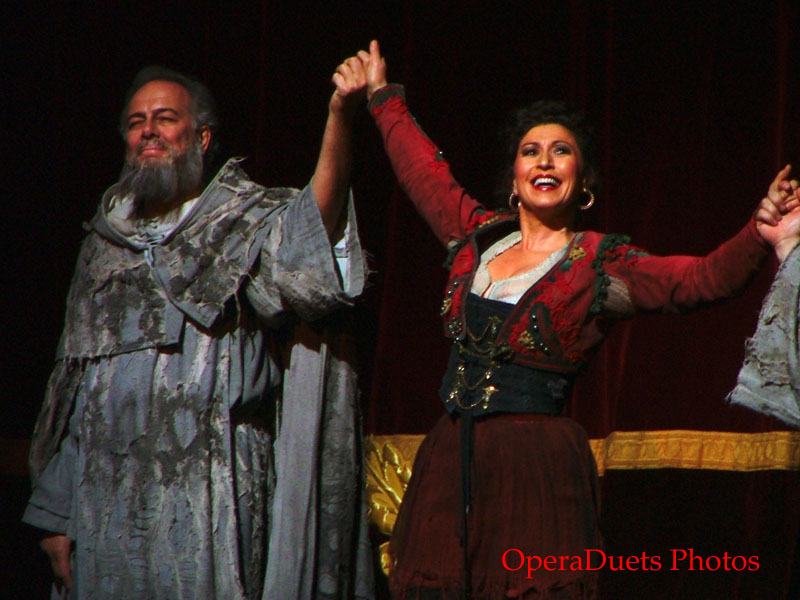
November 6, 2005: Osud in Vienna

2005-11-06 Osud (Janacek), Wiener Staatsoper

Zivný = Jorma Silvasti
Míla Válková = Cornelia Salje
Mílas Mutter = Anja Silja
Poet/Dr. Suda/Ingenieur = John Dickie
Lhotský/Verva = Adrian Eröd
Konecný = Georg Tichy
Fräulein Stuhlá = Ǻsa Elmgren
Frau Major = Regina Knauer
Ein Student = Robert Maszl
Eine alte Slowakin =
Waltraud Winsauer
Frau Rat = Janina Baechle
Eine junge Witwe = Eliza Zurmann
Erster junger Mann = Jeong-Ho Kim
Zweiter junger Mann = Ion Tibrea
Doubek als Student = Terry Wey
1. Dame/Pacovská/
Fanca/Soucková =
Ileana Tonca
2. Dame/Kosinská = Simina Ivan
1. Gast = Dritan Luca
2. Gast = Michael Wilder
Ein Ober = Wolfram Derntl
Hrazda = Cosmin Ifrim
Zán = David Prochazka
Nána = Michaela Marhold
Pianistin = Raluca Stirbat

Simone Young, conductor


6. November 2005


OSUD
(6. Aufführung in dieser Inszenierung)

Dirigentin: Simone Young
Inszenierung: David Pountney
Bühne: Stefanos Lazaridis
Kostüme: Johan Engels
Licht: Rudolf Fischer
Regieassistenz: Nicola Raab
Chorleitung: Ernst Dunshirn


AN OPERA about a composer writing a opera. A sort of opera in a opera. Or is this ... Without Jorma Silvasti as the composer this opera would no doubt fail.

Pountney has some point in his regie, it took some time grabbing it, but then I understood the opera better.

Thanks to Agnes Baltsa I have heard Jánácek music before in the opera Jenufa (Wiener Staatsoper 2002). That naturally meant that I had an easier time dealing with the music than I would have had without. But where Jenufa is a more straight forward kind of opera, it is more linear story and you get to know the persons more in a straight way. Osud, Destiny, is a peculiar opera, more operatic than most operas, starts with a chorus containing more of just feelings of sunniness than of sun.

Anja Silja as the mother of Mila. Die Silja is of course famous for her many roles, and is especially known for her Jánácek roles. So here was an expectation that she would as important as Emily Marty in the Macropolous Case or as the Küsterin in Jenufa, two roles that are really her own. But there is not such a big role for her. Of course Anja Silja did it well but I couldn't help to think that Agnes Baltsa would in this role spring much more excitement and be more of a "can't take one's eye of her". Some magnetism was lost. But this was not Anja Silja's opera.

The role of Mila was much more as long as it lasted. And Cornelia Salje was great in this opera. From the moment she appeared it was her show. All other singers faded except Jorma Silvasti as her lover Dr Zisny. Cornelia Salje sang and acted her role as no other could have created this dysfunctional woman, was it the experience with Zisny that have made her such or was it her mother's fault , or...

OSUD is an opera that stands or fails with the tenor singing Dr Zisny. Jorma Silvasti was certainly the chief motor in holding it all together. Where as the role of Laca Klemen in Jenufa never allowed him to show the full extent of his voice and acting ability. The longer one get into the opera one realizes that it is not being realistic is Dr Zisny's opera in the making that we see. Everything is maybe in the composers head. The opera is about the torment of a composer making an opera out of his own experiences. David Poutney makes it possible to see this opera for what is probably is, the working process of an opera seen from the composers view.

One important person in the opera is Doubek, the son of Mila & Zisny. He is in many ways the reason why it all happened. Zisny wants his small son and finds his old love of Mila being as it was new. They live together unhappily with Mila's mother who is demented. When an unfortunate accident kills both Mila and her mother, Zisny is finally able to write an new act. Then Doubek grows up. Zisny decides that the opera is going to be on a stage finished except that 3rd act is missing. When he tells the students about the opera/his life is is almost finished up thinking to hear Mila's voice and a sort of forgiveness/cleaning up the mess happens, and when Doubek helps his father up, Zisny take a bow to the audience, and is like that before our eyes we have seen the 3rd act take shape. It is an opera inside this opera.

OD Travel + Photos

For more reviews from my travels, see www.operaduetstravel.com
If you want to see more photos from my OperaDuets Travels, go to www.operaduetsphotos.com
Friday, November 3, 2017

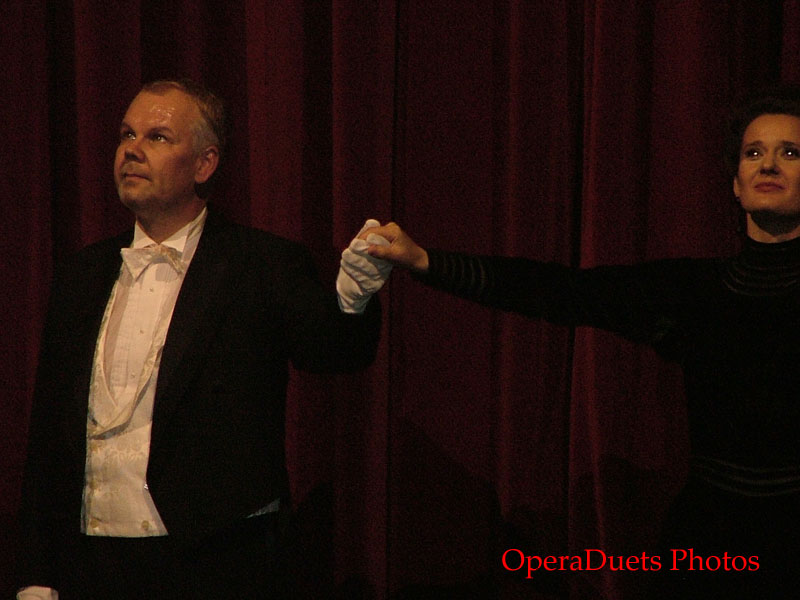
November 3, 1995: Carreras/Caballe in Oslo

1995-11-03 Opera Gala, Oslo Spektrum

Josep Carreras, tenor
Montserrat Caballé, soprano
Norwegian Radio Orchestra
David Giménez, conductor


01. IL BARBIERE IN SIVIGLIA - Ouverture / Kringkastingsorkesteret, David Gimenez
02. TOSTI: Apri / José Carreras
03. Vieni sul mal / José Carreras
04. HERODIADE - Il est doux, il est bon / Montserrat Caballé
05. L'AFRICANA - Mi batte il cor / José Carreras
06. CIRO IN BABILONIA - Vorrei veder lo sposo / Montserrat Caballé
07. LA FORZA DEL DESTINO - Ouverture / Kringkastingsorkesteret, David Gimenez
08. LA TRAVIATA - Brindisi / Montserrat Caballé, José Carreras
09. CAVALLERIA RUSTICANA - Intermezzo / Kringkastingsorkesteret, David Gimenez
10. ADRIANA LECOUVREUR - Io son l'umile ancella / Montserrat Caballé
11. Coren'grato / José Carreras
12. Musica Proibita / José Carreras
13. Me llaman la primarosa / Montserrat Caballé
14. EL ULTIMO ROMANTICO - Bella enamorada / José Carreras
15. LA BODA DE LUIS ALONSO / Kringkastingsorkesteret, David Gimenez
16. EL DUO DE LA AFRICANA / Montserrat Caballé, José Carreras
17. Granada / José Carreras
18. GIANNI SCHICCHI - O mio babbino caro / Montserrat Caballé
19. O sole mio / José Carreras
20. La Paloma / Montserrat Caballé
21. DIE LUSTIGE WITWE - Lippen schweigen / Montserrat Caballé, José Carreras

5 extras

Radio NRK P2
Carreras/Caballe first concert together in Scandinavia.
It was wonderful to see them dancing a bit to Lippen Schweigen.

OD Travel


For more reviews from my travels, see www.operaduetstravel.com
If you want to see more photos from my OperaDuets Travels, go to www.operaduetsphotos.com

Thursday, November 2, 2017

November 2, 2013: Aida in Paris

2013-11-02 Aida (Verdi), Opera National de Paris (Opera Bastille)

The King = Carlo Cigni
Amneris = Luciana D’intino
Aida = Oksana Dyka
Radamès = Marcelo Alvarez
Ramfis = Roberto Scandiuzzi
Amonasro = Sergey Murzaev
A messenger = Oleksiy Palchykov
High Priestess = Elodie Hache

Philippe Jordan, conductor

Stage director - Olivier Py
Sets and costumes - Pierre-André Weitz
Lighting - Bertrand Killy
Chorus master - Patrick Marie Aubert

"Commissioned to celebrate concord between the nations, Aida is essentially about conflict. Hieratic and flamboyant, spectacular and introspective, Verdi's masterpiece returns to the Paris Opera after an absence of more than half a century."

Philippe JordanConductor
Olivier PyStage director
Pierre-André WeitzSets and costumes
Bertrand KillyLighting
Patrick Marie AubertChorus master
Carlo Cigni Il Re
Luciana D’intino (A) ⁄Elena Bocharova (B) Amneris
Oksana Dyka (A) ⁄ Lucrezia Garcia (B) Aida
Marcelo Alvarez (A) ⁄ Robert Dean Smith (B) Radamès
Roberto Scandiuzzi  (10, 12, 15, 20, 29 oct., 2, 6, 9, 12, 14 et 16 nov.) / Alexei Botnarciuc (25 oct.) Ramfis
Sergey Murzaev Amonasro
Elodie Hache Sacerdotessa

Paris Opera Orchestra and Chorus


(A) 10, 15, 25 OCTOBER, 2, 9, 14 NOVEMBER
(B) 12, 20, 29 OCTOBER, 6, 12, 16 NOVEMBER

So Opera Bastille and Marcelo Alvarez as Radames in Verdi's AIDA. The sets was in gold. The costumes was black or golden or camouflage. We all know that Verdi was an Italian patriot and that his name was used to say discreetly that they wanted Vittorio Emanuele Re D'Italia. Etiopia became Italy, and Egypt became Austria and that did not make sense here. The director improvements of Aida was distractions and in bad taste.

The singing was glorious, the conductor magnificent. I was happy in the beginning, no blackface. Alas, that was not to last...

The opera started with man waiving a big, Italian flag behind the big golden building. Then soldiers dressed in camouflage caught him and beat him severely. Aida in black dress and blonde whig tried to help him. Amneris was also in a black dress with sparkly spots and blonde whig. Blond and white was name of Amneris followers. Aida rebelled and soon the whig was off. Radames was dressed in black as a general with gold streaks. Ramfis and his men was dressed as Catholic priests and monks. Ramfis was dressed in gold as Archbishop or Pope.

Soldiers in camouflage, some times off with shirt, flexing muscles, eager always to use machines against anyone. OK. We get it, Austria was bad to Italians. Ballet meant a chance for bad taste to unfold. The blackest blackface to one of the dancers and then a red "egypt hat" with black, curly hair AND dancing in a kind of monkey type dance AND beating of two camouflage soldiers. I had to look over the stage towards Amneris and friends and just avoid the stage floor. And what did it do for the opera NOTHING except BAD TASTE in whole body. Then there was the Holocaust looking like scene with lots of Dead, White Bodies and Radames strolling there with his water bottle. Also something in Bad Taste and Not Necessary.

This production was distracting when it should not be and it did not speak to me. All that wonderful musical talent and then we got a Golden, but Empty AIDA. Oksana Dyka was wonderful!!! Marcelo Alvarez wonderful!!!

When I left Opera Bastille I was SOOO happy I did not have to see it again. My number 10 Aida and sadly not one of the good ones. The Aida in Verona this summer does not seem so bad now.

OD Travel & Photos
Original blog post

For more reviews from my travels, see www.operaduetstravel.com If you want to see more photos from my OperaDuets Travels, go to www.operaduetsphotos.com