Pages

Showing posts with label 2014. Show all posts

Thursday, March 8, 2018

March 8, 2014: Stiffelio in Stockholm

2014-03-08 Stiffelio (Verdi), Kungliga Operan (Stockholm)

Stiffelio = Andrea Caré
Lina = Lena Nordin
Stankar = Kosma Ranuer
Raffaele = Jonas Degerfeldt
Jorg = John Erik Eleby
Federico = Klas Hedlund
Dorotea = Sara Olsson

Giampaolo Bisarti, conductor
Stage design and costumes: Magdalena Åberg 
Light design: Ellen Ruge 
Dramaturg: Stefan Johansson 

Producer: Tobias Theorell 


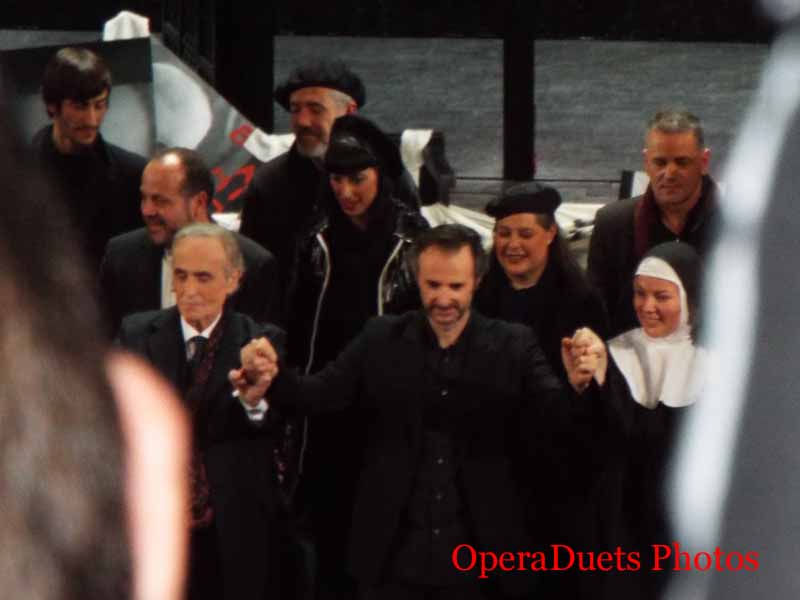
It was the first time that I saw and heard the tenor Andrea Caré. I do think I have found my new favorite tenor. He was just wonderful as Stiffelio.

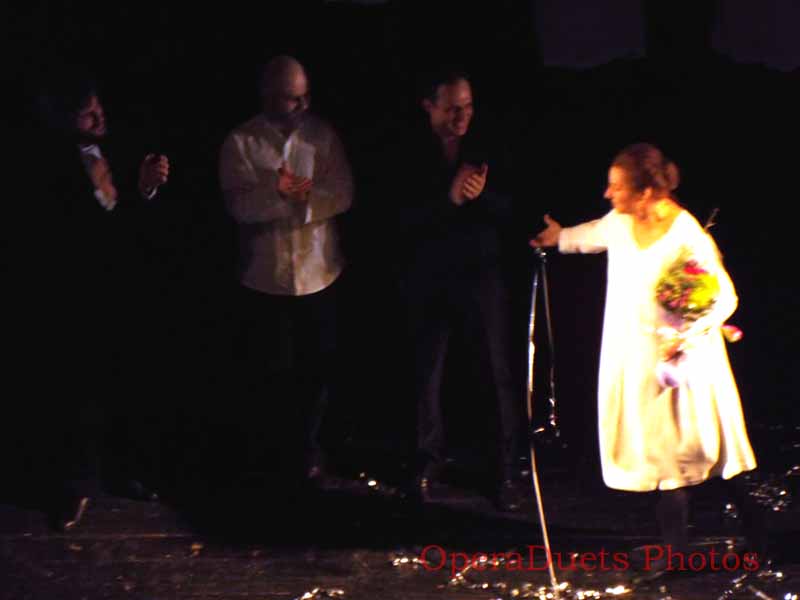
After 27 years working in Royal Opera House in Stockholm Lena Nordin was singing her last role as permanent engaged as opera singer. Now she is officially retired. But as Birgitta Svenden, the opera chief said she will still work in other opera houses and with her festival and also come as guest to Stockholm opera house.

I almost missed that the opera started 1500 and not 1900 as I thought. It was cold in Stockholm, not as bad as in January. Since I had already seen the production before, and did not love it, but as I had seen it I found it easier to like it this time. Having Andrea Caré as Stiffelio helped a lot. I think the whole ensemble was better, more together. Las time we had two Stankars, one singing and one acting. Now we had the unity that was missing. Lena Nordin was Lina that time, too. I think that Andrea Caré was inspiring them all. And then it was Lena Nordin chance to go out with a bang. Lovely!!!


Andrea Caré is a young tenor and hope he will have a long and exciting career. One could not have a better Stiffelio, not even Carreras, Domingo or Cura could do better!!! As a Cura fan I would love to see him in Stockholm as Stiffelio... Andrea Caré is just simply lovely. His voice has everything, strength and sweetness.

OD Travel & Photos
Original blog post


For more reviews from my travels, see www.operaduetstravel.com If you want to see more photos from my OperaDuets Travels, go to www.operaduetsphotos.com

Thursday, February 22, 2018

February 22, 2014: Konzerthausorchester Berlin, Christian Vásquez, Konzerthaus Berlin

2014-02-22 Konzerthausorchester Berlin, Christian Vásquez, Konzerthaus Berlin

José Cura, tenor
Claudio Bohórquez, Violoncello

Konzerthausorchester Berlin

Christian Vásquez, conductor


2014-02-22 Konzerthausorchester Berlin, Christian Vásquez, Konzerthaus Berlin

José Cura, tenor
Claudio Bohórquez, Violoncello

Konzerthausorchester Berlin
Christian Vásquez, conductor
This time I was in Berlin for a concert of South American music. It was a nice trip. Another time something I did just because Jose Cura would be there singing Argentinian songs.

A reviewer of the concert said that Cura seemed to be uncertain and not fully himself until he sang Aurora by Panizza. He must have been on another concert. The concert was on Friday 21, Saturday 22, and Sunday 23., I was there on Saturday, the reviewer was probably on Friday. I cannot be sure that he was wrong since I only attended the concert on Saturday but I think he was mistaken. Of course a tenor would sing an opera aria with a fuller voice than he would sing the delicate classical art songs of Guastavino and Ginastera. Aurora is an opera by Panizza, the Intermezzo Epico is an Opera Aria. The songs of Guastavino and Ginastera are canciones. With Aurora comes the Opera Tenor Jose Cura, with the canciones comes the recitalist Jose Cura. On Saturday Cura showed that he can sing with his sweetest voice what must be sung so and with more forceful when the text demands it. This is fine and delicate work done by a master. Everybody knows Jose Cura as a operatic tenor with his famous Otello, Samson, Calaf. So those who expect to hear something more like Otello find something familiar when he sings the Song to the Flag from Aurora.

http://www.kulturradio.de/rezensionen/buehne/2014/konzerthaus_festival_suedamerika_2.html

I must say that I liked best Huapango by Moncayo. The orchestra works of Ginastera was too much noice. Of course, the cello player was divine. I loved the conductor. And Jose Cura was wonderful!!!

2014-02-22 Konzerthausorchester Berlin, Christian Vásquez, Konzerthaus Berlin

José Cura, tenor
Claudio Bohórquez, Violoncello

Konzerthausorchester Berlin
Christian Vásquez, conductor

PROGRAMM

Silvestre Revueltas (1899 – 1940)
„Sensemayá“

Alberto Ginastera (1916 – 1983)
Konzert für Violoncello und Orchester Nr. 1 op. 36
ADAGIO MOLTO APPASSIONATO
PRESTO SFUMATO – TRIO NOTTURNALE
ASSAI MOSSO ES ESALTATO – LARGO AMOROSO

José Pablo Moncayo (1912 – 1958)
„Huapango“

PAUSE

Carlos Guastavino (1912 – 2000)
„Las nubes“ (Die Wolken)
Texte: Luis Cernuda Orchesterbearbeitung: Guillo Espel
JARDIN ANTIGUO (DER ALTE GARTEN)
DESEO (VERLANGEN)
ALEGRÍA DE LA SOLEDAD (DIE FREUDE DER EINSAMKEIT)

Albero Ginastera
Tänze aus dem Ballett „Estancia“
DANZA FINAL (MALAMBO). ALLEGRO


Carlos Guastavino
Tres canciones
Texte: Luis Cernuda Orchesterbearbeitung: Guillo Espel
VIOLETAS (VEILCHEN)
PÁJARO MUERTO (DER TOTE VOGEL)
DONDE HABITE EL OLVIDO (WO WOHNT DAS VERGESSEN)

Alberto Ginastera
„Cancion al árbol del olvido“
(Lied auf den Baum des Vergessens, 1938) Text: Fernán Silva Valdés

Arturo Márquez (*1950)
„La Conga del Fuego“

Héctor Panizza (1875 – 1967)
„Intermezzo Épico“ aus der Oper „Aurora“

2 extra orchestra numbers, first was very famous and catchy but I don't remember what it is called, last one was Mambo from West Side Story by Leonard Bernstein.

Then it was night talk with Jose Cura. My batteries was empty so no photos from the concert and only phone photos from the night talk in the music club.


For more reviews from my travels, see www.operaduetstravel.com If you want to see more photos from my OperaDuets Travels, go to www.operaduetsphotos.com
Saturday, January 20, 2018

January 20, 2014: I due Foscari in Vienna

2014-01-20 I due Foscari (Verdi), Theater an der Wien

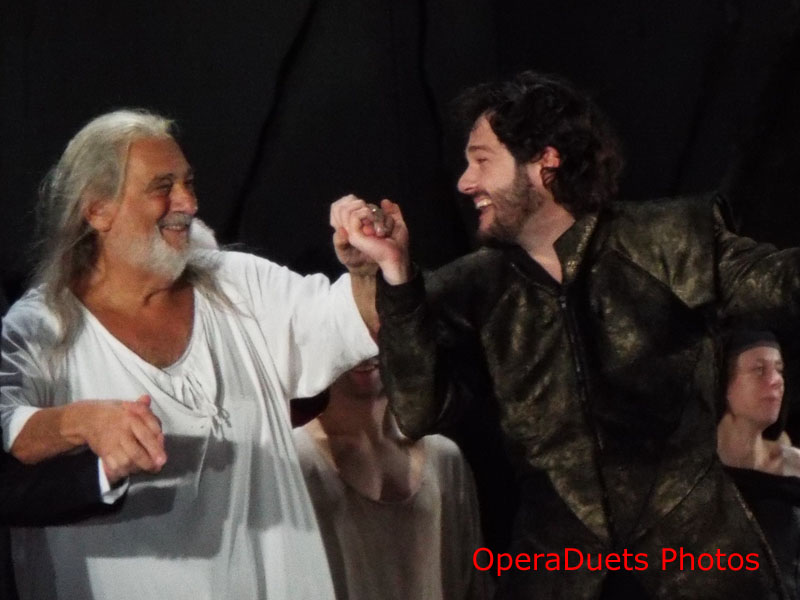
Francesco Foscari = Plácido Domingo
Jacopo Foscari = Arturo Chacón-Cruz
Lucrezia Contarini = Davinia Rodriguez
Jacopo Loredano = Roberto Tagliavini
Barbarigo = Andrew Owens
Pisana = Gaia Petrone
Fante = Ioan Hotea
Servo del Doge = Marcell Attila Krokovay

James Conlon, conductor'
ORF Radio-Symphonieorchester Wien
Arnold Schoenberg Chor (Ltg. Erwin Ortner)

Inszenierung - Thaddeus Strassberger
Bühne - Kevin Knight
Kostüme - Mattie Ullrich

Licht - Bruno Poet


I DUE FOSCARI by Giuseppe Verdi. Different from La Gioconda in many ways. Verdi's music sings of the waters surrounding Venice, the production tells of a cruel world filled up with torture and the unlucky souls caught up in the power games of the Counci of Ten. The lauded Fairness of Venice is that even a son of the current Doge can be caught in the web. Fairness, they call it, and pity as cruel verdicts is given both father and son Foscari.

La Gioconda is a Venice of later centuries than the story of the two Foscari. Whether or not Jacopo Foscari is guilty his treatment is too cruel to be fair. To our eyes Torture is never acceptable and we should never be willing to trade that truth. In the century of Foscari torture was used often, but was it thought acceptable then? Due Foscari had a lot of torture going on onstage. I hated that, but it was not put there on a whim, it was telling the story. I am just not a fan of cruelty onstage but even more do I object to the cruelty of torture and courts of law where the law is followed in such a way that it is a mockery of human lives and their sanctity. It is an important lesson but are we willing to see it as it happens now somewhere on the planet and work against the ills of our world.

Arturo Chancun-Cruz was able to justice to Jacopo Foscari, singing as a god as Jacopo was tortured on stage. That must have taken a lot of will power. Behind the scenes and onstage people must have really been learning a lot of safety features unssen by the audience as all that torture happened.

Davinia Rodriguez as Jacopo's wife, Lucrezia Contarini, had so many different palettes of sounds. In the end she would win the audience heart. The hardest role was hers and she was amazing.

Placido Domingo as the old Doge Francesco Foscari. Unhappy father and now he was to lose his last son. The implacable enemy wanted all Foscaris gone and dealt with and with the power of the Council of Ten in his hands he had the power, The Doge dies utterly unhappy with no shame spared. Loredano  uses a mock pity is used to knife his victims.

Foscari has not yet drawn fully his last breath before the new Doge in crowned. Loredano' justice has been served.


I DUE FOSCARI is a masterpiece just like La Gioconda. The story of Foscari is part of the history of Venice. La Gioconda is a story that happens to be in Venice.

OD Travel & Photos
Original blog post

For more reviews from my travels, see www.operaduetstravel.com If you want to see more photos from my OperaDuets Travels, go to www.operaduetsphotos.com

Friday, January 19, 2018

January 19, 2014: La Gioconda in Berlin

2014-01-19 La Gioconda (Ponchielli), Deutsche Oper Berlin

La Gioconda = Hui He
La Cieca = Dana Beth Miller
Alvise Badoero = Ante Jerkunica
Laura = Marianne Cornetti
Enzo Grimaldo = Marcelo Álvarez
Barnaba = Lado Ataneli
Zuàne = Ben Wager
Ein Steuermann = Noel Bouley
Ein Sänger = Simon Pauly
Isèpo = Gideon Poppe
1. Gondoliere = Paul Kaufmann
2. Gondoliere = Ben Wager
Kirchendiener = Simon Pauly


Jesús López Cobos, conductor
Chor der Deutschen Oper Berlin
Opernballett der Deutschen Oper Berlin
Orchester der Deutschen Oper Berlin

Director - Boleslaw Barlog
Stage-design, Costume-design  - Filippo Sanjust
ChöreWilliam Spaulding
ChoreografieGudrun Leben

Originaldekorationen aus der Entstehungszeit des Werkes [Scenografia Camillo Parravicini, Rom]


The music in both La Gioconda and I Due Foscari is just wonderful. The productions could not be more different. In Deustche Oper Berlin's La Gioconda the scenography and costumes was just breathtakingly beautiful. The beauty of the original scenography from the very first premiere of La Gioconda was so beautiful it was difficult to get inside opera the opera. Theater an der Wien's I Due Foscari had another problem, the ugliness of torture was all too much to handle as it was right in your face.


The solution was in both cases to have the best singers that sung and acted superbly. What ever the beauty or cruelty that was to be seen we had in both cases directors who knew what they were doing. The director managed to create with these excellent singers the web of relations between individuals that create the feeling of truth.

Hui He was La Gioconda, she was truely La Gioconda, and a great La Gioconda, too. Very unlike Violeta Urmana's La Gioconda from Paris Bastille, but the was a completely different production. Hui He was the right choice in this production. As her mother, La Cieca, we had Dana Beth Miller and she owned her role. Like in Paris Marcelo Alvarez was Enzo Grimaldi. I found him even better in Berlin. He was marvellous in Paris, but in Berlin better. Lado Ataneli was a great Barnaba. Ante Jerkunica was a young and splendid Alvise. Marianne Cornetti was Laura, wife of Alvise and rivale to Gioconda for the love of Enzo.

La Gioconda is a street singer who profoundly loves two persons, her mother and Enzo. La Cieca is Gioconda's blind mother, a devoute woman who loves her child, La Gioconda. Enzo Grimaldi is a Prince that Alvise has outlawed. He loved Laura but Laura was then married to Alvise, against her will. Now he is the lover of La Gioconda. But he stills loves Laura and La Gioconda believes him just to be a young sea captain. Barnaba and Alvise are the villains. Barnaba is the spy for the inquisition and works for Alvise but mostly for himself. He fancies himself in love with La Gioconda. This "love" does not care that La Gioconda loaths him and he is willing to kill La Cieca because she is in his way, or so he thinks. An obsession to possess La Gioconda is driving him. There are no layers in him. He is simply evil. Alvise is one of the leaders of the Inquisition in Venice. He thinks that killing his wife when it is believed and almost proven that she has been adulterous will cleanse the stain to his honor. Alvise is in many ways just like Barnaba just richer and more powerful. Laura Adorno is married to Alvise, she does not love him. Finding out Enzo is there, in Venice, makes her reckless when she should know how dangerous Alvise can be.

Enzo Grimaldi is no hero. He is faithless to La Gioconda. He creates dangers for Laura Adorno. There are no reason here, only feelings. He almost kills La Gioconda in a rage that is all about Laura, and then when Laura is heard and then seen and he understands La Gioconda has saved Laura, then it is "fanciulla santa". The change seem to take just seconds.

OD Travel & Photos
Original blog post

For more reviews from my travels, see www.operaduetstravel.com If you want to see more photos from my OperaDuets Travels, go to www.operaduetsphotos.com

Thursday, January 18, 2018

January 18, 2004: Tosca in Berlin

2014-01-18 Tosca (Puccini), Deutsche Oper Berlin

Floria Tosca = Tatjana Serjan
Mario Cavaradossi = Marcello Giordani
Baron Scarpia = Sergey Murzaev
Cesare Angelotti = Ben Wager
Der Mesner = Seth Carico
Spoletta = Jörg Schörner
Sciarrone = Andrew Harris
Ein Schließer = Noel Bouley

Matthias Foremny, conductor
Kinderchor der Deutschen Oper Berlin
Chor der Deutschen Oper Berlin
Orchester der Deutschen Oper Berlin

Director - Boleslaw Barlog
Stage-design, Costume-design  - Filippo Sanjust
ChöreThomas Richter

KinderchorChristian Lindhorst


There is this idea that one can see too many performance of one opera. Then there is perfection like on Saturday January 18, 2014 in Deutsche Oper Berlin. This is on of the classic productions that will never be tired, especially when it has been rehearsed so well that it seem to be real here and now. Marcello Giordani was a wonderful Mario Cavaradossi, perfectly sung and acted. Tatjana Serjan was just so right in this role, Tosca was in her bones and airs. Sergey Murzaev was just the perfect Scarpia.

Sergey Murzaev was the perfect Scarpia. Only hardened Thomas Hampson fans would be disappointed by Murzaev. This was a smooth, good-looking Scarpia who just occationally let the inner demon out. His minions looked more intimidating than Scarpia himself. But Roma knew of his reputation. Marcello Giordani made his Mario Cavaradossi a much more noble, politically savvy and screwd mind than most tenors give the role. Tatjana Serjan's Floria Tosca had also a wider pallette to paint than most sopranos. Then add upp a production and regie that takes everything in and draws the right picture all the way. Best Tosca ever!!

OD Travel & Photos
Original blog post

For more reviews from my travels, see www.operaduetstravel.com If you want to see more photos from my OperaDuets Travels, go to www.operaduetsphotos.com
Wednesday, January 10, 2018

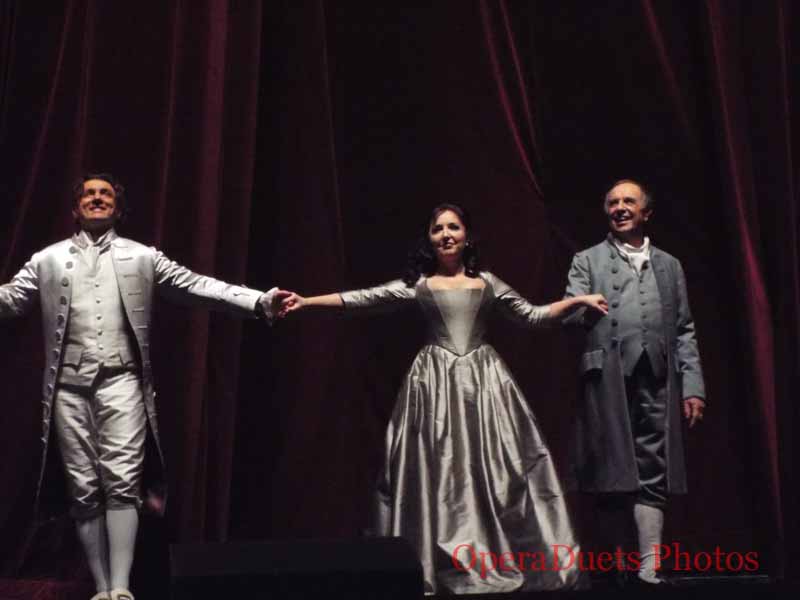
January 10, 2014: Andrea Chenier in Stockholm

2014-01-10 Andrea Chenier (Giordano), Kungliga Operan (Stockholm)

Andrea Chénier - José Cura
Carlo Gérard - Alberto Gazale
Maddalena di Coigny - María José Siri
Bersi, her maid - Susann Végh
The Countess of Coigny - Marianne Eklöf
Madelon - Marianne Eklöf
Roucher  - Linus Börjesson
Mathieu, a sans-culotte - Johan Edholm
The Incredible - Magnus Kyhle
The Abbot - Magnus Kyhle
The novelist Pietro Fléville - Kristian Flor
Fouquier Tinville, the Public Prosecutor  -
Kristian Flor
Schmidt - Michael Schmidberger
Dumas - Michael Schmidberger
Master of the Household - Michael Schmidberger
Father of Gerard - Lars Ekholm

Pier Giorgio Morandi, conductor

DIRECTOR Dmitri Bertman
SETS Hartmut Schörghofer
COSTUME Corinna Crome
LIGHTING Hans-Åke Sjöquist
CHOREOGRAPHY Edvald Smirnoff

The Royal Opera Chorus
Chorus master: Folke Alin and Christina Hornell

Royal Opera Orchestra

It was Friday January 10th, 2014, it was winterly cold without snow. The snowing started on Sunday. I was going to see a traditional Regie of Andrea Chenier, or so I thought. At first I was disappointed but then I started to understand it. I hated the fakesness of the Contessa and her ilk in act 1. I thought in the beginning it meant that the Regie was wrong-headed and just vulgar. Later I understood it as a critique, and a just one, of the high society. A world where the fake has substitued the real. They might say the word love (Amore) but love is nowhere to be seen in here. They might flirt with sex, to be vogue as they lust, but real, pure love or simple affection that is true and not just affected does not live here.

Carlo Gerard looks at it all, sees the wrongness, and loves the still pure Maddalena. Maddalena di Coigny who is a few years from being corrupted by this society, is still pure at heart. Her play with Bersi, her chamber maid, is still that of a child. Then the entertainment enters. Andrea Chenier is the only one that is not playing a role. Chenier is clad in dark cloths and no whig. No one of the gray hairs on his head can make him old and cynic. Jose Cura's Andrea Chenier is very much young at heart. A dreamer and a poet. He does not belong in the cold and fake world. La Contessa of Marianne Ekløf is angered by his refusal simply to bough and recite a poem on the fly. Maddalena of Maria Jose Siri is taken by the first appearance of Andrea Chenier, so taken is she that she has to make him talk of love. She insults him by saying that they all have spoken of Love, and without his precious Muse. L'Improvviso. Great singing. And very much a tipping point, Maddalena understands  something new, feels love. Carlo Gerard opens the door for la Miseria to visit the high society. As Carlo Gerard of Alberto Gazale leaves, the high society will meet death.

Often I get bored with the first act of Andrea Chenier and it is only when Chenier himself arrives that I get into it. In Stockholm there was no hesitation, I went inside the opera and stayed there. Alberto Gazale is the best Carlo Gerard I have ever seen. Maria Jose Siri was just amazing as Maddalena di Coigny. Jose Cura is the best Andrea Chenier today, and in Stockholm he just did one of his fiest intepretation. Marianne Ekløf was La Contessa. She was putting layers to her role, just as she could be totally fake and play with crowd, there was also a deep love for her daughter. Foolish and yet profond.

Act 2 was really great. It was really well thought out. Gazale, Siri and Cura was just astounding. Marianne Ekløf came again, this time as La Vecchia Madelon. Wow, this is how it should be done. I mean WOW!!! Of course, the love duet between Siri and Cura was wonderful!! But really Marianne Ekløf!!!! Viva!!

Interval. The Royal Opera House in Stockholm. It is old, it is lovely, it seem like an intimate venue.

Act 3. Alberto Gazale was looking so well in his red tuxedo. He looked like the handsomest Mefistofele. Carlo Gerard is no longer an innocent servant and he still lusts after Maddalena and now he has power. Maria Jose Siri is a powerhouse as Maddalena di Coigny. She is also an excellent actress. La mamma morta, wonderful, feeling every second of it. Then it is the court scene. Not just four condemned people but four people whose lives are connected now. Andrea Chenier is a source of comfort and strenght for them all. Chenier defense, Si, fui soldato, ended on a high note that I deem did not belong there. And really that it the only minus in the whole evening, that I still haven't accepted.

Act 4. Wonderful act 4. I have never seen any production of Andrea Chenier where the 4 prisoners are interacting. I loved how much love and care that they had towards each other, only when the soldier was not looking. Idia Legray, the young, pregnant woman. When the soldier let her out the door was he really letting her go? Chenier was a source of goodness and comfort. Wonderful love duet!! Of course, Stockholm got one of the best ever Come un bel di di Maggion from Jose Cura, too.

Death cage with the former high socity members to carry them to Death. Viva la morte insieme!

OD Travel & Photos
Original blog post

For more reviews from my travels, see www.operaduetstravel.com If you want to see more photos from my OperaDuets Travels, go to www.operaduetsphotos.com

Wednesday, December 27, 2017

December 27, 2014: Luisa Miller in Zurich

2014-12-27 Luisa Miller (G. Verdi), Opernhaus Zurich

Graf von Walter = Vitalij Kowaljow
Rodolfo = Ivan Magri
Federica = Judith Schmid
Wurm = Wenwei Zhang
Miller = Leo Nucci
Luisa Miller = Elena Mosuc
Laura = Hamida Kristoffersen

Carlo Rizzi, conductor
Philharmonia Zürich
Chor der Oper Zürich​ 

Musikalische Leitung - Carlo Rizzi
Inszenierung - Damiano Michieletto
Bühnenbild - Paolo Fantin
Kostüme - Carla Teti
Lichtgestaltung - Hans-Rudolf Kunz
Choreinstudierung - Jürg Hämmerli


Carlo Rizzi conducted. He had now more gray hair but as most vigor as before. Last time, and first time I saw this opera was in 2000 (March 4th) also in Zurich and with the same soprano as Luisa Miller. Elena Mosuc was great as Luisa, even better than in 2000, and she was great in 2000 also. Ivan Magri was a just as wonderful as Rodolfo just like Elena Mosuc as Luisa. Such beautiful voices and acting beautifully too. Leo Nucci was a powerful Miller. The most surprisingly beautiful voice was the voice of Vitalij Kowaljow. Conte di Walter was just so pleasing dressed in beautiful white cloths and such a beautiful voice one could almost forget that he is one of the villains. Judith Schmid was Frederica and she was all and more that one could wish for as Frederica. 

The use of revolving stage was overused and the chorus was treated more like props. And then we had Wurm sung beautifully by Wenwei Zhang. Maybe I should call him Wormtongue. A villain is Wurm there is now doubt that it is true. So the director makes him look and act as a villain in all times. There is now need to make him move his neek and head in strange ways just to make him villainous the director should have been much more subtle. Other than the overuse of revolving stage, using chorus as props and setting Wurm up as just villainous it was a wonderful production of Luisa Miller.

OD Travel & Photos
Original blog post

Wednesday, December 13, 2017

December 13, 2014: Los Diamantes de la Corona in Madrid

2014-12-13 Los diamantes de la corona (Francisco Asenjo Barbieri), Teatro de la Zarzuela (Madrid)

CATALINA - María José Moreno
DIANA - Marina Pardo
MARQUÉS DE SANDOVAL - Carlos Cosías 
CONDE DE CAMPOMAYOR - Ricardo Muñiz
REBOLLEDO - Fernando Latorre
DON SEBASTIÁN - Gerardo Bullón
ANTONIO - Joseba Pinela
CRIADO - Antonio Gómiz
UJIER - Xavi Montesinos

Oliver Díaz, conductor
Orquesta de la Comunidad de Madrid
Coro del Teatro de La Zarzuela
Director:
Antonio Fauró

ARTISTIC TEAM
Music director - Oliver Díaz
Stage director - José Carlos Plaza
Sets and lights - Francisco Leal
Costumes - Pedro Moreno
Stage assistant - Jorge Torres
Costumes assistant - Carmen Mancebo
Lights assistant - Pedro Yagüe


Beautiful singing and lovely production. Great fun and surtitling in Spanish and English. A full theatre. Lots of Bravos. A lovely theater night but not something I needed to go to see more times not like La Chulapona by Moreno Torroba.

SYNOPSIS
Queen Maria of Portugal (Catalina) is about to come of age; in the meanwhile, the Conde de Campomayor acts as the regent. Aware of the poverty of her people, and that there are many jewels in the royal jewelry box, the queen decides to convert them into money, replacing the real jewels with false ones without anyone knowing.

The Crown Diamonds
Approximate duration: 2 hours and 30 minutes
Zarzuela in three acts by Francisco Camprodón
Music by FRANCISCO ASENJO BARBIERI
Worldpremiered at Teatro del Circo in Madrid, September 15, 1854
Production of the Teatro de la Zarzuela (2010)

Tuesday, October 24, 2017

October 25, 2014: Carmen in Madrid

2014-10-25 Carmen (G. Bizet), Teatro de la Zarzuela (Madrid)

Carmen = María José Montiel
Don José = Javier Palacios*
Escamillo = Rubén Amoretti
Micaëla = Sabina Puértolas
Zuniga = Francisco Tójar
Moralès = David Rubiera
El Donairo = Javier Galán
El Remendado = Néstor Losán
Frasquita = Isabel Rodríguez García
Mercédès = Marifé Nogales
CURRO FLORES = José Vicente Ramos
UN GUÍA = Juan Pedro Schwartz

Yi-Chen Lin, conductor
Orquesta de la Comunidad de Madrid
Coro del Teatro de La Zarzuela
Director:
Antonio Fauró

Stage directo - Ana Zamora
Sets - Richard Cenier
Costumes - Deborah Macías
Lights - Pedro Yagüe, Miguel Ángel Camacho
Asesor de verso - Vicente Fuentes
Asesor de movimiento coreográfico -
Javier García Ávila
Video design - Álvaro Luna
Director assistant - Fuensanta Morales
Costumes assistant - Anuschka Braun
Sets assistant - Almudena Bautista

Maestro repetidor - Andrés Junco

JAVIER PALACIOS as DON JOSE in replacement for Jose Ferrer who was not well.

Yes that was the announcement that started this Carmen in Madrid's Teatro de la Zarzuela. And a great Don Jose he was, this Javier Palacios on Saturday, October 25th, 2014. Maria Jose Montiel was Carmen just as expected.

This was not the usual Carmen, this was an opera turned zarzuela but for me it was nothing like a true zarzuela just Carmen sung and spoken in Spanish. No Lillas Pastia here, in this Carmen he was names Curro Flores. Here the spoken dialogue was in Spanish almost the same as the original French but expanded to more dialogue and more realistic in then Spanish version. But in this version I could here no doubt the music was French. Strange that when sung in French I could feel it spanishness and only lose Spain and suddenly be in France in the dialogue.

Zarzuela it might not be but the cast was strong with Maria Jose Montiel as a great Carmen, Javier Palacios also in great voice and believable as Don Jose. Sabina Puértolas as Micaela was a wonder as a strong Spanich Micaela. Rubén Amoretti was a rather usual Escamillo when compared to Montiel, Palacias and Puertolas. Francisco Tójar as Zuniga and David Rubiera as Morales were both great actors and singers.

Ana Zamora as stage director created a bright colored Carmen but her idea was that Carmen was to be very feminine but not feministic. That sound like someone who thinks that feminists can not be feminine. She tried to make Carmen into something "more" by setting each act into a newer time so Carmen ended in the 1960s or so. But Carmen can very well be a femistic idol, she rules her own and no man can make her different. Don Jose is a man still very much in the paternalistic pattern, his idea of honor, and he thinks Carmen can be become his help mate. He never listens to her views or believe in them as real. In the end he can only look at Carmen as an Idol or a Demon. Don Jose never sees himself as a man who chooses, so he think he has to kill her when she refuses to save him from himself. Micaela is a brave woman even if she fears Carmen. She never gives up. The soldiers street harassment of Micaela as young, unprotected girl (17)  walks into Sevilla to ask after Don Jose, the officer. Escamillo, the cynic, is he really that much better than the other men, or is he is just the benevolent sexist. And what would really be Carmen's story if Jose did not kill her? Maybe we should also ask how happy would Micaela  and Don Jose be together if Carmen never happened to them. What would be Micaela's story?

Bright colored Carmen, sweetly done, but still no layers here in Ana Zamora's zarzuela version of Carmen. Still: Viva Espana!!!

CARMEN
Zarzuela en cuatro actos, basada en la ópera cómica de Ludovic Halévy y Henri Meilhac
Traducción de Eduardo de Bray
Música de GEORGES BIZET

Estrenada en el Teatro-Circo Alegría de Barcelona, el 7 de abril de 1890
Nueva producción del Teatro de la Zarzuela

FECHAS Y HORARIOS
10, 12, 15, 17, 19, 22, 23, 25, 26, 29, 30 y 31 de octubre de 2014
19:00 horas (domingos, a las 18:00 horas)


For more reviews from my travels, see www.operaduetstravel.com If you want to see more photos from my OperaDuets Travels, go to www.operaduetsphotos.com
Thursday, October 5, 2017

October 5, 2014: I Puritani (Søner av sola), Nordfjordeid

2014-10-05 I Puritani (Bellini), Opera Nordfjord

”Søner av sola" = Sons of the Sun (Jostein Avdem Fretland)
Svavna (Lord Gualtiero) = Bjørn Gisle Seter
Svidre (Sir Giorgio) = Trond Gudevold
Vakar (Lord Arturo Talbo) = Bo Kristian Jensen
Snjodainn (Sir Riccardo Forth) = Trond Halstein Moe
Stallarbrut (Sir Bruno Robertson) = Petter Wulfsberg Moen
Arnaviv (Enrichetta ´di Francia) = Gro Bente Kjellevold
Svava (Elvira) = Ditte Højgaard Andersen

Michael Pavelich, conductor

Regie - Michael Pavelich
Scenography - Sunniva Bodvin
Costume design - Anne Gotaas

Light design - Hans Åke Sjøquis

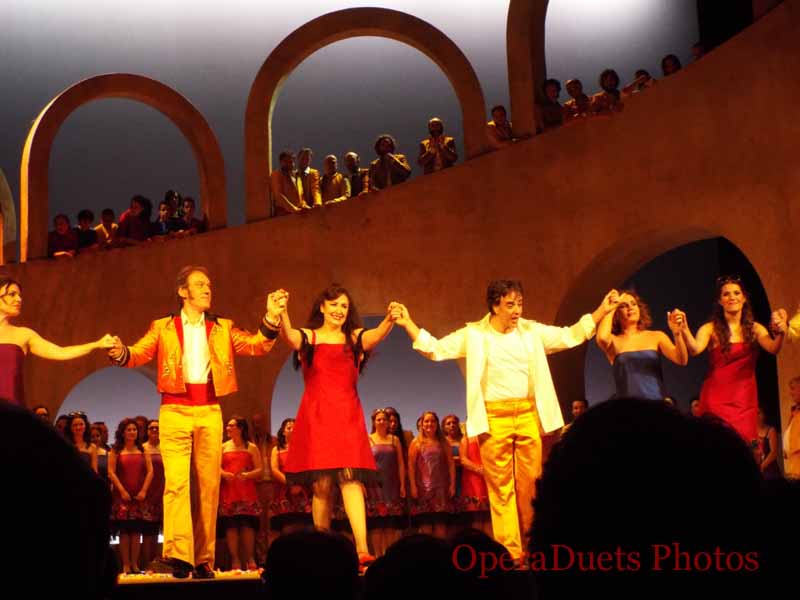
Simply the best Elvira of all times: Ditte Højgaard Andersen as Svava(Nordfjordeid 2014-10-05)


The Opera Nordfjord production of I Puratani by Bellini was called Søner av sola (Sons of the Sun) and was called a fantasy opera. Norse mythology in stead of Civil War in England. New translation by young Norwegian Jostein Avdem Fretland.

Two Danes as the protagonists Svava (Elvira) and Vakar (Arturo): Ditte Højgaard Andersen & Bo Kristian Jensen. Trond Gudevold was Svava's uncle Svidre (Giorgio) and Bjørn Gisle Seter was Svavna (Valton), King of the Volunds. Then as the other man who loves Svava and had the King's promise to have her Snjodainn (Riccardo), a great Volund leader,  was the great Trond Halstein Moe. The other tenor of the group Stallarhrut (Bruno) was Petter Wulfsberg Moen. As Arnaviv (Enriquetta), Queen of the Egds was Gro Bente Kjellevold. ¨

The two lovers comes from different people Svava of the Volunds and Vakar of the Egds.No politics is involved, it is just two different people and maybe different Gods. The cast of two Danes and the rest Norwegians was great. Fabulous singing of the soloists, a great chorus and orchestra conducted by Michael Pavelich, the man himself.

Michael Pavelich also had the Regie, Scenography was by Sunniva Bodvin. Costume design by Anne Gotaas. Light design by Hans Åke Sjöquist. Masks by Maren Togstad. Assistant regie and choreography by Marit Grytnes Dullaert.

In this new production there was an added element Herkja, a Volve working for Svidre played by Jannik Bonnevie. The opera started with the vigorous prelude of Puritani and then full stop and then words, words and words and then finally the opera started again. I was bored while she explained the background or something. But then it started. Puritani is not Norma, it has many good parts but Norma has a story that makes sense and you can feel for Norma and Pollione and Adalgisa. Puritani, yes even in this Norse fantasy opera version has the same weaknesses. But the aria, and duets and ensembles are just smashing wonderful. And we had Bel Canto here and also stupidity as sometime come with bel canto repertoire. Trond Halstein Moe, the old wolf of Norwegian opera (I probably read to many novels about shifters) was wonderful as the young and dashing Snjodainn, powerful and so bel canto. I was surprised how little stage time Svavna, Bjørn Gisle Seter, had, but yummy. Trond Gudevold as Svidre and Ditte Højgaard Andersen in duet was amazing. Trond Gudevold was like a bel canto God, Ditte was the Godess of all. Gro Bente Kjellevold was great to stand out. The tenors Stallarhrut, Petter Wulfsberg Moen had such a beautiful tenor voice, but poor Vakar or rather Bo Kristian Jensen had all those nasty high note to press out.

It was a beautiful production in Nordfjordeid but I am sorry to say I am not totally on board but I think it is the opera's fault. I Puritani, I am sorry, but I can not love you.


Still it is totally you have to go and see and experience this. Because you listen to Met on Demand for hear some Puritanis and not even Joan Sutherland or Edita Gruberova are better than Ditte Højgaard Andersen!!!

Original blog post
Opera Duets Travel & Photos

For more reviews from my travels, see www.operaduetstravel.com If you want to see more photos from my OperaDuets Travels, go to www.operaduetsphotos.com
Monday, September 25, 2017

September 25, 2014: L'Opera e la grande Bellezza in Arena di Verona

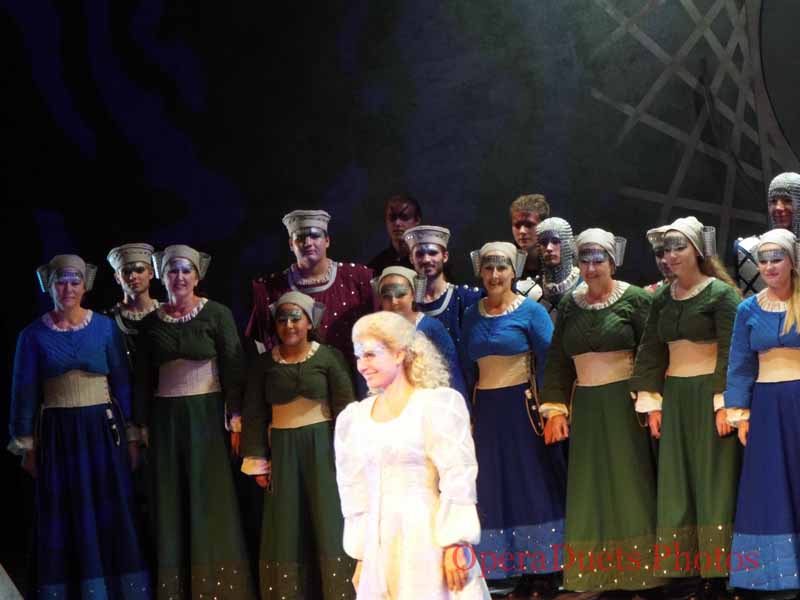
2014-09-25 L'Opera è la grande bellezza, Arena di Verona

Maria Guleghina
José Cura
Carlo Guelfi

Presentatore Michele Mirabella

Orchestra Filarmonica Arturo Toscanini
Massimo Zanetti, conductor
Coro Teatro Regio di Parma, Coro Università degli studi di Perugia, Coro dell’Università di Modena e Reggio Emilia e le Voci Bianche Adamu

Regìa e progetto scenografico di ENRICO STINCHELLI
Coreografie di “Modulo Factory


Almost 7 minutes of talk by presenter before and then a lot of talk later on too.

Orchestra & ballet
"1. Terzo ballabile Macbeth"
Carlo Guelfi, baritone
2. Pietà, rispetto, amore (Macbeth) "
Jose Cura & Maria Guleghina
"3. Già nella notte densa (Otello)"

Jose Cura
"4. E lucevan le stelle (Tosca) "
Maria Guleghina
"5. Vissi d'arte (Tosca) "

Orchestra & ballett & chorus
"6. La Traviata - matadori & zingari"

Carlo Guelfi, Maria Guleghina
"7. Donna, chi sei? (Nabucco) "

Chorus & Orvhestra
"8. Patria oppressa (Macbeth) "

Jose Cura, Carlo Guelfi
"9. Desdemona rea...Sì pel ciel (Otello)"

PAUSE
fanfara dei carabinieri (2 minutes)
"10. korpsmusikk"

fanfara dei carabinieri
"11. Gloria all'Egitto, Aida con marcia trionfale e balletto"

fanfara dei carabinieri (2 minutes)
"12. ukjent korpsmusikk"
Maria Guleghjina
"13. Nel dì della vittoria (Macbeth)"
Jose Cura
"14. Vesti la giubba (Pagliacci) "

Carlo Gulefi, Chorus
 "16. Te Deum (Tosca)"

Maria Guleghina, Jose Cura & Chorus
 "17. In questa reggia (Turandot) "

Carlo Guelfi
"18. Nemico della Patria (Chénier) "

Chorus
"19. Va’, pensiero (Nabucco)"

Jose Cura, Chorus
"20. Nessun dorma (Turandot)"

Maria Guleghina, tutti
"21. Finale Turandot TUTTI"

Jose Cura, tutti
22. National Anthem of Italy "Fratelli d'Italia"


Momenti di grande emozione quando l'artista ha intonato il nostro inno nazionale cantando "Fratelli d'Italia"
---
My review would be almost the same except that I did not know that the last item was the National Anthem of Italy "Fratelli d'Italia"


For more reviews from my travels, see www.operaduetstravel.com If you want to see more photos from my OperaDuets Travels, go to www.operaduetsphotos.com
Thursday, September 14, 2017

September 14, 2014: La Fanciulla del West in Vienna

2014-09-14 La Fanciulla del West (Puccini), Wiener Staatsoper

Minnie = Nina Stemme
Dick Johnson (Ramirez) = José Cura
Jack Rance = Tomasz Konieczny
Nick = Carlos Osuna
Ashby = Alexandru Moisiuc
Jake Wallace = Gabriel Bermúdez
Sonora = Boaz Daniel
Bello = Tae-Joong Yang
Happy = Clemens Unterreiner
Joe = Benedikt Kobel
Jim Larkens = Marcus Pelz
Trin = Thomas Ebenstein
Harry = Peter Jelosits
Sid = Mihail Dogotari
José Castro = Gabriel Bermúdez
Wowkle = Ilseyar Khayrullova
Billy Jackrabbit = Il Hong
Postiglione = Jinxu Xiahou

Graeme Jenkins, conductor

Director  & Set design - Marco Arturo Marelli
Costumes - Dagmar Niefind
Lighting design - Marco Arturo Marelli


Of course you can update an opera. You just have to be careful about what that does to the story, the persons and their surroundings. It was not too bad but an update should give the opera a lift or something and that never happened. The only uplifting thing was the balloon. And the balloon ending did not make much sense. Did the director intend is as a laugh and so making it all a laughingstock?

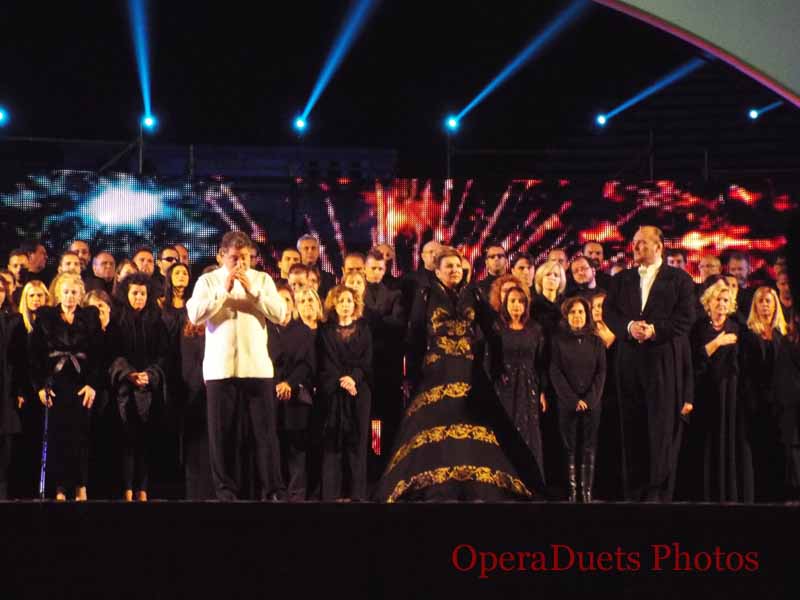
Puccini's latest masterpiece, La Fanciulla del West, in Wiener Staatsoper was simply not played well enough to be take flight. A Spaghetti Western just like an opera is always best when played straight. Updated to the 1950s so we have electricity and Minnie comes to work in an overall. The first act just looked wrong and with the help of the orchestra and conductor it did not sound that good either. 

First act started with the otherwise fine conductor putting holes and airs where sound should have been and putting the wall of sound too high at other times. From the first phrase he was off the wrong horse. As the act progressed it became better. The chorus was a mess maybe because it was not so much a  chorus of choristers as a chorus of soloists. The blue overall made Minnie into a too boyish or mannish woman. It was not before act two that Nina Stemme was allowed to be a more attractive Minnie. The minor soloists never really came off as persons. Nick, Larkins and Ashby was the one could mark but not truly noticable. Sonora, who? Nina stemme was Nina Stemme more than Minnie. The gruff-voiced Sheriff Jack Rance was there. Then Jose Cura comes and we have an opera!! The tenor is here. So I start day-dreaming of Nina Stemme as Isolde and Jose Cura as Tristan. Of course, my day-dreaming was cause by Nina Stemme, the Wagnerian soprano. Jose Cura as Tristan ¿que idea? singing Tristans death scene!

The first acts ends with a lovely duet of Dick Johnson and Minnie. Best part until the rest of the opera. Then intermission. Only 1 pause because act 2+3 are played together.  

I love act 2. It was charming, it worked. Nina Stemme was most beautiful and Jose Cura the most handsome. Minnie is running so fast towards her first kiss that they both fell on the floor and then almost made out. So that was a bit over the top but maybe that is what Fanciulla needs. The wonderful tenor aria was marred by one unfortunate loud cough, but it was still divine. 

Act 3 I do not love. Usually I feel it drags on forever untill finally the tenor since the great act 3 aria which is really the highlight. Somehow this production never makes you feel that this is a manhunt out to get Ramerrez. And one does not fear for this man life so when Minnie comes to rescue him there is still no tension. Then off they go in a many coloured balloon. And that finally burst my balloon.

A  lovely ending that does not fit.  It was not awful but it was not great. 

OD Travel & Photos
Original blog post

Sunday, July 23, 2017

July 23, 2014: Josep Carreras in Dalhalla, Sweden

2014-07-23 The Legendary Tenor José Carreras, Dalhalla, Sweden 

José Carreras, tenor
Simge Büyükedes, soprano

Stockholm Concert Orchestra

David Giménez, conductor


THE LEGENDARY TENOR JOSÉ CARRERAS

On July 23rd, 2014 is it exactly 20 years since Birgit Nilsson opened the first Dalhalla festival with her concert. So this is the Jubilee Concert for Dalhalla. Josep Carreras was chosen to do the special Jubilee Concert as he is now a legend himself. Many years ago he sang with Birgit Nilsson in Tosca (in the US) and she refered to him as "her baby Cavaradossi".

Simge Büyükedes was the unknown quantity in this concert and she was the one who sang opera arias in the concert, the famous ones from Rusalka and La Wally. She was born in Istanbul, Turkey. A wonderful soprano voice that is like velvet. The weather that had threatened the concert with thunders, lightnings and heavy rains that luckily stopped in time of the concert begin at 2100 might have had an effect on her voice as it in the second half seemed to loose some of the strength. A slight cold could be hard on the voice. Josep Carreras was as he is nowadays a strong voice but not so subtle as when he was younger, no wonder when the man is over 67 years old. Nevertheless this was a party of well song canciones, musical tunes, zarzuela and opera arias. The Majesties of Sweden was there. And there were encores and Bravos and Bravas. The man holding it all together was David Gimenez conducting STockholm Concert Orchestra.


PROGRAM
1
1. Verdi: NABUCCO - Ouverture (Orchestra)
2. Donizetti: Te voglio bene Assaje (Carreras)
3. Tosti: L'ultima canzone (Carreras)
4. Dvorak: RUSALKA - Song to the Moon (Büyükede)
5. Albeniz: El eco de tu voz (Carreras)
6. Rubas: Rosó - pel teu amor (Carreras)
7. LA WALLY - Ebben ne andro lontana (Büyükede)
8. Bizet: L'Arlesienne suite - Farandole (Orchestra)
9. Leigh: THE MAN OF LA MACHA - The Impossible Dream (Carreras)

2
10. Rendine: Vurria (Carreras)
11. Valente: Passione (Carreras)
12. Delibes: Les filles de Cadiz (Büyükede)
13. Satie: Je te veux (Carreras & Büyükede)
14. Jimenez: LA BODA DE LUIS ALONSO - Intermedio (Orchestra)
15. Barbieri: EL BARBERILLO DE LAVAPIES  - Cancion de Paloma (Büyükede)
16. Caballero: EL DUO DE LA  AFRICANA - Duo y Jota (Carreras & Büyükede)
17. Cardillo: Core n'grato (Carreras)

ENCORES

1. Gitarra Romana (Carreras)
2.  I Could Have Danced All NIght (Büyükede)
3. Non ti scordar di me (Carreras & Büyükede)
4. Torna a Surriento (Carreras)

5. Libiamo ne lieti calici (Carreras & Büyükede)

OD Travel & Photos
Original blog post

For more reviews from my travels, see www.operaduetstravel.com If you want to see more photos from my OperaDuets Travels, go to www.operaduetsphotos.com

Thursday, June 22, 2017

June 22, 2014: Der Fliegende Hollender in Oslo

2014-06-22 Der fliegende Holländer (Wagner), Den Norske Opera & Ballet (Oslo)

Hollenderen = Terje Stensvold 
Senta = Erika Sunnegårdh
Daland = Ketil Hugaas
Erik = Henrik Engelsviken
Mary = Tone Kummervold
Styrmannen = Marius Roth Christensen

John Helmer Fiore, conductor
Den Norske Opera & Ballet

REGI - Andreas Homoki
SCENOGRAFI - Wolfgang Gussmann
KOSTYMER - Wolfgang Gussmann
DRAMATURGI - Werner Hintze

LYSDESIGN - Franck Evin


I thought I would be so bored. This was Wagner after all. Opera with no intervals is just plain wrong. I have to admit I looked at my watch. First time I looked one hour had already passed. I thought I saw wrong numbers it was dark there. So this was working and with this regie and scenography it did not make sense to stop between acts.

Here one could have compassion with the Hollender because he care about Senta. When the H understand that Senta would probably suffer eternally he wants to stop the wedding. Senta has promised herself to Erik years ago but she is so much in love in the idea of the H. Erik loves Senta but he comes of more like a brute who has such self-pity. The H. is a man who has suffered a lot for his arrogance but his love for Senta makes him able to put Sentas life and happiness first, something Erik has not learned. Senta shows her "love" for the H. with sacrifising her life, she blows her brains out.

The Romantic Opera of Wagner. Where is the Romance really? Senta is not really the kind of woman one should aim to be. Daland, her father talks about her that she would be as pleasing and obidient to her husband as she is to Daland. Senta, my sweet child. But ever since she heard the story of the flying hollender she has been wild. So it was a great!!


After the opera and the applaus and the speech and flowers it was time to go home.

OD Travel & Photos
Original blog post

For more reviews from my travels, see www.operaduetstravel.com If you want to see more photos from my OperaDuets Travels, go to www.operaduetsphotos.com
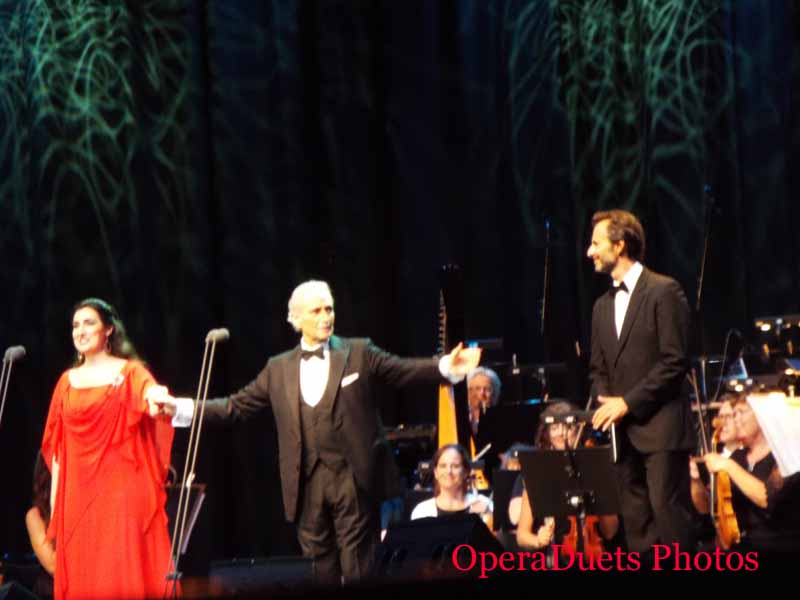
Tuesday, May 2, 2017

May 2, 2014: El Juez in Bilbao

2014-05-02 El Juez (Christian Kolonovits), Teatro Arriaga (Bilbao)

Federico = Josep Carreras
Paula = Sabina Puértolas
Alberto = José Luis Sola
María/1ª monja = Mª José Suárez
2ª monja = Itziar de Unda
Paco (cameraman) = Manel Esteve
Abadesa = Ana Ibarra
Morales = Carlo Colombara
Hombre 1 = Alberto Núñez
Hombre 2 = Giorgi Meladze
Hombre 3 =José Manuel Díaz
Hombre 4 = Mikel Zabala
Mujer mayor = Milagros Martín
Figuración (niña) = Laia de la Fuente

David Gimenez, conductor
Coro niños perdidos: Kantika Korala
Director: Basilio Astúlez
:
Coro: Coro Rossini 
Director coro: Gerardo Carbajo
:
Orquesta: BIOS

Dirección escénica: Emilio Sagi
Escenografía: Daniel Bianco 
Figurinista: Pepa Ojanguren
Iluminación: Eduardo Bravo
Ayudante de dirección escénica: Javier Ulacia
Maestra repetidora: Husan Park
Realización de escenografía: Neo Producciones

Realización de vestuario: Pepispoo


A new opera in Bilbao, an old one in Barcelona. Josep Carreras in a new role as the Judge Federico Ribas. The tragedy happens when people agree to dubious thing for a supposed higher reason. It was another villain role for Carlo Colombara. The Italian bass was Morales. Morales is a role cast from the same mold as Baron Scarpia in Puccini's Tosca. Even worse than Scarpia and more towards Mefisto. Pure evil but suppossedly in the service of the Church. Probably just after power and lust for violence. 


Alberto is a man in search of his brother. The brother is one of The Lost Children. Children taken by the Church and given other parents without knowledge of the truth. Alberto with journalist Laura is on the task to find out more of the lost children. This threatens the Church and Morales. So Morales talks to Alberto and promises him to know who his brother is. The catch is that the judge that Alberto will threaten is Alberto's brother. And Morales knows this, so he will crush two in one crash. Before any happy end can happen Morales kills Alberto. As Alberton lies dying, brother meets brother. SAD END!!!


Real tears rolled down at the end of this opera. I seldom react like that so for me this means El Juez is a triumph for the composer and the singers and whole theatre. BRAVI, tutti!!!


For more reviews from my travels, see www.operaduetstravel.com If you want to see more photos from my OperaDuets Travels, go to www.operaduetsphotos.com

Monday, May 1, 2017

May 1, 2014: Carmen in Barcelona

2014-05-01 Carmen (Bizet), Barcelona

CARMEN - Ana Ferro
DON JOSÉ - Sergi Giménez
MICAELA - Cristiana Oliveira
ESCAMILLO - Nuno de Araujo Pereira
FRASQUITA - Anna B. Gómez
MERCEDES- Carla Mattioli


Piano - Montse Pujol Dahme


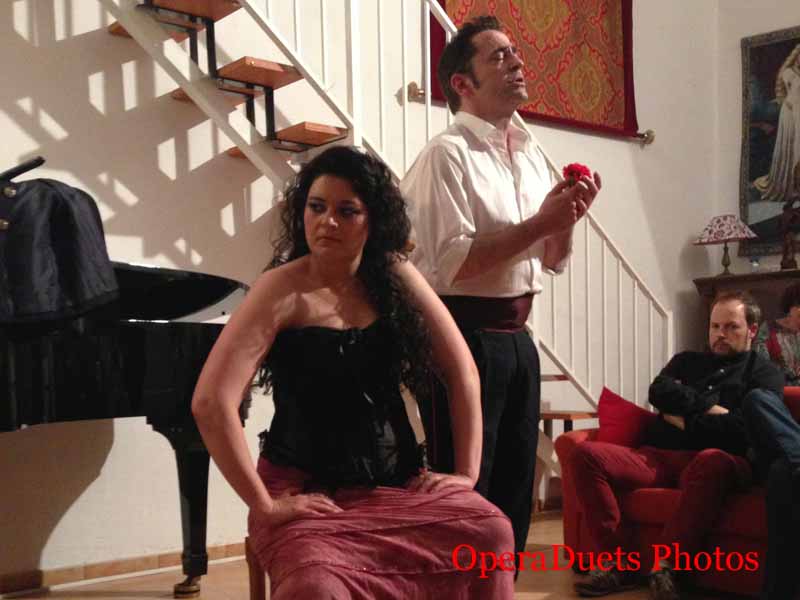
A great opera erlebnis in an Opera Salon

Sitting just a few feet from the opera singers this was intense. On sofas and chair in a living room with a piano we sat. The prelude and entr'acte was played on speakers. Then the pianist starts the live opera or maybe we should call it lived opera. The space was used for optimal operatic tension. The staircase was used theatrically and so was other rooms used as backstage. One of the best Carmen performances and in such a limited space! Amazing!!!


OD Travel & Photos
Original blog post

For more reviews from my travels, see www.operaduetstravel.com If you want to see more photos from my OperaDuets Travels, go to www.operaduetsphotos.com