2003-03-14 Don Carlo (G. Verdi), Opernhaus Zurich
Filippo II = Carlo Colombara
Don Carlo = José Cura
Rodrigo = Franco Vassallo
Il Grande Inquisitore = Pavel Daniluk
Un Frate = Giuseppe Scorsin
Elisabeth de Valois = Elena Prokina
La Principessa d'Eboli = Luciana D'Intino
Tebaldo = Judith Schmid
La Contessa d'Aremberg = Susanne Merle
Il Conte di Lerma = Leonardo Silva
Voce dal cielo = Sen Guo
Pier Giorgio Morandi, conductor
Verdi: Don Carlo
Musikalische LeitungPIER GIORGIO MORANDI
InszenierungWERNER DÜGGELlN
SpielleitungULRICH SENN
BühnenbildRAIMUND BAUER
KostümeSUE WILLMINGTON
LichtgestaltungJÜRGEN HOFFMANN
Chor ERNSTRAFFELSBERGER
Deputati fiamminghi/PETER KÁLMÁN, VALERIY MURGA,
Grandi di SpagnaSERGEY AKSENOVo, KEVIN ARMSTRONGo, MIRKO JANISKA
ERIC KELLERo, SEUNG-HYUK PARKo, FEDERICO SACCHlo
0 Mitglied des 105
CHOR DES OPERNHAUSES ZÜRICH
ZUSATZCHOR OPERNHAUS ZÜRICH
STATISTENVEREIN AM OPERNHAUS ZÜRICH
ORCHESTER DER OPER ZÜRICH
Solo-CelloLuciano Pezzani
Musikalische Assistenz
und EinstudierungTHOMAS BARTHEL, THOMAS GRABOWSKI
InspizienzPAUL SUTER
SouffleurLORENZO COLADONATO
Freitag, 14. März 2003FREITAG-ABO A
PAUSE NACH DEM ZWEITEN AKT BEGINN: 19.30 UHR
ENDE: ca. 23.00 UHR
Voce dal cielo
Sen Guo: In the autodafé-scene, her voice is heard at the end of this scene, when the heretics are burnt, tortured. A lovely voice promises the poor tortured souls that heaven is open for them. Beautifully sung by this Chinese soprano.
Il Conte di Lerma
Leonardo Silva: Good.
La Contessa d'Aremberg
Susanne Merle: She is the one that is expelled from the Spanish court for not being together with the Queen at the meeting of Elisabeth & Don Carlo. The King in this way offend also the Queen. The Queen comforts her compatriot, she is not expelled from the heart of the Queen ("Non pianger, mia compagna"). Silent role. Tall, blond woman, skinny. An actress, or a just a member of the chorus.
Tebaldo
Judith Schmid: a trouser role for this Swiss mezzo. Walking and acting very much like a young man, which is her role. In this Zurich version it is Tebaldo who announces people coming in, and not the Count of Lerma like in the Salzburg 1986-version.Very good voice and acting.
La Principessa d'Eboli
Luciana d'Intino: this Italian mezzo is today's great Eboli. Amneris and so on. Her dark voice have an agility for coloratura even though her voice is a big one. And she even acts...All opera singers are supposed to act, but still some really can't do that and sing at the same time, Luciana has no problem with that. Onstage never for a second, is she not Eboli. Her passion, witty and loves clearly portrayed by Luciana d'Intino. Her song of the veil is great, and she is great in duos, trios and quartets, and her O don fatale is stupendous.
Elisabetta di Valois (Elisabeth de Valois, Queen of Spain)
Elena Prokina: great singing and acting by this Russian soprano. She does well her big aria in the end of the opera, Tu che le vanita, even though she doesn't quite have the big voice to really get it right. She is the Queen of this opera, regal in presence, and still gets the human side of Elisabeth to stand out like a real human being. The confrontation with the King, as a King's daughter she has greatness and is not easily intimidated. She shines, she acts very well with all the other members in the ensemble.
Un frate (The imperator Carlo Quinto?, Charles V)
Giuseppe Scorsin: the 3rd bass in Don Carlo. In this production we don't see him, we only hear him and the other monks at the monastery San Juste, in the beginning and the end of the opera. Good.
Il Grande Inquisitore
Pavel Daniluk: the 2nd bass. I have to say he does OK, I wonder if he lacks some of the deepest notes when he sings SiRe, it doesn't seem to go easily down. Good.?
Rodrigo, Marchese di Posa
Franco Vassallo: A really great Rodrigo sung and acted by this Milanese baritone. In flesh and blood real, but still a dreamer. GREAT!!!
Don Carlo (Don Carlos, Infante of Spain)
José Cura: Bravo, Cura! I don't understand how you do that, managing to play so perfectly a Don Carlo closer to the historical truth than we usually see, and still not break against Verdi's Don Carlos. Magic... Hard work.
Filippo II (Philip II of Spain)
Carlo Colombara: the 1rst bass of Don Carlo. An unhappy father and spouse. He has a misfit as son and a wife who never loved him. Great singing an acting by this bass.
Pier Giorgio Morandi and the orchestra....
He did a good job, Morandi, but still something the orchestra drowned the singers.
BRAVI tutti
OD Travel + Photos
Wednesday, March 14, 2018
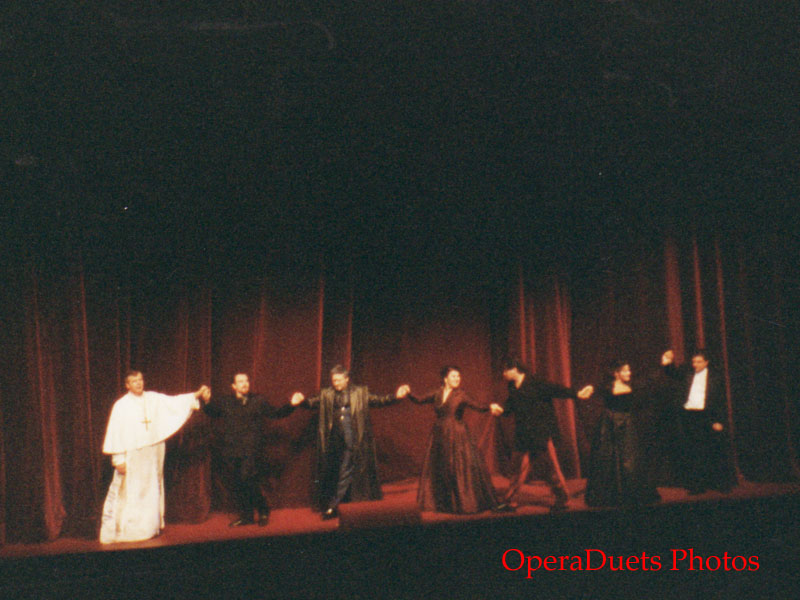
March 14, 2003: Don Carlo in Zurich

Monday, March 12, 2018
March 12, 2003: Don Carlo in Zurich
2003-03-12 Don Carlo (G. Verdi), Opernhaus Zurich
Filippo II = Carlo Colombara
Don Carlo = José Cura
Rodrigo = Franco Vassallo
Il Grande Inquisitore = Pavel Daniluk
Un Frate = Giuseppe Scorsin
Elisabeth de Valois = Elena Prokina
La Principessa d'Eboli = Luciana D'Intino
Tebaldo = Judith Schmid
La Contessa d'Aremberg = Susanne Merle
Il Conte di Lerma = Leonardo Silva
Voce dal cielo = Sen Guo
Pier Giorgio Morandi, conductor
Verdi: Don Carlo
Regie Werner Düggelin
Musikalische Leituug PIER GIORGIO MORANDI
Inszenierung WERNER DÜGGELlN
Spielleitung ULRICH SENN
Bühnenbild RAIMUND BAUER
Kostüme SUE WILLMINGTON
Lichtgestaltung JÜRGEN HOFFMANN
Chor ERNST RAFFELSBERGER
Deputati fiamrninghi/PETER KÁLMÁN, VALERIY MURGA,
Grandi di Spagna SERGEY AKSENOVo, KEVIN ARMSTRONGo, MIRKO JANISKAo,
ERIC KELLERo, SEUNG-HYUK PARKo, FEDERICO SACCHr
0 Mitglied des 105
CHOR DES OPERNHAUSES ZÜRICH
ZUSATZCHOR OPERNHAUS ZÜRICH
STATISTENVEREIN AM OPERNHAUS ZÜRICH
ORCHESTER DER OPER ZÜRICH
Solo-Cello Luciano Pezzani
Musikalische Assistenz
und Einstudierung THOMAS BARTHEL, THOMAS GRABOWSKI
Inspizienz PAUL SUTER
Souffleur LORENZO COLADONATO
Mittwoch, 12. März 2003 FREIER VERKAUF
PAUSE NACH DEM ZWEITEN AKT BEGINN: 19.30 UHR
ENDE: ca. 23.00 UHR
Act 1 Scene 1
This is the Italian, 4 act version. Which starts in San Juste, with the monks singing "Carlo, o sommo Imperatore". The stage is black, and we do not see the monks, they are singing ofstage. Don Carlos is
already onstage, Jose Cura is laying down, making a pathetic figure, "Io l´ho perduta", he is mourning the loss of Elisabeth de Valois, his once-fiancee, who had to marry the King, Filip II, his own father for political reasons. Luckily the voice of Cura was improved after the first minutes here. Don Carlos´ friend, Rodrigo sees Don Carlo, the Infante of Spain in quite a mood. But Rodrigo makes Don Carlos think of the Flemish people in need, Jose Cura and Franco Vassallo sings a wonderful "Dio che nell'alma infondere", even though Cura is sometime of of synch, so the conductor Morandi must take special care and point to Cura, when he is on cue. When Filip II
and Elisabeth de Valois comes in to pray, they and the 6 "bodyguards" walks to fast for a royal prosession I think.
Act 1 Scene 2.
It is in bright blue, with some wonderful scenery, the court ladies is making a big picture of Fontainebleu, for the queen. Tebaldo is walking around like a teenager with an important job. Then Pricess Eboli arrives and soon a happy song of the veil, Muhammed and his queen. Eboli, Luciana d'Intino receives the first applause, she
is fantasic. Coloratura-alto. Then the queen arrives, Elena Prokina is Elisabeth de Valois. And the Rodrigo, Grande de Espana, comes with one secret message from Carlos, and one official from the royal Queen
mother in France. And soon a terzett "Che mai si fa nel suol francese", where Rodrigo efficiently and elegantly stops Eboli from casting the eyes at the Queen, finding something suspicious. And then Don Carlos comes to talk with his "mother" (step-mother, naturally), and Jose Cura starts very softly but is soon angered by Elisabeth de Valois "coldness", Elisabeth speaks of honnour and Carlos wants to talk about love. "Io vengo a domandar" ends with Elisabeth telling about murder his father, and marry his mother. "Maledetta io son",
and Carlos runs out. Then the King, Carlo Colombara, come in and see the queen alone, that is against the etiquette of the Spanish court. ONLY, that when the king arrives, the court woman have arrived a
little too soon... The Lady of Honnour who was supposed to be with the Queen, gets the message from the King, go back to France. So the queen looses her compatriot at the court, "Non pianger, mia compagna". Elena Prokina is a little out of synch and conductor and singer tries to get intact. Then all is leaving, but The king want to talk to Rodrigo". Great Duet ("Restate!")
Act 2 Scene 1
In the Queens Garden, Don Carlo (Jose Cura) is waiting for his beloved, Elisabeth de Valois to come for a secret rendez-vous. But it is naturally Princess Eboli (Luciana d'Intino) who comes. She thinks the Infante loves her, Eboli, but then realise that the sweet words was meant for somebody else, ... the Queen. A fantastic Duet that becomes a wonderful Trio, when Rodrigo (Franco Vassallo) comes in to save Don Carlo when the rage of a jilted woman. My favourite scene in this opera. Rodrigo makes Don Carlo give som letters about the revolt they are planning in Flandern, and some love letters.
Act 2 scene 2 Autodafe-scene.
Grand scene with all people gathered to have a feast, when "enjoying" the death of sinners condamned by the Spanish Inquisition. The King, Carlo Colombara, restates his vow to be the protector the Cathotic faith. "Gloria a Filippo, gloria al ciel'!" Then suddenly Don Carlo comes in with the Flemish deputation to ask of clemency for Flandern and Brabant, something the King and the Monks refused, but the people with Elisabeth and Rodrigo asks for clemency also. Don Carlo loses his patience, and ask of to reign Flandern and Brabante (Sire! egli e tempo ch'io viva), when the King refuses this, Don Carlo threaten his father with a sword. Only Rodrigo asks for the sword from the Infante. The crisis is over. And the celebration of death of the heretics can continue. A voice from Heaven, promises the "heretic" salvation.
Intermession
Act 3 Scene 1
In the chamber of the King Filip II, Carlo Colombara is singing the wonderful aria "Ella giammai m'amo". Elisabeth has never loved the King, and the Infante is rebelling against his father. Filip thinks that his crown makes it possible to read the mind of others, the king has a very suspicious mind. He long for peace, to sleep in Escorial, the royal grave. More misfortunes, the Grand-Inquisitor comes in, and two basses are battling against each-other, why must the crown always bend for the altar. Grand-Inquisitor gives the king permission, to excile or death to the Infante, but he wants the life of Rodrigo of Posa, The king tries to resist... And after this The queen comes asking for justice, someone has robbed her of the box inwhich all her juwellery is in. Filip has it, he opens it a finds the portrait of Don Carlo. He accuses Elisabeth of being an adulteress, she swoons, Rodrigo and Eboli rushes in. Wonderful quartett. It is Eboli who has stolen it, and told Filip about Elisabeth and Carlos. She asks for forgivesness, is almost forgiven but the she has more on her hart, the King has seduced Eboli, this can not be forgiven, Eboli gets the choice of excile or the convent. Then comes the BIG moment, "O don fatale", where Eboli mourns the loss of her queen, never to see her again, a curses her own beauty that have made her so vain. Then she remembers Don Carlo, he is condammed to death, One day I have left, I can save him.
(This is what I call a highlights-only scene)
Act 3 Scene 2
The prison of Don Carlos. Rodrigo comes to visit his friend. He has saved him, the letters have been found in Rodrigos room. "Per me giunto e il di supremo". And then when the bullet come, he tells Carlos that his "mother" knows everything, go to San Juste, she will meet you there, YOU can save Flandern. Rodrigos has just died, when Filip II comes to give his son the sword back. Don Carlos refuses, since The king has killed the best friend, he gave his life for me. The people wants the Infante, the Grand-Inquisitor comes to calm all down, prostrate to your King.
Act 4
San Juste. Elisabeth de Valois, Elena Prokina sing her Great Aria "Tur che la vanita", about Carlo V, Charles V. Then Cura and Prokina have their last duet. "E dessa! - Ma lassù ci vedremo in un mondo migliore". At last Don Carlo is ready to forget Elisabeth and to use all his force to the Flemish cause. But the the King and Grand-Inquisitor appear. They demand both deaths. And then the opera ends with the monk, and they all are afraid since they hear the voice of Carlo V, the grand-father of Don Carlos. In the confussion, Don Carlo and Elisabeth disappair into the monastery San Juste.
First time I know that Elisabeth was saved, too!!
GREAT OPERA
Bravi, tutti!
OD Travel + Photos
Tuesday, January 16, 2018
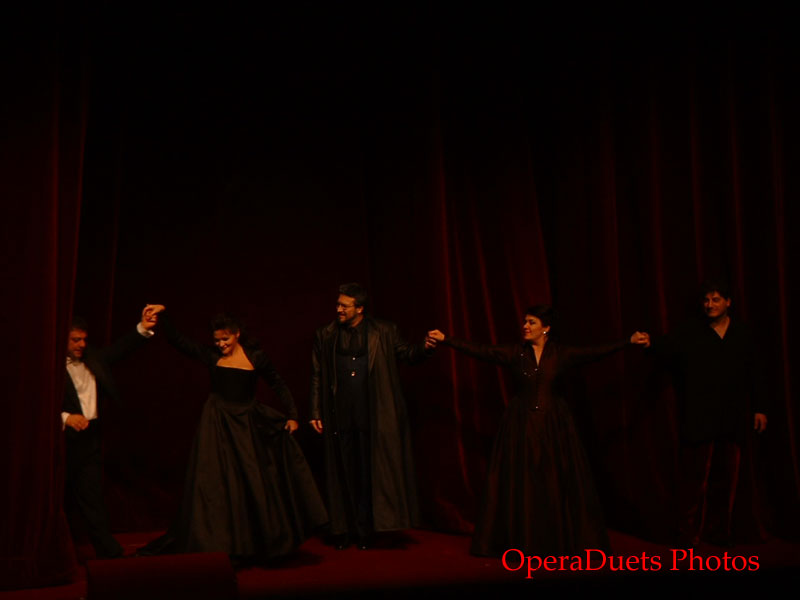
January 16, 2016: Don Carlo in Frankfurt
2016-01-16 Don Carlo (Giuseppe Verdi), Oper Frankfurt

OperaDuets Travel & Photos
Original blog post
For more reviews from my travels, see www.operaduetstravel.com If you want to see more photos from my OperaDuets Travels, go to www.operaduetsphotos.com
Monday, December 18, 2017
December 18, 2006: Don Carlo in Vienna
2006-12-18 Don Carlo (Giuseppe Verdi), Wiener Staatsoper
Philipp II. = Matti Salminen
Don Carlo = José Cura
Rodrigo = Simon Keenlyside
Elisabeth von Valois = Olga Guryakova
Prinzessin Eboli = Luciana D´Intino
Großinquisitor = Kurt Rydl
Mönch = Goran Simic
Tebaldo = Laura Tatulescu
Lerma = Vladimir Moroz
Herold = Vladimir Moroz
Stimme vom Himmel = Ileana Tonca
Marco Armiliato, conductor

Don Carlo (it.)
Dirigent Marco Armiliato
Deputierte aus Flandern:
Hannes Lichtenberger
Karl Nebenführ
Friedrich Springer
Hacik Bayvertian
Gerhard Panzenböck
Josef Stangl
Mario Steller
Hermann Thyringer
I liked this traditional production very well. And they are all singing and acting very well. That Jose Cura was booed on the first night (December 8th) was strange to hear. He certainly sang very well tonight. The trio was also wonderful. Cura does not always have the beautiful sound that Jose Carreras used in the Salzburg production (DVD), but he was still a very good Don Carlo in Vienna. Luciana d'Intino was herself as Eboli, wonderful, but no Baltsa. Olga Guryakova had a wonderful voice and was a good actress. Simon Keenlyside was a really good Posa, I just wish he could have his hands still for longer periods, they were really distracting. Matti Salminen was even better as Filip this time compared to Zurich 25.11.06.
But then there was a conductor, Marco Armiliato, who was slowing the tempi at the most curious times. But Olga Guryakova was such a strong singer she could sing this SLOW "non pianger, mia compagna", many sopranos would been out of breath for this one. Wonderful orchestra, of course, and really great those time the conductor was not slowing the tempi.
Great opera but Jose Cura was not at the stage door, he had just slipped away... But I still got; Luciana, Olga, Simon and Matti.
Rollendebüts
Marco Armiliato (Dirigent),
José Cura (Don Carlo),
Simon Keenlyside (Marquis von Posa),
Olga Guryakova (Elisabeth),
Luciana D´Intino (Eboli)
in Don Carlo
am 8. Dezember 2006
OD Travel + Photos
For more reviews from my travels, see www.operaduetstravel.com
If you want to see more photos from my OperaDuets Travels, go to www.operaduetsphotos.com
Saturday, November 25, 2017
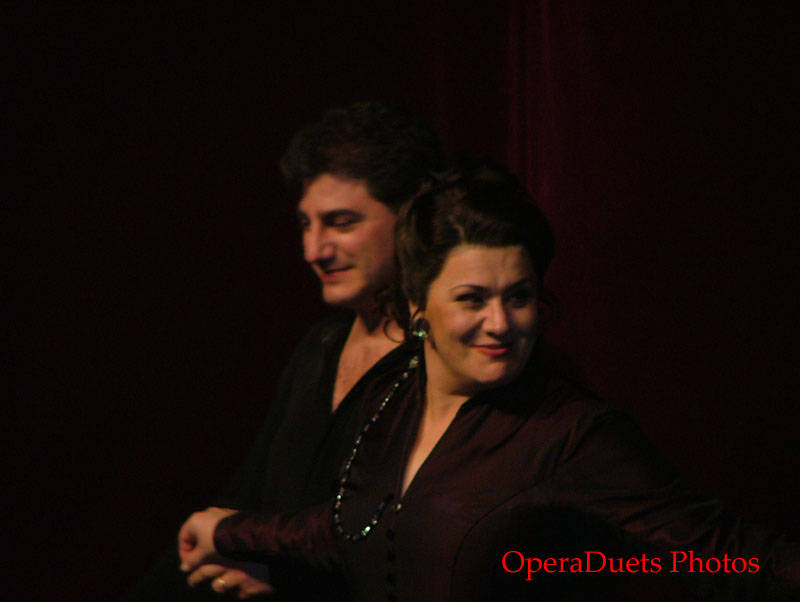
November 25, 2006: Don Carlo in Zurich
2006-11-25 Don Carlo (G. Verdi), Opernhaus Zurich
Elisabeth de Valois = Joanna Kozlowska
Eboli = Luciana d Intino
Tebaldo = Martina Welschenbach
Stimme von Oben = Eva Liebau
Don Carlo = José Cura
Posa = Leo Nucci
Filippo II = Matti Salminen
Grossinquisitor = Pavel Daniluk
Frate = Tomasz Slawinski
Lerma = Miroslav Christoff
Carlo Rizzi, conductor
Dirigent
Carlo Rizzi
Inszenierung
Werner Düggelin
Bühnenbild
Raimund Bauer
Kostüme
Sue Willmington
Lichtgestaltung
Jürgen Hoffmann
Choreinstudierung
Ernst Raffelsberger
Same production as in 2003. First I am a little bit thinking, why this opera again, or this production. Carlo Rizzi's fault I think or the orchestra, the Prelude doesn't sound quite right, I am not happy. The chorus and the Frate (Tomasz Slawinski) is too weak to make any impact. Jose Cura as Don Carlo is already there prostrate at the monastery. This time he is not twitching as much as Don Carlo, he is almost a normal man. "I'ho perduta" is sung but not with his beautiful voice, he is too throaty, at least in the beginning. Leo Nucci comes in as Rodrigo di Posa. They are usually wonderful together, but I still finds flaws. So things are not starting as well as I wish, but maybe it is not Jose's or Leo Nucci's fault, it is the weak bass of the the Frate and the other monks. They are not setting the mood right. Yeah, that's it.
Next scene. The Queen's Garden. Finally the women is singing wonderful setting the right mood. And then she comes, Luciana d'Intino as Eboli. And finally perfect singing. Much better than in 2003. I still find her voice a bit too low or dark. I miss the lightness of Baltsa. BRAVA, Luciana! Joanna Kozlowska comes in next as the queen, Elisabeth de Valois. She is wonderful as the demure queen. The Grande of Spagna, Rodrigo di Posa, Leo Nucci is announced, he carries a letter from the queen mother, but also a note from Carlo. The trio is wonderful, at least Leo Nucci and Luciana d'Intino can sing and act at the same time. Nucci is very playful. Then Elisabeth and Carlo will meet alone, not the thing done in the Spanish court: Jose Cura and Joanna Kozlowska. Beautiful to it staged in a strange way. The King Matti Salminen come and sees his queen all alone... But her wonderful aria "Non pianger, mia compagna" is however beautiful sung not really sung or acted with any understanding of the moment, her best / only friend is being banished from the court, when the king finds the queen alone, humiliating his queen in public. First the aria starts with a quick walked to the other side of the stage with the Countess of Aremburg, but this is nonsensical, and while her friend is crying, this queen looks at the ceiling, it is very awkward. After having insulted his wife, this King Filip II Matti Salminen wants to talk to his Grande de Spagna, Rodrigo de Posa, Leo Nucci. Great duet, but this Posa is really crazy talking like that to his king, difficult to understand why Filip is so understanding. But the singing and acting was superb.
Act 2. Scene 1. A perfect wonderful scene, with Don Carlo Jose Cura believing Eboli Luciana d Intino is Elisabeth. Then Eboli find out, rages, and Rodrigo Leo Nucci tries to save Don Carlo. Absolutely gorgeous singing and acting.
Act 2 Scene 2 Auto-da-fe scene. Wonderful singing acting but really already worn out since 2003, no real shock here for the audience, so somebody is going to be burnt alive, nope, no feeling there. Don Carlo is threatening his father, no nothing there either. They even forgets to arrest Don Carlo, who almost killed his father. No, no, maybe it is our war of terror that are making an auto-da-fe just the everyday thing.
Intermission
Act 3. The great Matti Salminen as Filip II, what could be better. Unfortunately he is getting old and his voice is not really heavy enough any more. Not saying he sang "Ella giammai m'amo" perfectly and acted very well. The when the Grand Inquisitor Pavel Daniluk came, it really never was a doubt who would win this duel / duet. Daniluk had the bigger voice, and Salminen had no chance. Then when Elisabeth Joanna Kozlowska came in and there was another duet. Good, but not great as in 2003 with Colombara and Prokina. Then Elisabeth faints and in burst Posa and Eboli. The duet between Elisabeth and Eboli is wonderful singing. But there is too little acting from Kozkowska and too much from d'Intino. But when Luciana d Intino is left solo, there is another triumph for her, "O don fatale" is a smash hit.
Act 3 Scene 2. Don Carlo is in prison and Rodrigo comes to visit. Rodrigo's death. Filip II come to let Carlo out of prison, and finds out that the wrong man has been executed. The people rebels, want the Infante, Don Carlo free from prison. Inquisitor and Filip quells the rebellion and all is prostrate. Don Carlo Jose Cura, Posa Leo Nucci, Filippo II Matti Salminen, Grossinquisitor Pavel Daniluk are all doing great in this scene.
Act 4. Finally Joanna Kozlowska is redeeming herself and making some wonderful singing and acting. The duet with Jose Cura is wonderful. And they both somehow "survive" (monastery) when Filip and Gran Inquisitore want's a double sacrifice.
OD Travel + Photos
For more reviews from my travels, see www.operaduetstravel.com
If you want to see more photos from my OperaDuets Travels, go to www.operaduetsphotos.com
Thursday, October 19, 2017
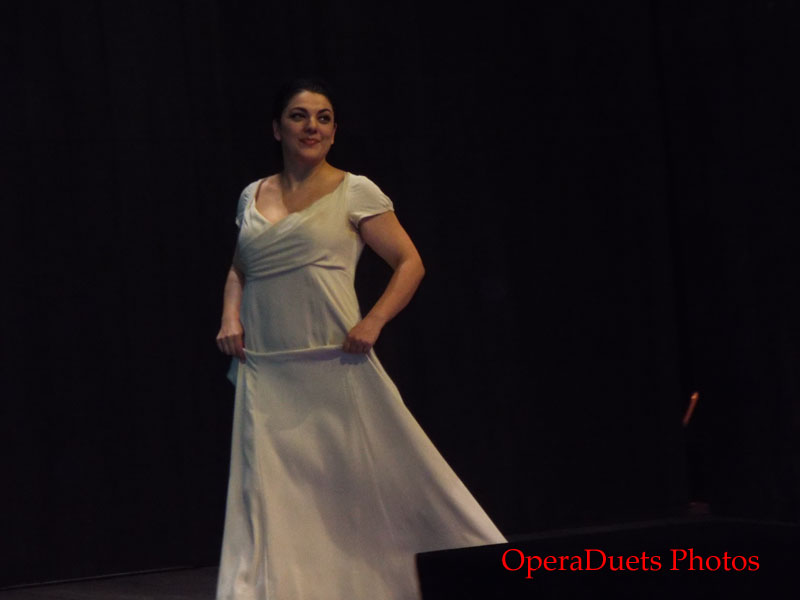
October 19, 2013: Don Carlo in Vienna
2013-10-19 Don Carlo (Giuseppe Verdi), Wiener Staatsoper
Philipp II = Ferruccio Furlanetto
Don Carlo = Ramón Vargas
Rodrigo = Ludovic Tézier
Elisabeth von Valois = Tamar Iveri
Prinzessin Eboli = Violeta Urmana
Großinquisitor = Eric Halfvarson
Mönch = Dan Paul Dumitrescu
Tebaldo = Ileana Tonca
Lerma = Xiahou Jinxu
Herold = Xiahou Jinxu
Stimme vom Himmel = Valentina Nafornita
Franz Welser-Möst, conductor
Daniele Abbado | Regie
Graziano Gregori | Bühnenkonzeption
Angelo Linzalata | Bühne
Carla Teti | Kostüme
Alessandro Carletti | Licht
Boris Stetka | Regiemitarbeit
Simona Bucci | Choreographie
DON CARLO (ITAL.)
Giuseppe Verdi
19. Oktober 2013
19:00-22:30|1 Pausen|Preise G
Did I like the production? Well, it was OK but nothing new and interesting. The stage was just like how do we move this walls around. The effect was nothing really. Costumes good but not amazing. Modern kind of historic. It was the majesty of Ferruccio Furlanetto, the vulnerality of Ramon Vargas, the vigor of Ludovic Tezier, the sweetness of Tamar Iveri, the passion of Violeta Urmana, these singers made the opera real.
Xiahou Jinxu as Lerma/Herold was just wonderful!! A wonderful voice, a skilful presention and a singer for the future. Loved him!!! Of course I adored Ramon Vargas who is a great singer and actor. I found the interaction between Vargas and Ludovic Tezier as Don Carlo and Rodrigo, just perfect. Tezier was a really wonderful Rodrigo. The interaction between Ferrucio Furlanetto and Tamar Iveri as Fillip II and Elisabeth was another high. Vargas as Iveri also very good. I really liked Violeta Urmana and her Eboli.
OD Travel & Photos
Original blog post
For more reviews from my travels, see www.operaduetstravel.com If you want to see more photos from my OperaDuets Travels, go to www.operaduetsphotos.com
Tuesday, July 25, 2017
July 25, 2015: Don Carlo in El Escorial, Madrid
2015-07-25 Don Carlo (Giuseppe Verdi), Teatro Auditorio San Lorenzo de El Escorial (Madrid)
Pelipe II. = John Relyea
Don Carlos = José Bros
Isabel de Valois, tercera esposa de Felipe II = Virginia Tola
Rodrigo, marqués de Posa, amigo y confidente de Don Carlo = Ángel Ódena
Fraile = Simón Orfila
Gran Inquisidor de Espana = Luiz Ottavio Faria
Princesa de Eboli = Ketevan Kemoklidze
Tebaldo = Sonia de Munck
Voz de Cielo = Auxiliadora Toledano
Conde de Lerma = Gerardo Lopez
Maximiano Valdés, conductor
Orquesta de la Comunidad de Madrid
Coro de la Comunidad de Madrid
Coro de la Orquesta Sinfonica Verum
Banda Interna de a Orquesta Sinfonica Verum
Director de escena - Albert Boadella
Escenografía - Ricardo Sánchez Cuerda
Figurinista - Pedro Moreno
Iluminador - Bernat Jansà
Coreógrafo - Amauri Lebrun
Director del Coro - Pedro Teixeira
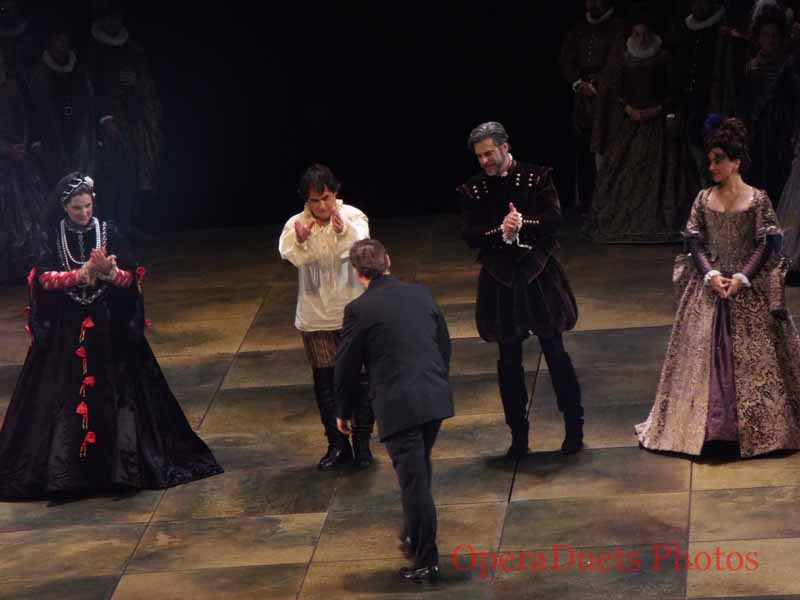
So the idea of Albert Boadella was create a more historical correct Don Carlo by Verdi. So he starts off with putting up the the opera in El Escorial. Escorial is after all mentioned in the opera but non of the action is set there. The places in opera is San Yuste monastery in Extremadura, the Royal Palace in Madrid and in the Queen's Garden there. Outdoors in.a Plaza in Madrid for the auto-da-fe and a prison. The opera is played in the hyper-modern Theatre Auditorio in San Lorenzo de El Escorial. The royal building and monastery called just Escorial in the opera is just some hundreds of meters of The Theatre. El Escorial is a big area with several villages and it an hour away from Madrid.
To make the opera or indeed Schillers play more historical is not easy. Historical correctness was not really something Schiller or later the librettist cared too much about. Schiller did try to get the History Right but in the en it was more important to get the drama right, a compelling story. Lucky as the drama was made into an opera it got a better structure and is much more compelling. Historical it is quite false especially the idea that Don Carlos, Infante of Spain and Elisabeth de Valois was ever in love with each other. But first it was Don Carlos who was going to marry Elisabeth. But then it became obvious that Don Carlos was not the right person and the alliance between France and Spain could only be strengthened by the French King's daughter marry the King of Spain, not just the heir of The Spanish throne.
One of the most interesting conflicts in the opera is between the throne and the altar. How long must the throne bend before the altar. In reality Philip 2 of Spain supported Inquisition fully. Assumed guilty was the King's idea of justice. There was conflict often between The king of Spain and the Pope. Philip believed himself closer to God than the Pope. The Pope was not just a religious leader at this time but a sovereign that often went to war and not always for religious reason. Philip made everything for God. The only acceptable faith was the Roman Catholic faith and that meant all Spaniards should follow Philips. Philip was King, Prophet and Priest, and naturally best pals with God. He often made decisions with the firm belief that God would perform the miracles Philip needed. Europe's history might have seen most different if Philip had been more of a realist than a fanatic.
Don Carlos and Elisabeth de Valois was the same age and died in the same year, a terrible year for poor Philip. The only woman that Don Carlos respected and never was uncivil towards Elisabeth. Maybe Boadella was right that Don Carlos loved Elisabeth with an infantile love. There was nothing in Don Carlos to compel Elisabeth to fall in love in, but there was reasons for compassion. The marriage between Philip and Elisabeth was a happy one. She was his third wife, his second marriage with Maria Tudor of England had not been a happy one, so Philip was devastated when she died because of childbirth. To loose the heir of a kingdom is always a disaster and Philip never wanted Don Carlos dead even as difficult he was and in the end Philip could no longer delude himself that it would be a good idea to have this strange, dangerous person on the Throne of Spain.
The idea of Rodrigo of Rosa is a creation of the times of Schiller who wrote Don Carlo also as a commentary of new idea in politics in Germany. The idealism of Rodrigo does not belong to the century of Philip 2 of Spain. In El Escorial Don Carlos was played as a hunchback with a lame leg and with many nervous ticks. Still someone to trust to change the life of all in the Netherlands. Maybe it was then. The truth about Don Carlos is that he looked at Netherlands and wrote letters to leaders there as he was on the way to treason, and later he attacked his father with a knife or tried. It was popular to tell that Philip killed his son (it was a Protestant rumor). Later a former secretary of Philip, who had managed to run from Spain to England with Death sentence on him. This Secretary Perez had some underhanded affaire with the Princess of Eboli, so he started another rumor that Philip and had an adulterous affair with her. The Princess was dead by that time.
I had come to El Escorial to see an extraordinary Don Carlos but I had seen almost every new thing before. The singing was excellent and the orchestra too. It was a little too much to hint as Elisabeth and Carlos had been childhood friends in the figurines. Eboli looked like historical Eboli with her eye patch. Elisabeth de Valois looked like her historical portrait, same with Philip II but Don Carlos looked too mature but sounded young enough. Don Carlos was unattractive buy the voice was divine.
This was the 4 act Italian version played in the 3 pieces. I love this version but then Rodrigo dies, LACRYMOSA. Until Lacrymosa we have drama going on and working wonderful but then we have "the wonder father-son duet". But it is so illogical and it doesn't fit. Drama just stop up, hi belcanto for no reason, and the scene with fizzles away.
Last act and also the whole opera quietly fizzles away with unnecessary "Carlo il grande imperatore".
OD Travel & Photos
Original blog post
For more reviews from my travels, see www.operaduetstravel.com If you want to see more photos from my OperaDuets Travels, go to www.operaduetsphotos.com
Monday, June 19, 2017
June 19, 2002: Don Carlos in Dusseldorf
2002-06-19 Don Carlos (G. Verdi), Opernhaus Düsseldorf
Philippe II = Stephen Bronk
Don Carlos = Sergej Khomov
Rodrigue = Boris Statsenko
Le Grand Inquisiteur = Hermann Becht
Un Moine = Sami Luttinen
Elisabeth de Valois = Therese Waldner
La Princesse Eboli = Jeanne Piland
Thibault = Anke Krabbe
Une Voix d'en haut = Sylvia Hamvasi
La Comtesse d'Aremberg =
Sonja Behrendt
Le Comte de Lerme = Alexandru lonitza
Un Heraut royal = Marcelo Puente
John Fiore, conductor
Deutsche Oper am Rhein Mittwoch, 19. Juni 2002, 18.00 Uhr Opernhaus Düsseldorf
Giuseppe Verdi
Don Carlos
Grand opera in fünf Akten und acht Bildern Text von Joseph Mery und Camille Du Locle
In der französischen Originalsprache
Musikalische Leitung John Fiore
Inszenierung Christof Loy
Bühne und Kostüme Herbert Murauer
Licht Volker Weinhart
Chor Gerhard Michalski
Spielleitung Volker Böhm
Un Heraut royal. Marcelo Puente*
Deputes flamands .Thilo Dahlmann, Jong-Hwa Kim, Wolf-Hagen Latzei, Daniel Shay*, Jörn E. Werner*, Matthias Wippich
Moines .Thomas Boldt, Thomas Lässig, Iwa-Kyeom Kim,
Elimar Köster, Martin Krämer, Ortwin Rave
Bodyguards. Christian Bock, Stephan Brinkmann, Mario Fernandez, Santiago Mendez, Oliver Schnitzler, Klaus Pütz, John Werschy *Mitglieder des Opernstudios
Der Chor der Deutschen Oper am Rhein
Die Statisterie der Deutschen Oper am Rhein
Die Duisburger Philharmoniker
Bühnenmusik Franz Klee
Wir bitten das Publikum, den Zuschauerraum während der Pausen zu verlassen.
Don Carlos was sung in French, and they all sung well except the American bass Stephen Bronk who sung Escurial (but it is ESCORIAL). A wonderful tenor Sergej Khomow sang Don Carlos extremely well. And Boris Statsenko was incredible as Rodrigue, Marquis de Posa. Therese Waldner was wonderful as Elisabeth de Valois, and Jeanne Piland was absolutely magic as Princess Eboli. Of the three basses, Philippe II, Le Grand Inquisiteur and the Le Moine, it was Sami Luttinen as Le Moine who won the praise. Not that the two others were bad.
OD Travel

Sunday, April 30, 2017
April 30, 2015: Don Carlo in Berlin
2015-04-30 Don Carlo (Giuseppe Verdi), Deutsche Oper Berlin
Philipp II. = Giacomo Prestia
Don Carlo = Rolando Villazón
Rodrigo, Marquis von Posa = Etienne Dupuis
Graf von Lerma / Herold = Gideon Poppe
Der Großinquisitor = Albert Pesendorfer
Ein Mönch = Andrew Harris
Elisabeth von Valois = Kristin Lewis
Prinzessin Eboli = Anna Smirnova
Tebaldo = Alexandra Hutton
Stimme von oben = Siobhan Stagg
1. Flandrischer Deputierter = Michael Rapke
2. Flandrischer Deputierter = Thomas Lehman
3. Flandrischer Deputierter = Seth Carico
4. Flandrischer Deputierter = Carlton Ford
5. Flandrischer Deputierter = Noel Bouley
6. Flandrischer Deputierter = Andrew Harris
Donald Runnicles, conductor
Chor der Deutschen Oper Berlin
Orchester der Deutschen Oper Berlin
Inszenierung, Bühne, Licht - Marco Arturo Marelli
Kostüme - Dagmar Niefind
Chöre - William Spaulding
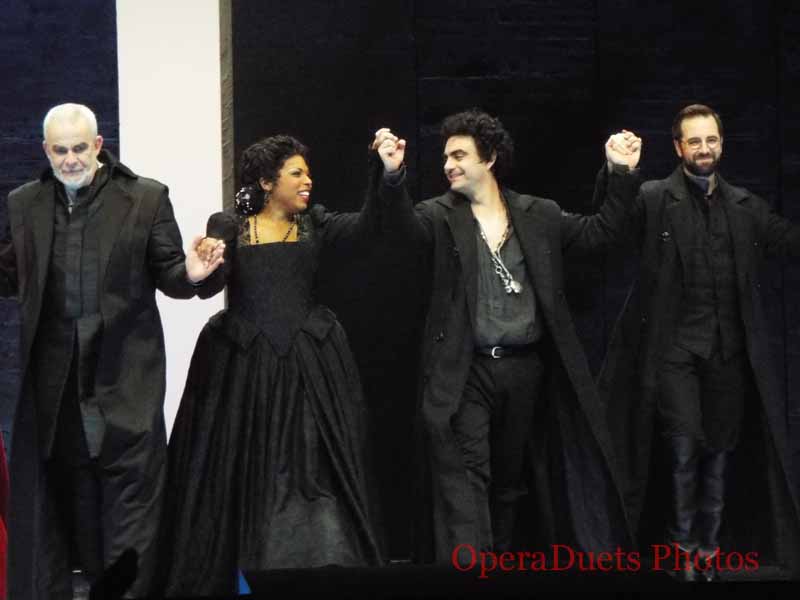
Giacomo Prestia as Felipe II, Rolando Villazon as Don Carlos, Kristin Lewis as Elisabeth de Valois were all great in their roles and singing. Etienne Depuis as Rodrigo, Marquis of Posa was a marvel to hear and see. Gideon Poppe as the Count of Lerma was equally an enjoyment to hear and see. The high and mighty Albert Pesendorfer was the high and mighty Grand'Inquisitor. Anna Smirnova was impressing as Principessa Eboli. As lovely Tebaldo we had the lovely Alexandra Hutton. Siobhan Stagg sang divinely as the Celestial Voice. Andrew Harris was hard pressed to impress as the monk (Carlo Quinto) but he hold his way.
Donald Runnicles was running the show as the conductor making it a Don Carlo to rememmber fondly. Marco Arturo Marelli made the opera work as the director, scenographer and light designer with Dagmar Niefind creating the costumes. William Spaulding as chorus master. Orchestra and Chorus of Deutche Oper Berlin.
A total win on all fronts: musically, theatrically and the choice of Edition was perfect. It was the Italian 4 act version with one interval after 105 minutes of music. No Fontainebleau scene here and no addition of the extra French fuzzies translated into Italian. This was the work as I believe it should always be played.
Kristin Lewis was amazing. AND Rolando Villazon is back!!!!
Etienne Depuis was the best of the best. Remember his name: ETIENNE DEPUIS.
OD Travel & Photos
Original blog post
For more reviews from my travels, see www.operaduetstravel.com If you want to see more photos from my OperaDuets Travels, go to www.operaduetsphotos.com


 Posts

