Pages

Showing posts with label 2012. Show all posts

Saturday, March 3, 2018

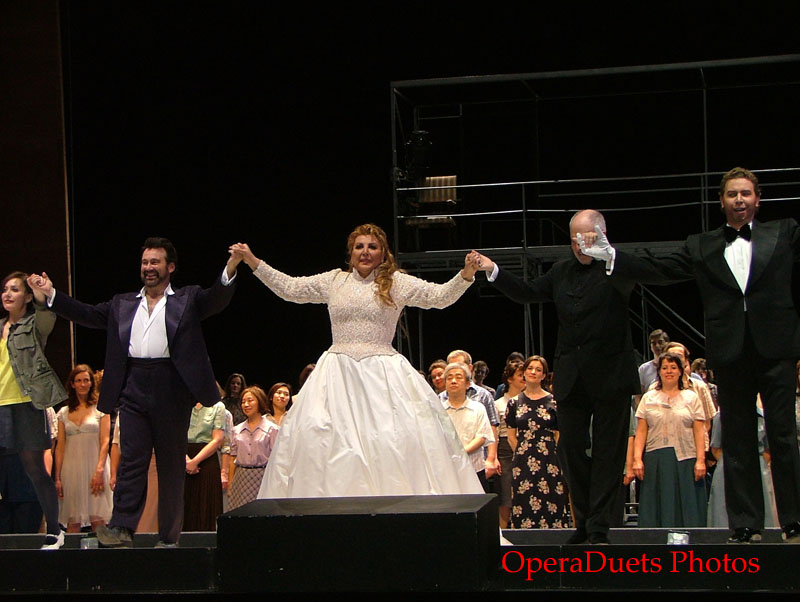
March 3, 2012: Turandot in Berlin

2012-03-03 Turandot (Puccini), Deutsche Oper Berlin

Turandot = Maria Guleghina
Liu = Manuela Uhl
Calaf = Roy Cornelius Smith
Timur = Stephen Bronk
Ping = Alexey Bogdanchikov
Pang = Jörg Schörner
Pong = Yosep Kang
Althoum = Peter Maus
Mandarin = Hyung-Wook Lee
1st voice  = Kathryn Lewek
2nd voice  = Rachel Hauge

Jesus Lopez Cobos, conductor

Director - Lorenzo Fioroni
Stage-design - Paul Zoller
Costume-design - Katharina Gault
Choir Conductor - William Spaulding

Giacomo Puccini
TURANDOT
Online-Karten: € 28,- | 48,- | 69,- | 86,-
[zuzüglich € 2,- Service-Gebühr]

Samstag, 03.03.2012, 19:30 Uhr
Dauer: ca. 2 Stunden 30 Minuten | Eine Pause
Dramma lirico in drei Akten
Libretto von Giuseppe Adami und Renato Simoni, nach dem Schauspiel von Carlo Gozzi
Uraufführung am 25. April 1926 in Mailand
Premiere an der Deutschen Oper Berlin am 13. September 2008

BRAVA, Manuela Uhl!
BRAVO, Roy Cornelius Smith!
BRAVA, Maria Guleghina!!!!!!


I saw this production in 2010 with Maria Guleghina and Jose Cura as Turandot and Calaf. The Regie was the same, offensive nonsense. In 2010 I said not even Maria Guleghina could save it. But she was the saving grace now. She sang the most wonderful IN QUESTA REGGIA and her duets with Roy Cornelius Smith (Calaf) was also pure magic. Manuela Uhl was a fantastic Liu vocally but this was not the best production to showcase her talent. She did well as she acted like the director wanted her too, but that meant she was not able to really be Liu at the same time.

Remembering this Turandot from 2010 made it possible for me just to take in what was right about this Turandot and ignore the nonsense. The singers was in their best form. The chorus sang well. Jesus Lopez Cobos is a wonderful conductor.

It was an amazing operatic evening. Roy Cornelius Smith was just great as Calaf. Maria Guleghina simply was a great Turandot. Biggest surprise for me was Manuela Uhl in her great scene, it was simply unbelievable singing. BRAVA!!!!

OD Travel + Photos
Original blog post


For more reviews from my travels, see www.operaduetstravel.com If you want to see more photos from my OperaDuets Travels, go to www.operaduetsphotos.com

Sunday, January 21, 2018

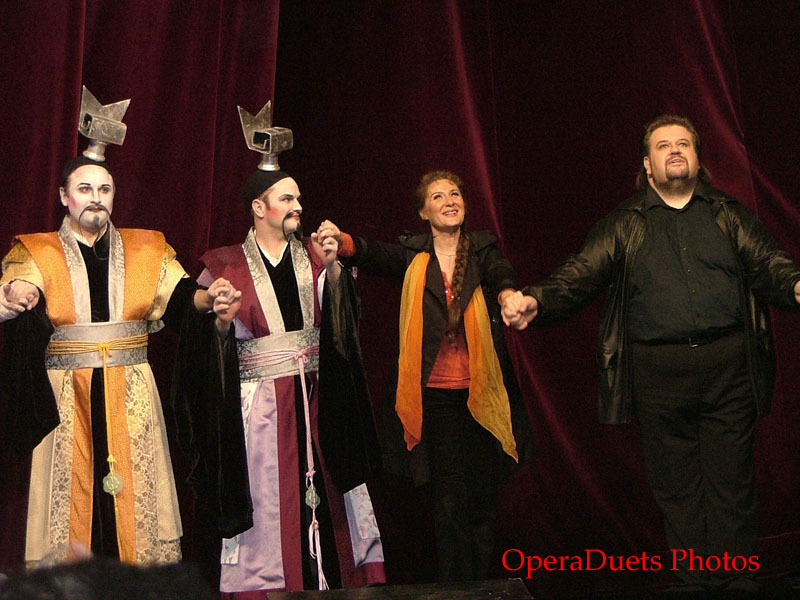
January 21, 2012: Turandot in Zurich

2012-01-21 Turandot (Puccini), Opernhaus Zurich

Turandot = Martina Serafin
Liu = Isabel Rey
Calaf = Johan Botha
Timur = Pavel Daniluk
Ping = Kresimir Strazanac
Pang = Andreas Winkler
Pong = Boguslaw Bidzinski
Althoum = Miroslav Christoff
Mandarin = Valeriy Murga

Massimo Zanetti, conductor

Producer/production - Giancarlo del Monaco
Set design - Peter Sykora
Costumes - Peter Sykora
Lighting - Hans-Rudolf Kunz


I had come to Zurich to see Jose Cura as Calaf. But he got a serious head cold so he couldn't sing. Johan Botha was to sing instead. It was like Lohengrin singing Calaf, I thought. But his large girth did not prevent him much to be an effective Calaf. He has a big and beautiful, clear voice. He stood and delivered the goods, but his acting consisted mainly of smiling. Those smiles seemed to me to come sometimes at inapprobiate times, but maybe it was another way of telling that Calaf is more of a cad than a romantic hero.

Martina Serafin was Turandot. She was very different from Paoletta Marrocu as Turandot in this production. Unfortunately she had some difficulties in the aria "In questa reggia" where the demands of the role seemed to somewhat beyond her so Botha's voice could easily overwhelm her in the "enigmi sono tre, la morte una". Martina Serafin was an otherwise great Turandot who I am sure will be able to takle all the demands of Turandot in a few years.

I also came to Zurich to see Isabel Rey as Liu. She was great. From a somewhat weak Signore, ascolta in the first act to the most wonderful and greatest rendition of Tu che in gel sei cinta. Wow, that was amazing!!!

Pavel Daniluk was simply an amazing Timur. His voice was grand and demanding.

What can one say abou the production? Partly it is super traditional, and partly modern. The action does happen in China, in legendary times. BUT the unknown prince (Calaf), Timur and Liu is dressed modernly. AND Calaf uses a computer to answer the riddles. The audience laughed when Johan Botha took the computer. In April 2006 (last time I saw this production) they did not laugh when Cura took the computer. But naturally it was silly then and now. But I guess then it was not so strange to see the chorus dressed in modern cloths when Turandot tells that she know the name of the stranger: His name is Love. Then we are in modern Shanghai and Turandot disrobes her traditional dress to the modern one, and Calaf and Turandot can enjoy a champagne, romantic meal served by modern times Ping, Pang and Pong.


For more reviews from my travels, see www.operaduetstravel.com If you want to see more photos from my OperaDuets Travels, go to www.operaduetsphotos.com

Friday, December 15, 2017

December 15, 2012: Carmen in Berlin

2012-12-15 Carmen (G. Bizet), 

Carmen = Anita Rachvelishvili
Don José = José Cura
Escamillo = Bastiaan Everink
Micaëla = Martina Welschenbach
Zuniga = Seth Carico
Moralès = Zheng Zhong Zhou
Dancairo = Jörg Schörner
Remendado = Matthew Pena
Frasquita = Hulkar Sabirova
Mercédès = Rachel Hauge

Jacques Lacombe, conductor

Regie (Søren Schuhmacher)
nach der Inszenierung von Peter Beauvais
Bühne, Kostüme - Pier Luigi Samaritani
Überarbeitung der Ausstattung - Norbert Bellen
Chöre - William Spaulding
Kinderchor - Dagmar Fiebach


I just saw my 19th Carmen in theatre. I loved it. And I just realized that this was my first and only Cura performance this year. That was unsuspected. But it was also my 99th to see José Cura. It was the 4th time I saw José Cura as Don José. First time at all with Anita Rachvelishvili. This CARMEN was special mostly because of her. Cura sang well, too. And I liked the old production.

12 years ago, or closer to 13 years ago I saw this production with Agnes Baltsa, Alberto Cupido, Michaela Kaune and Ludovic Tezier. It was a better production then without the new addiction.

The children is fighting as they singing in their angelic voices the soldiers coming and going. Now that is stupid and completely against the words they are singing. The children steals the hat from Don Jose and he has to play and plead to get it back. Now what are that about? And in the 4th act Carmen is now dress like a female matador and Frasquita and Mercedes has black dresses with wings. Black wings like death or something.  The stets for Act 3 was from another Carmen production but that was unnoticeable.

Other than that it was great. It was a lot more dialogue than usual and in what I believe to be superb French.

I saw Carmen in Berlin in 2004 too, with Agnes Baltsa, Julian Gavin, Michaela Kaune and Laurent Naouri.

Anita Rachvellishvili was the perfect Carmen. Huge voice, great personality and great actress. José Cura did his best Don José ever. Then it was the question of Escamillo (Bastiaan Everink) and Micaëla (Martina Welschenbach). Bastiaan Everink looked the part but his singing was stiff. Martina Welschenbach looked very young, very thin, the first Micaela that looks 17. Great voice but I wanted more, not sure what.

Great CARMEN!


Friday, October 13, 2017

October 13, 2012: I Capuleti ed i Montecchi (Bellini) in Oslo

2012-10-13 I Capuleti ed i Montecchi (Bellini), Den Norske Opera & Ballett (Oslo)

Giulietta = Marita Sølberg
Romeo = Vesselina Kasarova
Capellio = Magne Fremmerlid
Tebaldo = Diego Torre
Lorenzo = Yngve André Søberg

Antonio Fogliani, conductor
Den Norske Opera & Ballett

Chorus and Orchestra


It was Vesselina Kasarova's debut in Oslo's new opera house, but it was Marita Sølberg's triumph.

It was strange being in Oslo for an opera. This was a concertant opera. But that was not it. My mother died early Monday morning. And now on Sunday this opera, I Capuleti ed i Montecchi, a Romeo and Julia story. My mother died of breast cancer. This time it had spread through her body.

I still liked Bellini's music and the opera, but I could not get into it. It was too far away from my life. Marita Sølberg was fantastic. Her voice is so warm and so she was the ideal Giulietta. Vesselina Kasarova is, of course, the famous Bulgarian mezzo, but I have never really warmed up to her. She was a teenage Romeo, walking strangely about. Her voice was more soprano than mezzo. Diego Torre was a wonderful Tebaldo. Loved his tenor voice. Magne Fremmerlid as Cappelio and Yngve Andre Søberg as Lorenzo are two amazing basses who sang well. The conductor Antonio Fogliani worked hard to get the right sounds from the orchestra. The chorus sang well. It would have been wonderful if it could have become staged this opera, but that was not to be this time.

OD Travel + Photos
My original blog post

For more reviews from my travels, see www.operaduetstravel.com If you want to see more photos from my OperaDuets Travels, go to www.operaduetsphotos.com
Friday, September 1, 2017

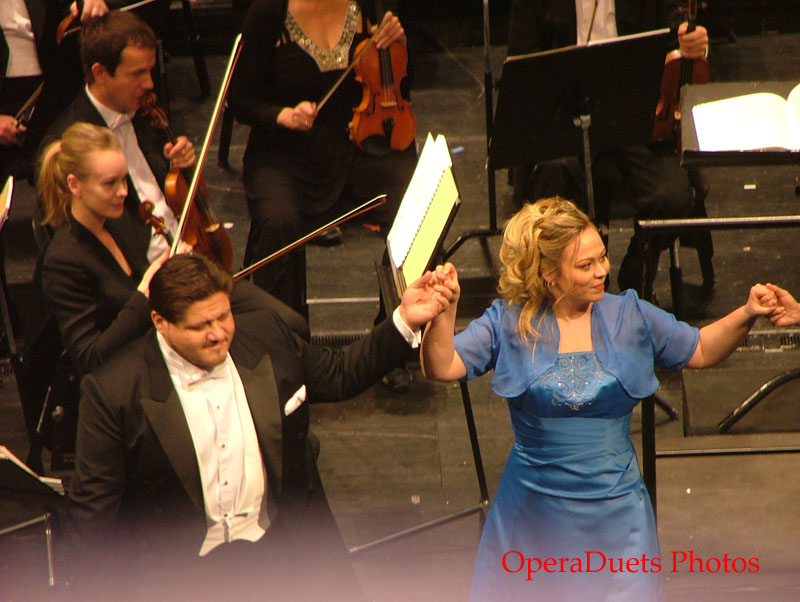
September 1, 2012: Tosca in Stockholm


2012-09-01 Tosca (G. Puccini), Operan (Stockholm)


Floria Tosca = Lena Nordin
Mario Cavaradossi = Thiago Arancam
Baron Scarpia = Fredrik Zetterström
Angelotti = Anton Eriksson
Sagrestano = Magnus Kyhle
Spoletta = Daniel Ralphsson
Sciarrone = Michael Schmidberger
Jailer = Alar Pintsaar

Lawrence Renes, conductor

Stage design: Björn Brusewitz Costumes: Ann-Mari Anttila
Light design: Hans-Åke Sjöquist Producer: Knut Hendriksen


It was a pity I was not there when Jose Cura sang even though I had tickets. I had hoped for another tenor to love.

I did not love this tenor, Thiago Arancam. He was good-looking and could act. He was the ideal Mario Cavaradossi except for his voice. I do not like Jonas-Kaufmann-like tenor voices, they are too dark for me.  There was no announcement that the tenor was not well. The weather was bad, lots of rains so it would not have been strange if it had some impact on the opera singers. But with no announcement and with the enthusiasm of the audience I must believe that the voice I heard on September 1, 2012, was his normal opera voice. He had the weakest voice of all in this performance. His voice was dark and so "covered" that he seem to have to fight to get it out. It is great shame when then tenor can be overwon by the Sagrestano. Magnus Kyhle was magnificent and had a big voice. Lena Nordin as Floria Tosca was likewise in all shapes better than the tenor. The duet was less painful to listen to than the Recondita armonia. But it was act 1 so I thought it must get better. This must just be a bad start. Fredrik Zetterström as Baron Scarpia was perfect in all, singing, acting. Fredrik rules!!!

Act 2 and I am really getting to see the production as it is. And that it is nothing too special. It is a traditional opera production and the only thing that differentiates it from other traditional Tosca productions is that in Act 2 the stage floor is lifted up  while they are singing and we see the dungeon where Cavaradossi is tortured. But Cavaradossi has his back to the audience so it is not like we are really getting some gruesome detailed torture scene. It is rather clean and nice. And when Cavaradossi comes up again from the torture there is no blood that I could see. This is beautiful production that is not daring at all. Fredrik Zetterström, Thiago Arancam and Lena Nordin can all act well and they do it well. Only Fredrik Zetterström and Lena Nordin lifts the act up. Zetterström is the closest to the ideal Scarpia. Lena Nordin is a wonderful Tosca and sings the most vulnerable Vissi d'arte and for the first time the audience interrupts the opera with applause. She deserved the long applause of Wiener Staatsoper and many BRAVA shouts.

Act 3 and for the second time an aria ends in applause. But this time with shouts of BRAVO. For me I can only say yes, he did not completely ruin this aria as he did in Recondita armonia. I was sitting there so decidedly underwhelmed and confused by the "whole" audience going wild for Thiago. THEY loved him, I liked him after all he is the dark good-looking man. He can act.  Then the duet. I wonder how did it feel to be Lena Nordin singing with him. Or maybe she just loved it. I don't know. Lena saved the show!!! But I know I prefer to have a great Tosca, Scarpia AND Cavaradossi in Tosca.

Dear Thiago, you can only be better. I hope this was just this time, but if not, please get help with the issues. Love!!


OD Travel + Photos
Original blog post (Norwegian), Second blog post (English)

For more reviews from my travels, see www.operaduetstravel.com If you want to see more photos from my OperaDuets Travels, go to www.operaduetsphotos.com
Monday, July 3, 2017

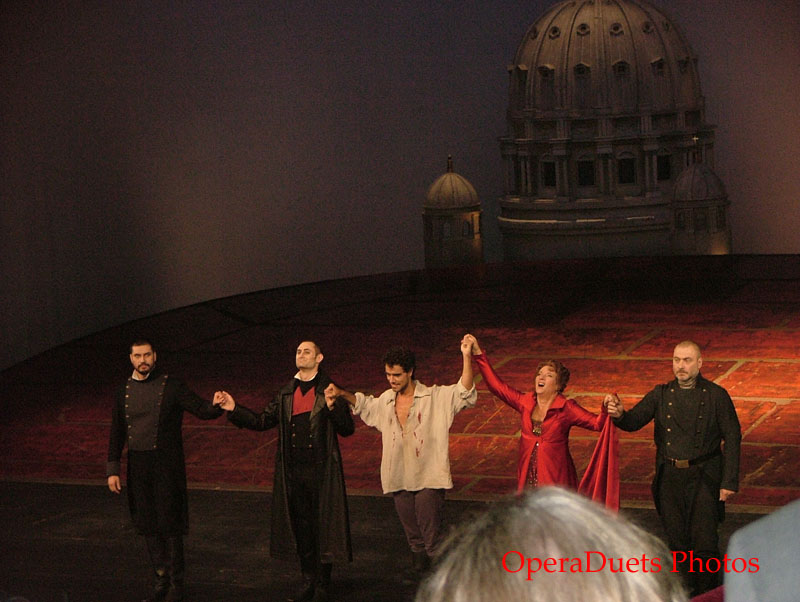
July 3, 2012: Simon Boccanegra in Zurich


2012-07-03 Simon Boccanegra (Verdi), Opernhaus Zurich

Simon Boccanegra = Plácido Domingo
Maria Boccanegra (Amelia) = Barbara Frittoli
Jacopo Fiesco = Carlo Colombara
Gabriele Adorno = Fabio Sartori
Paolo Albiani = Cheyne Davidson
Pietro = Giuseppe Scorsin
Ein Hauptmann der Bogenschützen = Ilker Arcayürek
Eine Dienerin Amelias = Julie Bartholomew

Carlo Rizzi, conductor

Producer/production - Giancarlo del Monaco
Set design - Carlo Centolavigna
Costumes - Maria Filippi
Lighting - Hans-Rudolf Kunz


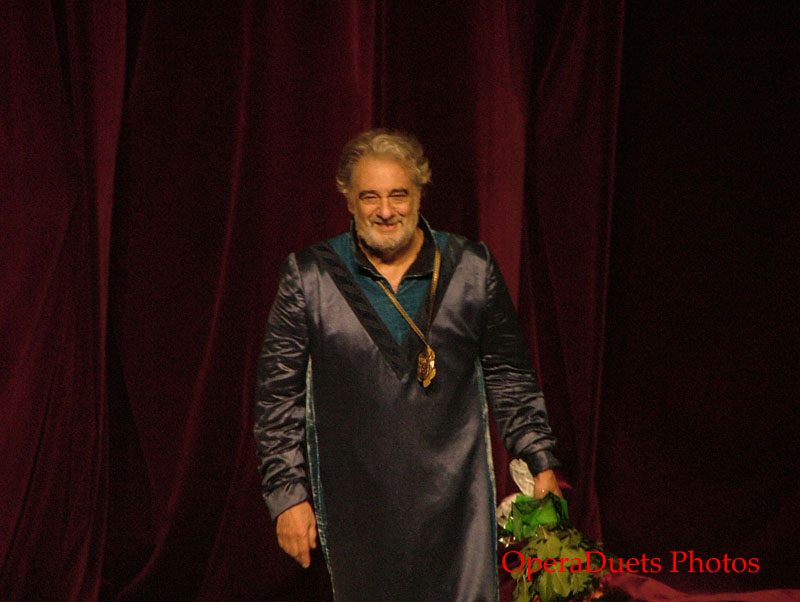
STANDING OVATION FOR PLACIDO DOMINGO IN ZURICH 2012-07-03

Placido Domingo as Simon Boccanegra. The tenor as baritone. The multi-talent Placido Domingo is loved by many but many think he is over-reaching himself. I found him wonderful as Simon Boccanegra but I must accept that had I only listened to him then I might have been more skeptical. The Magic of Placido Domingo was in his abilty not only to sing each note but to do so while acting. Placido Domingo was Simon Boccanegra that night in Zurich. Pure baritones may sing it more beautiful but in acting Placido is a gigant.

Cheyne Davidson sang Paolo Albiani in stead of earlier mentioned Massimo Cavalletti. Cheyne Davidson and Giuseppe Scorsin sanf Paolo and  Pietro. Something made me feel that they were not quite up to par. Paolo lacked his bite and bile. Pietro was a deep-voiced but no depth. Luckily they are not that important except that done properly they do give some extra depth to the story. Otherwise it would just be a family drama and not a political drama.

Placido Domingo clad in brown in the Prologue and he looked just like an old photo of Placido as Otello. So young he was as he lept on stage. And it was with Placido Domingo the opera really started to energize. Next energy burst came with Carlo Colombara as Jacopo Fiesco. The great Italian bass owned the stage during his great aria. Then two gigants Fiesco and Boccanegra, Colombara and Domingo, and wow, what an amazing duet. A duel between the fury of Fiesco and the compassion of Boccanegra.

Act 1 and finally Barbara Frittoli as Amelia. She was stunning. Her voice and acting was amazing. I found her jsut perfect as Amelia. Beauty and style in every ounce. Fabio Sartori was her lover Gabriele Adorno. (This tenor is not a thin man but for once the costume people had chosen cloths that looks good on the not-so-thin people. I hope this is a trend that one will create costumes that looks good on all body-types. But I fear this is knowledge that is forgotten, REVIVE IT PLEASE.) Fabio Sartori has a wonderful tenor voice and was an amazing Adorno.

And what to say more. Act 2 and 3 was wonderful. The sets are beautil and the costumes too. It is a stilistic Genoa we see with the blue sea in the background. During the duet between Boccanegra and Amelia I cried and the end made me cry too. I am sure was weepy during other times of the opera. For me it meant that this SIMON BOCCANEGRA  was great. It touched me. Placido Domingo touched me.

BRAVI, tutti!! BRAVO, Placido!!!


For more reviews from my travels, see www.operaduetstravel.com If you want to see more photos from my OperaDuets Travels, go to www.operaduetsphotos.com
Sunday, July 2, 2017

July 2, 2012: Jose Carreras in Zurich

2012-07-02 Liederabend Jose Carreras, Opernhaus Zurich

Josep Carreras, tenor
Lorenzo Bavaj, piano


PROGRAM
1. Pieta, Signore (Louis Niedermeyer 1802-1861)
2. Il cardellino (Saverio Mercadante 1795-1870)

3. Dolente immagine (Vincenzo Bellini 1801-1835)
4. Malinconia, ninfa gentile (Vincenzo Bellini 1801-1835)

5. Valse Lugubre (Gioacchino Rossini 1792 - 1868)

6. Malia (Francesco Paolo Tosti 1846-1916)
7. Segreto (Francesco Paolo Tosti 1846-1916)
8. L'ultima canzone (Francesco Paolo Tosti 1846-1916)

9. Chanson des yeux (Ruggero Leoncavallo 1857-1919)
10. Serenade Napolitaine (Ruggero Leoncavallo 1857-1919)

Pause

11. Cancion al arbol del olvido (Alberto Ginastera 1916-1963)
12. La rosa y el sauce (Carlos Guatavino 1912-2000)

13. Milonga del Angel (Astor Piazzolla 1921-1992)

14. Del cabello mas sutil (Fernando J. Obradors 1897-1945)
15. L'oroneta (Enric Morera 1865-1942)
16. Intima (Tata Nacho 1894-1968)

17. Muerte del Angel (Astor Piazzolla 1921-1992)

18.  'E rrose e tu (Furio Rendine 1920-1967)
19. Passione (Nicola Valente 1881-1946 and Ernesto Tagliaferri 1889-1937)
20. Vurria (Furio Rendine 1920-1967)


EXTRA NUMBERS
21. Coren'grato by Salvatore Cardillo
22. Dicitencello vuie by Rodolfo Falvo
23. Anema e core by Salvatore d'Esposito
24. Un umbra by Richard Adinsell

STANDING OVATION FOR CARRERAS IN ZURICH 2012-07-02

Opernhaus Zurich was full of people waiting for Carreras to win them over. And he did win. So in the end it was "never-ending" applause and then Standing Ovation.  No Granada or L'emigrant as extra number but still, 4  extra numbers.

Carreras and Lorenzo Bavaj, the pianist, has worked together many times before. Lorenzo Bavaj played 3 piano pieces that showed him as a master pianist. With Carreras he is the loving and knowing accompanist.

During his first song, the prayer Pieta Signore, Carreras had to cough once. If I remember it right his was the only cough during the whole recital. At every 2 or 3 songs Carreras went inside for his glass of water (I believe that is his habit). Refreshed he came out to sing more. At this point of his carreer Carreras is mostly competing against himself and his own CDs. Pieta Signore sadly or happily served as his warming up piece and from there it was only getting better. From the first half I loved especially the songs of Bellini, they are favorites of mine, and Carreras sings them so well.  From the second half I loved most the Spanish songs, El Arbol del Olvido, La Rosa y El Sauce and naturally, Del cabello mas sutil. I am not saying that L'oroneta or Intimo was not great, they were marvellous.

The extra numbers was great. Coren'grato was not a surprise as extra numbers and it is a song loved by Carreras and by the audience. Dicitencello vuie is a beautful song and we loved that too. Anema e core was a suprise and a happy one. Then came the song from the Pure Passion CD  which I thought must be Tsjaikovsky but it was Richard Adinsell.

BRAVO, CARRERAS!!!


For more reviews from my travels, see www.operaduetstravel.com If you want to see more photos from my OperaDuets Travels, go to www.operaduetsphotos.com

Sunday, May 28, 2017

May 28, 2012: Nabucco in Bilbao

2012-05-28 Nabucco (Verdi), Palacio Euskalduna (Bilbao)

Nabucco = Roberto Frontali
Ismaele = Alejandro Roy
Zaccaria = Carlo Colombara
Abigaille = Maria Guleghina
Fenena = Rosanna Rinaldi
High Priest of Belo = Silverio De la O
Abdallo = Eduardo Ituarte
Anna = Ana Otxoa

Massimo Zanetti, conductor
  Orquesta del Teatro Regio di Parma
Coro de Ópera de Bilbao

Director de escena - Daniele Abbado
Scenography - Luigi Perego
Light  design - Valerio Alfieri


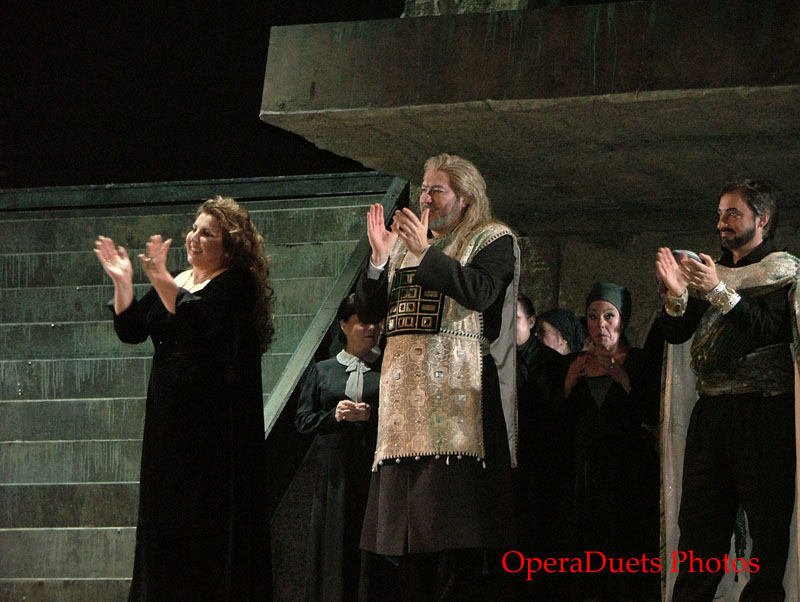
It was the best Nabucco production with the best singers. Only one thing stood out for me as problematic and that was the golden hair of Zaccaria. Golden hair in the Middle East what was that about? Carlo Colombara has dark hair and could have been more authentic as Zaccaria without fake hair. This production of Nabucco was one that seemed to be about authenticity as history goes. Ismaele is clearly marked by his cloths as a Prince of Judea. Zaccaria is also similarly marked an important person. There is no doubt that Nabucco is an Assyrian King. All clearly marked except that one is never shown the chorus in Assyrian cloths. They are always dressed in Jewish cloths. This can be explained by the fact that Jerusalem is taken by Assyrians pretending to be Jews. But that is just true in the first act.

This is a beautiful production, intelligent and wants to be truthful to the libretto. Roberto Frontali, who I have seen as Stankar in the ROH Stiffelio production, was a truly fine Nabucco. Alejandro Joy was wonderful as Ismaele. Strong singing, wonderful acting. Rosanna Rinaldi was also great as Fenena. But the star was Maria Guleghina as Abigaille.

Abigaille can be boring since she is sometime acted as just a one-dimensional villain. Maria Guleghina shows all the different emotions that is Abigaille. She is weak sometimes. In this production one sees Abigaille hesitate in some crucial moment. How ambitious is she? She vacillate between power and love. Most of all she wants to be accepted as Nabucco's daughter and to be loved by Ismaele. Her feelings for her sister Fenena is also torn. Love and envy. So Nabucco changes into a believer of the God of Judea. As Abigaille loses her life she is also going to her redemption and I personally believe more in Abigaille change. Nabucco is just about his daughter Fenena.

I love Abigaille! And Maria Guleghina as Abigaille is just amazing!!!!!!!!!!!!!!!!!!!!!


OD Travel + Photos
Original blog post


For more reviews from my travels, see www.operaduetstravel.com If you want to see more photos from my OperaDuets Travels, go to www.operaduetsphotos.com
Friday, May 26, 2017

May 26, 2012: La Chulapona in Madrid

2012-05-26 La Chulapona (Moreno Torroba), Teatro de la Zarzuela (Madrid)

Manuela = Cristina Faus
Rosario = Susana Cordón
José María = Antonio Gandía
Juan de Dios = Carlos Crooke
Señor Antonio =Luis Alvarez
Doña Venustiana = Charo Reina
El Chalina = Jesus Castejón
Don Epifanio = Gerardo Malla
Emilia = Raquel Torres
Organillero = Jesus Alcaide
Lolita = Ana Santamaria
Ascensión = Isabel Gonzalez
Concha = Ada Rodriguez
Ist Guard = Keni Roldan
2nd Guard = Abel Garcia
Manolito = Neric Forcada / Raul Ruiz / Pedro de la Torre
Chico de la taberna = José Varela
Cantaora = Eva Duran
Ganadero = Saturnino Garcia
Maestro Cansino = Juan Rueda
Maravilla = Maria Briones
Guadalupe = Sagrario Mielgo
Engargado de Café = Juan Luis Cobo
Durmiente = Jesus Landin
Plachandoras = Rosa Maria Gutierrez, Carmen Gaviria, Paloma Curros
Zapatero = Carlos Duran
Hojolatero = Pedro Azpiri
Cliente = Gustavo Berliete
Voz Interna = Paloma Suarez
Giutarrista = José Maria Molero
Invitado = Ignacio Del Castillo


Dirección musical: Miquel Ortega

Dirección de escena: Gerardo Malla
Escenografía y figurines: Mario Bernedo
Coreografía: Goyo Montero
Iluminación: Eric Teunis


La Chulapona
Del 4 de Mayo al 3 de Junio de 2012 (excepto lunes y martes)
Miércoles (Día del espectador) y domingos, a las 18:00 horas
Funciones de abono: 24, 25, 26 y 27 de Mayo de 2012
Comedia lírica en tres actos
Música de Federico Moreno Torroba
Libro de Federico Romero y Guillermo Fernández-Shaw
Estrenada en el Teatro Calderón de Madrid,
el 31 de Marzo de 1934
Producción del Teatro de la Zarzuela, 1988
Edición a cargo de Federico Moreno-Torroba Larregla
(Ediciones Iberautor, SRL / Instituto Complutense de Ciencias Musicales, 2005)


Yesterday was veterans showing how to sing and act, today was the young and coming up showing their colors. Another Manuela, Rosario and Jose Maria. But still great singing and acting. I was so used to a blond Rosario than I almost missed Susana Cordons entrance. This was another Rosario, but it was hard to tell in which way she differed from Carmen Gonzalez. The young Rosario was not so ironic and seemed softer. Cristina Faus was todays Manuela. Younger voice, and amazing but still I must say Milagros Martin could still be someone that Cristina Faus should look after in order to be even better. Antonio Gandia as Jose Maria was also wonderful.

The whole experience of what a zarzuela is made me think it more like a musical than simply operetta. It is vocally demanding like an opera, expects dancing skills more like in a musical. How I wish I understood Spanish! The dialogue is demanding and singing superb in a zarzuela. It is stylistic and naturalistic in combination. LOVED IT...


OD Travel
Original blog post


For more reviews from my travels, see www.operaduetstravel.com If you want to see more photos from my OperaDuets Travels, go to www.operaduetsphotos.com

Thursday, May 25, 2017

May 25, 2012: La Chulapona in Madrid


2012-05-25 La Chulapona (Moreno Torroba), Teatro de la Zarzuela (Madrid)

Manuela = Milagros Martín
Rosario = Carmen González
José María = Marcelo Puente
Juan de Dios = Carlos Crooke
Señor Antonio =Luis Alvarez
Doña Venustiana = Charo Reina
El Chalina = Jesus Castejón
Don Epifanio = Gerardo Malla
Emilia = Raquel Torres
Organillero = Jesus Alcaide
Lolita = Ana Santamaria
Ascensión = Isabel Gonzalez
Concha = Ada Rodriguez
Ist Guard = Keni Roldan
2nd Guard = Abel Garcia
Manolito = Neric Forcada / Raul Ruiz / Pedro de la Torre
Chico de la taberna = José Varela
Cantaora = Eva Duran
Ganadero = Saturnino Garcia
Maestro Cansino = Juan Rueda
Maravilla = Maria Briones
Guadalupe = Sagrario Mielgo
Engargado de Café = Juan Luis Cobo
Durmiente = Jesus Landin
Plachandoras = Rosa Maria Gutierrez, Carmen Gaviria, Paloma Curros
Zapatero = Carlos Duran
Hojolatero = Pedro Azpiri
Cliente = Gustavo Berliete
Voz Interna = Paloma Suarez
Giutarrista = José Maria Molero
Invitado = Ignacio Del Castillo


Dirección musical: Miquel Ortega

Dirección de escena: Gerardo Malla
Escenografía y figurines: Mario Bernedo
Coreografía: Goyo Montero
Iluminación: Eric Teunis


Finally at 2000 LA CHULAPONA in Teatro de la Zarzuela with Milagros Martin as Manuela and Carmen Gonzalez as Rosario. The production is from 1988 and there exists a DVD from it also with Milagros Martin and Carmen Gonzalez.

Despite I still don't understand all that much Spanish I understood much more than I did in 1989 when I saw this zarzuela during the Edinburgh Festival. I love zarzuela and have recently started a small collection of zarzuelas. Federico Moreno Torroba (the composer) is a genius and the music in Chulapona is just marvellous. Naturally I have the CD with Teresa Berganza as Manuela and the wonderful Pilar Lorengar as Rosario. A wonderful CD with the perfect Manuela and perfect Rosario.

24 years after the premiere are Milagros Martin and Carmen Gonzalez still the perfect Manuela and Rosario. Aged but like fine wine only better and more refined than ever. Marcelo Puente in the role of Jose Maria, loved by these two different women, was also wonderful.

OD Travel
Original blog post


For more reviews from my travels, see www.operaduetstravel.com If you want to see more photos from my OperaDuets Travels, go to www.operaduetsphotos.com
Saturday, April 15, 2017

April 15, 2012: Strauss and Wagner in Sogndal, Norway


2012-04-15 Strauss/Wagner, Sogndal Kulturhus

Elena Nebera, soprano
Jørgen Halstein Moe, baritone

Michael Pavelich, conductor
Opera Nordfjord


Program

Richard Wagner (1813-1883)

Die Meistersinger von Nürnberg - Vorspiel
Orchestra

Tannhäuser - O, du mein holder Abendstern
Trond Halstein Moe  

Tannhäuser - Dich, teure Halle
Elena Nebera

Der Fliegende Holländer - Wie aus der Ferne
Trond Halstein Moe, Elena Nebera

Götterdämmerung - Siegrieds Trauermarch
Orchestra

Die Walküre - Wotan Abschied
Trond Halstein Moe

PAUSE

Richard Strauss (1864-1949)

Rosenkavalier suite, op. 59
Orchestra

Vier letzte Lieder (Frühling, September, Beim Schlafengehen, Im Abendrot)
Elena Nebera


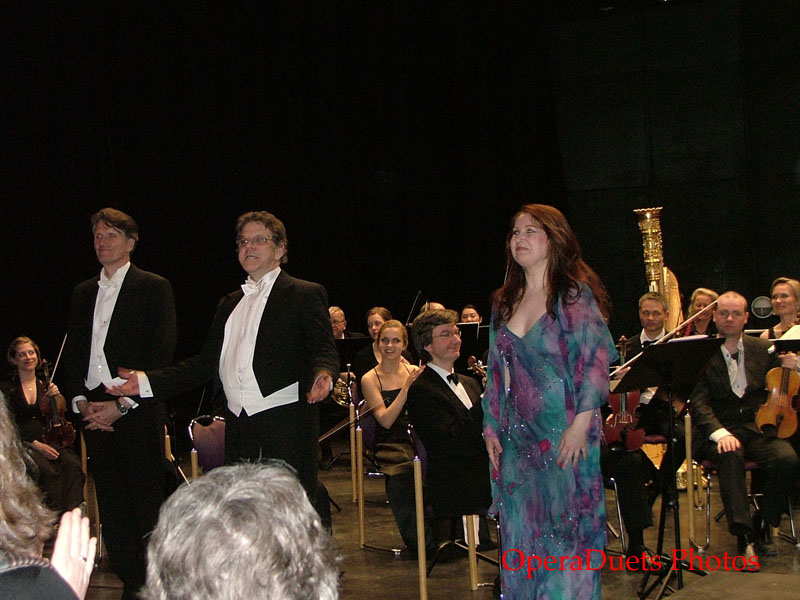
In stead of Norwegian Soprano Turid Karlsen we got Elena Nebera, a wonderful Russian Soprano.

Elena Nebera was just a wonderful revelation. Passionate and always involved with the words and the drama. Her voice rides easilly above the orchestra. She has a very dark timbre in her voice. Her voice seemed to be to big for our little sale especially in the Last 4 songs by Richard Strauss. Dich teure Halle from Tannhäuser was just amazing, wonderful. It was worth going just for that. And then the love duet from The Flying Dutchman, wonderful.


Trond Halstein Moe disappointed me in Wolframs aria from Tannhäuser. Then came Elena Nebera and saved it. But appart from the first aria Trond Halstein Moe was wonderful. He read the Norwegian translation of Wotans farewell from Die Walküre before he sang it so that we should understand the text and he did the same for Strauss' Vier letzte Lieder.

Michael Pavelich and the orchestra of Opera Nordfjord was just wonderful. No extra numbers because several members needed to travel to other places like Sweden. The life of a musician is hard.

BRAVA, ELENA NEBERA!


OD Travel + Photos
Original blog post


For more reviews from my travels, see www.operaduetstravel.com If you want to see more photos from my OperaDuets Travels, go to www.operaduetsphotos.com