Sunday, November 29, 2009

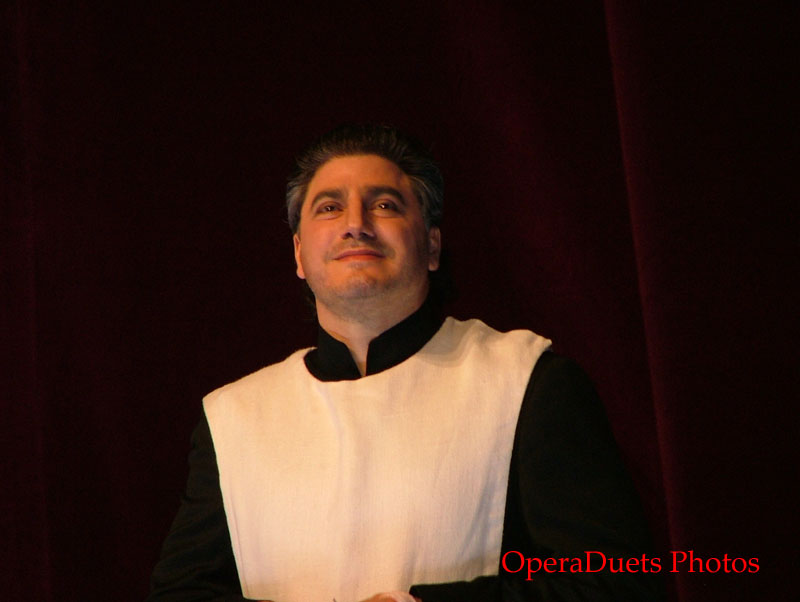
November 29, 2002: Jose Cura in Vienna

2002-11-29 Opera Arias & Symphonic Concert, Konzerthaus Wien

José Cura, tenor & conductor
Sinfonia Varsovia
Pietro Veneri, conductor

José Cura in Concert, Konzerthaus Wien
Sinfonia Varsovia
José Cura, tenor and conductor
Pietro Veneri, conductor
Composers: Ponchielli, Verdi, Boito, Giordano,
Meyerbeer, Panizza, Rachmaninow


P R O G R A M M E
Part 1
Amilcare Ponchielli
Cielo e mar, scena & aria ( Enzo from «La Gioconda») (1876)

Giuseppe Verdi
O figli, o figli mei ... Ah, la paterna mano, scena & aria
(Macduff from «Macbeth») (1847)

Ouverture «Les vêpres siciliennes» (1855) Cura conducts

Ah si. ben dite .... Tutto parea sorridere (Corrado from «Il Corsaro»)

Arrigo Boito
Giunto sul passo estremo (Faust from «Mefistofele») (1868)

Umberto Giordano
Prelude 2. Act from the opera «Siberia» Cura conducts

Giacomo Meyerbeer
Mi batte il cor ... O paradiso (Vasco from «L'Africana») (1865)

Panizza
La Cancion a la Bandera (Mariano from «Aurora»)

------------------- Pause ------------------- Part 2


Sergei Rachmaninov
Second Symphony in E minor opus 27 (1906-1907) Cura conducts


Extra-numbers:


Ouverture, Guglielmo Tell (Rossini)


Nessun dorma

How can one compare a studio recording to a live concert? It is impossible for me, it was live, it was wonderful to look at José Cura conducting his Sinfonia Varsovia. And in the end, he just started the orchestra to get into a joyous musical moment, unfortunate I don't know which music that played, only that Cura started the orchestra and then he left. But luckily he came back to give us an extra number, Nessun Dorma.

And naturally did the Konzerthaus Wien give us opportunity to buy his Aurora CD and the Rachmaniov CD, and then we could stand in line for his autograph and maybe a photo of the great maestro.
-------------------------------------------------------------------------
José Cura 29.11.2002
COMPARISON: CD and November 29th, 2002 (Part 1):

Aurora, opera arias

1- Canción a la Bandera / Aurora, (Hector Panizza)
2- Svanir le voci! ... Meco all' altar di Venere... Me protegge, me difende / Norma (Vincenzo Bellini)
3- Ah si, ben dite... Tutto parea sorridere / Il Corsaro (Giuseppe Verdi)
4- Oh! fede negar potessi .... Quando le sere al placido / Luisa Miller (Giuseppe Verdi)
5- Mi batte il cor ... O Paradis / L'Africana (Giacomo Meyerbeer)
6- Giunto sul passo estremo / Mefistofele (Arrigo Boito)
7- Sia gloria ai canti dei naviganti! ... Cielo e mar / La Gioconda (Amilcare Ponchielli)
8- Ed anche Beppe amó / L'amico Fritz (Pietro Mascagni)
9- Preludio. Atto II / Siberia (Umberto Giordano)
10- Orride steppe / Siberia (Umberto Giordano)
11- Intermezzo Epico / Aurora (Hector Panizza)

As one can see from the list of the CD and 1rst part of this concerts, they are very similar, which makes it easier to make a comparison. On the CD Cura conducts it all. In the concert it was Veneri who conducted the arias. And here is the biggest difference, I find José Cura's reading of the score's more romantic, well, I liked his conducting better than Veneri's. Not that I found Veneri lacking in the concert, but when listening to the CD I know what I like best. Naturally I would have liked very much to hear and see Cura in the flesh singing the arias from Norma, Luisa Miller. L'Amico Fritz and the aria from Siberia. But I guess that Cura had to spare himself after all he was to conduct the 2nd symphony of Rachmaniov after the interval. In the aria concert I found Cura singing from Macbeth and Mefistofele as the two most beautiful vocal moments. And I enjoyed Cura conducting the Ouverture from I Vespri Siciliani and the Prelude from Siberia.

For more reviews from my travels, see www.operaduetstravel.com
If you want to see more photos from my OperaDuets Travels, go to www.operaduetsphotos.com
Saturday, November 28, 2009

November 28, 1989: Otello in Oslo

1989-11-28 Otello (Verdi), Den Norske Opera (Oslo)

Otello = Osvaldo di Pianduni
Desdemona =
Frøydis Klausberger
Iago = Knut Skram
Emilia = Torhild Staahlen
Cassio = Arild Helleland
Rodrigo = Stein Erik Sagbråten
Lodovico = Bjørn Mørch-Olsen
Montano = Jens Olai Justvik

Martin Turnovsky, conductor

For more reviews from my travels, see www.operaduetstravel.com
If you want to see more photos from my OperaDuets Travels, go to www.operaduetsphotos.com

Wednesday, November 25, 2009

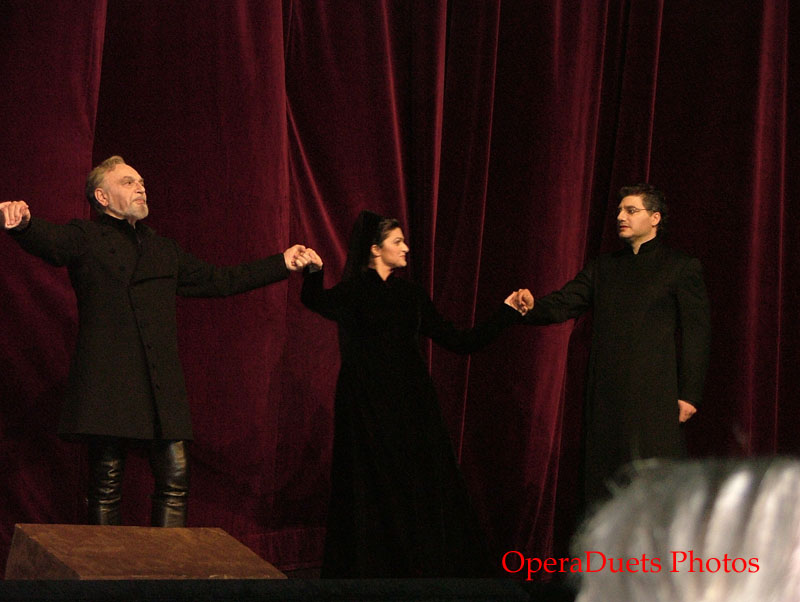
November 25, 2006: Don Carlo in Zurich

2006-11-25 Don Carlo (G. Verdi), Opernhaus Zurich

Elisabeth de Valois = Joanna Kozlowska
Eboli = Luciana d Intino
Tebaldo = Martina Welschenbach
Stimme von Oben = Eva Liebau
Don Carlo = José Cura
Posa = Leo Nucci
Filippo II = Matti Salminen
Grossinquisitor = Pavel Daniluk
Frate = Tomasz Slawinski
Lerma = Miroslav Christoff

Carlo Rizzi, conductor

Dirigent
Carlo Rizzi


Inszenierung
Werner Düggelin


Bühnenbild
Raimund Bauer


Kostüme
Sue Willmington


Lichtgestaltung
Jürgen Hoffmann


Choreinstudierung
Ernst Raffelsberger


Same production as in 2003. First I am a little bit thinking, why this opera again, or this production. Carlo Rizzi's fault I think or the orchestra, the Prelude doesn't sound quite right, I am not happy. The chorus and the Frate (Tomasz Slawinski) is too weak to make any impact. Jose Cura as Don Carlo is already there prostrate at the monastery. This time he is not twitching as much as Don Carlo, he is almost a normal man. "I'ho perduta" is sung but not with his beautiful voice, he is too throaty, at least in the beginning. Leo Nucci comes in as Rodrigo di Posa. They are usually wonderful together, but I still finds flaws. So things are not starting as well as I wish, but maybe it is not Jose's or Leo Nucci's fault, it is the weak bass of the the Frate and the other monks. They are not setting the mood right. Yeah, that's it.

Next scene. The Queen's Garden. Finally the women is singing wonderful setting the right mood. And then she comes, Luciana d'Intino as Eboli. And finally perfect singing. Much better than in 2003. I still find her voice a bit too low or dark. I miss the lightness of Baltsa. BRAVA, Luciana! Joanna Kozlowska comes in next as the queen, Elisabeth de Valois. She is wonderful as the demure queen. The Grande of Spagna, Rodrigo di Posa, Leo Nucci is announced, he carries a letter from the queen mother, but also a note from Carlo. The trio is wonderful, at least Leo Nucci and Luciana d'Intino can sing and act at the same time. Nucci is very playful. Then Elisabeth and Carlo will meet alone, not the thing done in the Spanish court: Jose Cura and Joanna Kozlowska. Beautiful to it staged in a strange way. The King Matti Salminen come and sees his queen all alone... But her wonderful aria "Non pianger, mia compagna" is however beautiful sung not really sung or acted with any understanding of the moment, her best / only friend is being banished from the court, when the king finds the queen alone, humiliating his queen in public. First the aria starts with a quick walked to the other side of the stage with the Countess of Aremburg, but this is nonsensical, and while her friend is crying, this queen looks at the ceiling, it is very awkward. After having insulted his wife, this King Filip II Matti Salminen wants to talk to his Grande de Spagna, Rodrigo de Posa, Leo Nucci. Great duet, but this Posa is really crazy talking like that to his king, difficult to understand why Filip is so understanding. But the singing and acting was superb.

Act 2. Scene 1. A perfect wonderful scene, with Don Carlo Jose Cura believing Eboli Luciana d Intino is Elisabeth. Then Eboli find out, rages, and Rodrigo Leo Nucci tries to save Don Carlo. Absolutely gorgeous singing and acting.

Act 2 Scene 2 Auto-da-fe scene. Wonderful singing acting but really already worn out since 2003, no real shock here for the audience, so somebody is going to be burnt alive, nope, no feeling there. Don Carlo is threatening his father, no nothing there either. They even forgets to arrest Don Carlo, who almost killed his father. No, no, maybe it is our war of terror that are making an auto-da-fe just the everyday thing.

Intermission

Act 3. The great Matti Salminen as Filip II, what could be better. Unfortunately he is getting old and his voice is not really heavy enough any more. Not saying he sang "Ella giammai m'amo" perfectly and acted very well. The when the Grand Inquisitor Pavel Daniluk came, it really never was a doubt who would win this duel / duet. Daniluk had the bigger voice, and Salminen had no chance. Then when Elisabeth Joanna Kozlowska came in and there was another duet. Good, but not great as in 2003 with Colombara and Prokina. Then Elisabeth faints and in burst Posa and Eboli. The duet between Elisabeth and Eboli is wonderful singing. But there is too little acting from Kozkowska and too much from d'Intino. But when Luciana d Intino is left solo, there is another triumph for her, "O don fatale" is a smash hit.

Act 3 Scene 2. Don Carlo is in prison and Rodrigo comes to visit. Rodrigo's death. Filip II come to let Carlo out of prison, and finds out that the wrong man has been executed. The people rebels, want the Infante, Don Carlo free from prison. Inquisitor and Filip quells the rebellion and all is prostrate. Don Carlo Jose Cura, Posa Leo Nucci, Filippo II Matti Salminen, Grossinquisitor Pavel Daniluk are all doing great in this scene.

Act 4. Finally Joanna Kozlowska is redeeming herself and making some wonderful singing and acting. The duet with Jose Cura is wonderful. And they both somehow "survive" (monastery) when Filip and Gran Inquisitore want's a double sacrifice.

For more reviews from my travels, see www.operaduetstravel.com
If you want to see more photos from my OperaDuets Travels, go to www.operaduetsphotos.com
Tuesday, November 24, 2009

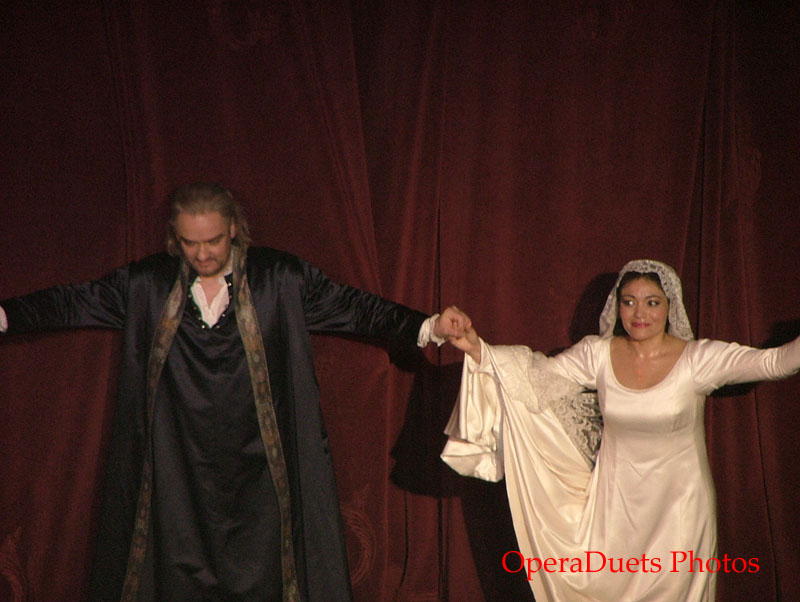
November 24, 2007: Elektra in Budapest

2007-11-24 Elektra (R.Strauss), Magyar Állami Operaház

Klytämnestra = Agnes Baltsa
Elektra = Nadine Secunde
Chrysothemis = Bátori Éva
Aegisthos = Gulyás Dénes
Orestes = Perencz Béla
Orestes nevelője - Cser Krisztián
Klytemneistra bizalmasa - Balogh Tímea
Uszályhordozónő - Polyák Valéria
Fiatal szolga - Megyesi Zoltán
Öreg szolga - Szegedi Csaba
A felügyelőnő - Kukely Júlia
1. szolgáló - Balatoni Éva
2. szolgáló - Érsek Dóra
3. szolgáló - Mester Viktória
4. szolgáló - Fodor Beatrix
5. szolgáló - Wierdl Eszter

Kovács János, conductor
Magyar nyelvű feliratok / Hungarian textMesterházi Máté
Rendező / DirectorKovalik Balázs
Díszlettervező / stage designer Antal Csaba
Jelmeztervező / costume designerBenedek Mari
Karigazgató / Chorus MasterSzabó Sipos Máté


It is Premiere of Elektra and the opera house is wrapped in red on this occasion. Only two things bothered me: that my seat got very uncomfortable after 70 min's plus of Opera, real pain in my ..., and the end where Orest kills both his sisters with a machine gun, so totally unnecessary.

Nadine Secunde was great as Elektra (no surprise there), Eva Batori was wonderful as Chrysothemis. Agnes Baltsa was magnetic as Klytämnestra.

The production: Modern and set in a bath. It started startlingly with the opera house completely dark and then suddenly some light and the thunder of Straussian music. And unlike the Vienna production we could see the people and different types and real human being. The very self-assured über-type of woman, from the more submissive one. But to be onstage without shoes, naked but for some bathrobe or just a towel wrap round the bodies, I would guess they look forward to get dressed again. Some nakedness occurred, only male, and for a short time. Elektra had a black dress (dressed as widow), Chrysothemis in white (dressed as a bride). Klytämnestra also had black dress and a white fur robe. Orest dressed very formally but with sunglasses. Aigist had only a white bathrobe which made him very self-conscious when taking the bow at the end.

The changing of color lighting the stage was very well done. So naturally it got to be very red during some parts of the Elektra/Klytämnestra scene. The symbolism when Klytämnestra was killed was perfectly. No such symbolism for Aigist.

In the end after the murders:Chrysothemis was first greeted by Orestes people as Princess and goes out to dress herself as a new Klytämnestra. Elektra also changes out with the old puff, and a white robe is over the old black. But Elektra is not ready for the happiness, she struggles with the Agamemnon tree to Klytämnestra's bed, the power lies in the bed. She is clearly exhausted. But instead of having her die in the bed of mental exhaustion Orest has her killed with a machine gun. Two shots is heard, so when Orest is supposed to kill Chrysothemis with his second bullet, all Eva Batori can do is to drop dead with no sound.

The end ruined it, when Orest kills his sisters that does not make it a Real Greek Tragedy, but if his two sisters died just of exhausted minds when Orest should celebrate his triumph. THAT WOULD BE Greek Tragedy.

For more reviews from my travels, see www.operaduetstravel.com
If you want to see more photos from my OperaDuets Travels, go to www.operaduetsphotos.com
Monday, November 23, 2009

November 23, 2007: Tosca in Vienna

2007-11-23 Tosca (G.Puccini), Wiener Staatsoper

Mario Cavaradossi = José Cura
Floria Tosca = Amarilli Nizza
Baron Scarpia = Marco Vratogna
Cesare Angelotti = Boaz Daniel
Der Mesner = Lars Woldt
Spoletta = Benedikt Kobel
Sciarrone = Clemens Unterreiner
Ein Schließer = Goran Simic

Paolo Carignani, conductor

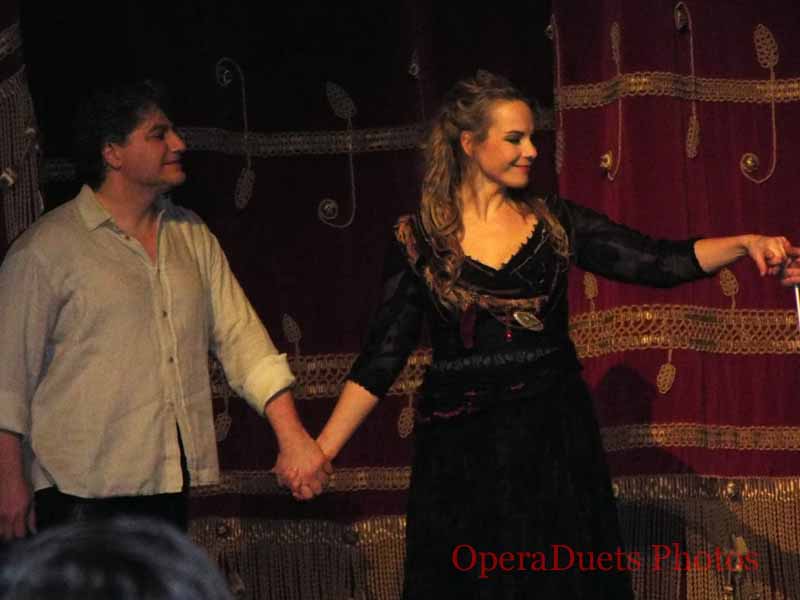
Tosca with José Cura as Mario Cavaradossi.

Tosca no 517:
Inszenierung Margarethe Wallmann
Bühnenbild und Kostüme: Nicola Benois


I missed a great Scarpia, Ruggero Raimondi is always great as Scarpia. Amarilli Nizza was Ok as Tosca. Liked her Vissi d'arte. José Cura and the conductor was not always in agreement. Cura wanted to be faster. He was also acting in a way inconsistent with the times, Neapolitan time. This was a very traditional Tosca with beautiful settings. It was a beautiful E lucevan le stelle. The end duet Tosca/Cavaradossi was great (good). But Nizza could not help herself when she leaped from the castle one might have thought this was one of the first Tosca's in this production, very old fashioned (at least from the -50s). One arm raised....

For more reviews from my travels, see www.operaduetstravel.com
If you want to see more photos from my OperaDuets Travels, go to www.operaduetsphotos.com
Sunday, November 22, 2009

November 22, 2008: Juanjo Cura in Berlin

2008-11-22 Juanjo Cura, Kammermusiksaal Philharmonie (Berlin)

Juanjo Cura, tenor
Javier Tucat Moreno, piano
Malys Im, double bass
Guillermo Destaillats, bandoneon
??, percussion

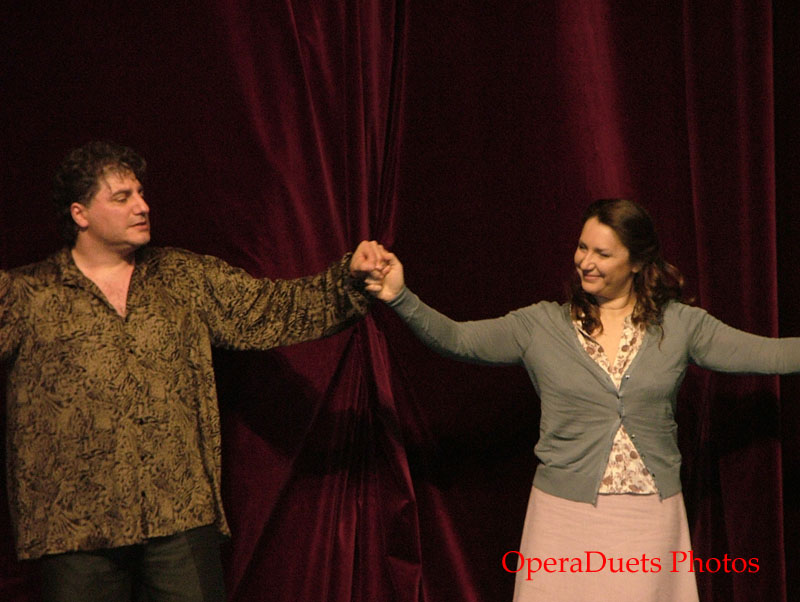
First impressions of Juanjo Cura in Berlin

It was cold in Berlin. And it was even a bit cold in Kammermusiksaal Philharmonie Berlin. It is a special concert room with a small plattform in the middle, just the right size for a small group of people with instruments. For 5 people, it was perfect.

Juanjo Cura seems to have more than just Argentinians on his side as fans of him and of tango, it was quite a lot of Germans there too. The concert hall was not full but it seemed to be more more than half full. I sat in the front row, in the best seat of the room. I bought my 3rd Juanjo Cura CD there, Pasional. He talked in German during the concert and we had no program, all our information was from Juanjo himself in his German. Since I am not German myself but understand German and speak a little myself I still had a little problem since his German was good but it was an Argentinian speaking German... But it was still very impressive to do that.

My other disadvantage is my not knowing too much about Argentinian Tango. For so many there they knew the music already and loved it already. I am more of the classical person. Juanjo Cura is more approaching the music like a Jazz singer would, being very free with the notes. But Juanjo Cura's voice is a true tenor voice. Personally I will always regret that he did not choose the more classical path but Juanjo seem to enjoy more the explosive passion of the tango. And he really acts it out. Nobody can say that he just sings because he doesn't just sing he is every tango and song he sings. But sadly it reminds me of why I "hate" Jazz and LOVE Classical music. I will always love more the correct attack to the notes that are the Classical way and dislike most of the loose attack that is Jazz. But I don't regret using my money to go to Berlin just for this concert. I don't regret that at all. I loved his singing "Dein ist mein ganzes Herz" from Lehar's Das Land des Lächelns. His singing My Way in German. And some of the tangos/boleros/songs that he sang as nicely as he does on his CD's.

For more reviews from my travels, see www.operaduetstravel.com
If you want to see more photos from my OperaDuets Travels, go to www.operaduetsphotos.com
Saturday, November 21, 2009

November 21, 1988: Madama Butterfly in Oslo

1988-11-21 Madama Butterfly (Puccini), Den Norske Opera (Oslo)

Cio-Cio-San = Keiko Kamegawa
Suzuki = Marit Osnes Aambø
Kate Pinkerton = Gro Hundvin
B.F. Pinkerton = Caj Ehrstedt
Sharpless = Jan Sødal
Goro = Rorald Rørvik
Prince Yamadori = Knut Gullerud
Uncle Bonzo = Svein Carlsen

Per Åke Andersson, conductor

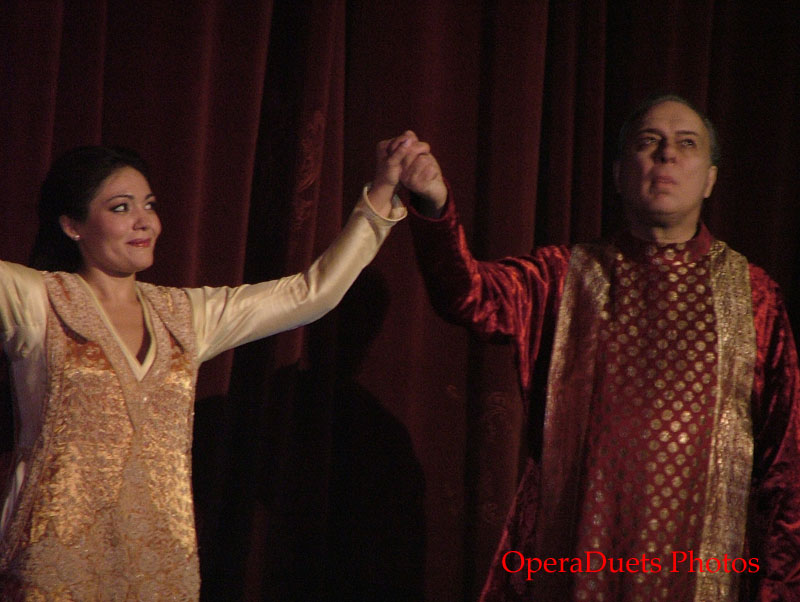
How irritating it is to hear/see this heart-wrenching opera and to have people sitting there finding it ludicrous the marriage contract for 999 years. But poor Butterfly she is going to die because she takes it seriously love, marriage but Pinkerton see every thing Japanese as a joke as this custom of leasing houses for 999 years. The clash West/East.

That bloody Pinkerton. Even the American consul who is normally quite cold-blooded tries to warn Pinkerton.

This is a great opera!

For more reviews from my travels, see www.operaduetstravel.com
If you want to see more photos from my OperaDuets Travels, go to www.operaduetsphotos.com
Friday, November 20, 2009

November 20, 2004: Jose Cura interview in Vienna


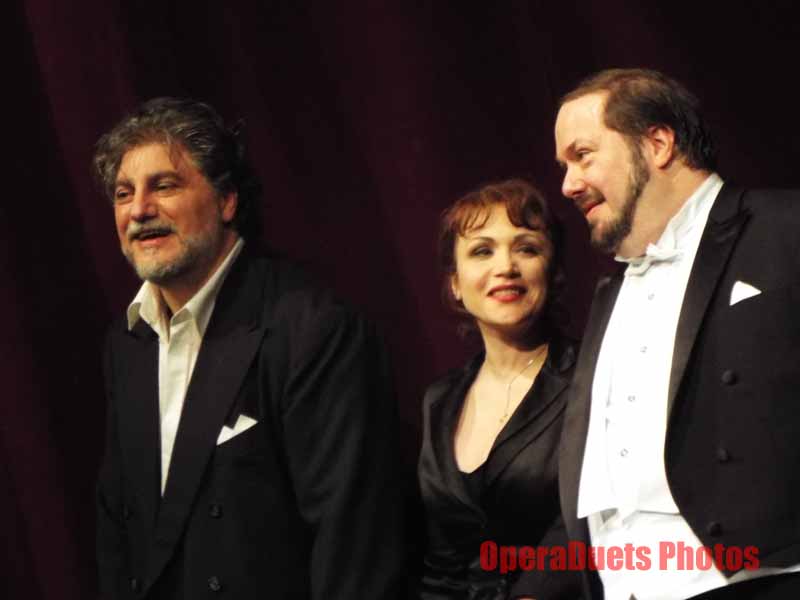
Many members of JCx (José Cura Connexion) were in Vienna for Stiffelio already and so when Marlene told us about the public interview in Theater Akzent we got our tickets.

First the technical problems. And José had to take a photo of that:

And then on the left we see the translator, José Cura, and on the right the interviewer.
In the end it needed a technichian.

It was interesting to hear Cura explain his views about this and that in opera. And a point in the interview he got visibly red after too many compliments.

That was cute.

For more reviews from my travels, see www.operaduetstravel.com
If you want to see more photos from my OperaDuets Travels, go to www.operaduetsphotos.com
Thursday, November 19, 2009

November 19, 2004: Stiffelio in Vienna

2004-11-19 Stiffelio (Verdi), Wiener Staatsoper

Stiffelio = José Cura
Lina = Hui He
Stankar = Renato Bruson
Raffaele = Cosmin Ifrim
Jorg = Johannes Wiedecke
Federico = Peter Jelosits
Dorotea = Ǻsa Elmgren

Marco Armiliato, conductor

Breakfast. Free time in Berlin. Afternoon-flight to Vienna. Just an hour before the opera started was I in the Staatsoper, naturally I had skipped visiting my hotel first. So all my luggage in Staatsoper. Relaxing and meeting friends before the opera started. I had bought the Viennese newspapers on the airport Schwechat and
looked through it on the train to Vienna City. I usually am quite drowsy when I get into the opera houses after my traveling, not this time. Unfortunately it didn't get that much interesting on the stage.

The ouverture was well played with the orchestra conducted by Marco Armiliato. And the young bass as Jorg was quite good. But he was a young man playing an older man, not utterly convincing. I was ready to admire the soprano Hui He as Lina first I was a bit put off by the painting of her face as too white, reminded me of Chinese opera, it was a visual disturbance that I would have learned to live with. But this very beautiful large voice was simply too weak in the piano. You need the hear the voice even it should sound piano.

Cosmin Ifrim as Raffaele was charming. And Hui He and Cosmin Ifrim was a nice couple of singers. Renato Bruson (Stankar) was not, in my opinion, in great form. Even though Jose Cura acted the role very well, I felt that even he was not in such a great form. The Moshinsky production is wonderful but without a great Stiffelio,
Lina & Stankar it could not stand on it own. How I longed for Leo Nucci as Stankar and Emily Magee as Lina, they sang so well in Zurich I wished they came to Vienna too. Really, the test for this opera is the ending of it. "Allor Gesu..." and PERDONATA!!, the adulteress is forgiven in the Bible and in Opera, and I felt
nothing. Big applause to Hui He and Renato Bruson from the house but not from me. I really wished that I could feel that Jose Cura did another great performance. ´Maybe it was the weather?

Anyway, after the performance, applause and backstage, I found my hotel pension Haydn and had another good nights sleep.

PS. I feel like I disagree with myself now 4 years later. That Jose Cura sang well, and that Hui He was a great Lina. But I still let it say this. It was what I felt that time.DS

Stiffelio
(32. Aufführung in dieser Inszenierung)

Dirigent: Marco Armiliato
Inszenierung: Elijah Moshinsky
Bühnenbild: Michael Yeargan
Kostüme: Peter J. Hall
Lichtregie: Paul Pyant
Choreinstudierung: Ernst Dunshirn

Stiffelio: José Cura
Lina: Hui He


Beginn: 20.00

For more reviews from my travels, see www.operaduetstravel.com
If you want to see more photos from my OperaDuets Travels, go to www.operaduetsphotos.com
November 19, 2001: Italiana in Algeri, Vienna

2001-11-19 L'Italiana in Algeri (G. Rossini), Wiener Staatsoper

Mustafà = Simone Alaimo
Elvira = Milagros Poblador
Zulma = Stella Grigoriau
Haly = István Gáti
Lindoro = Robert Nagy
Isabella = Agnes Baltsa
Taddeo = Alfred Sramek

Frédéric Chaslin, conductor

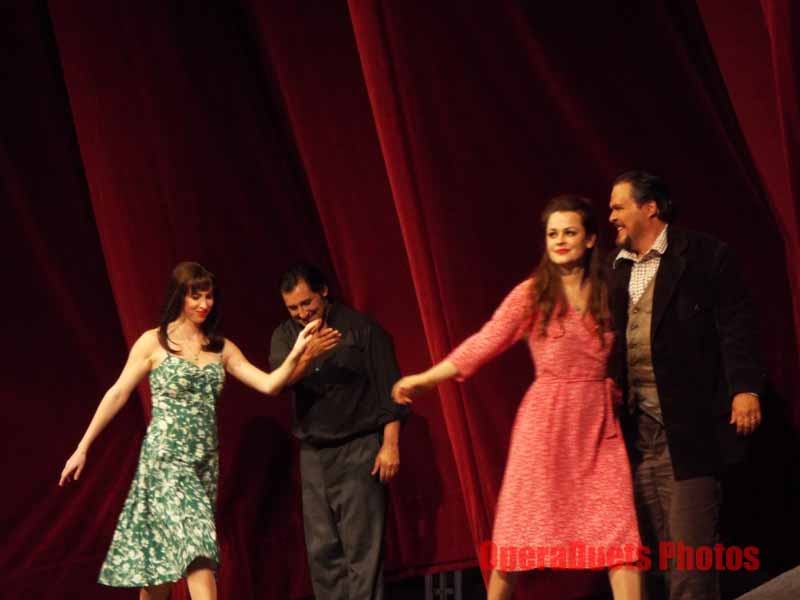
On November 19th, I saw Agnes Baltsa when she came to the Vienna State Opera, and when she went from the State Opera. And naturally I was there when she sang Isabella in Italiana in Algeri.

To wait for Agnes Baltsa just inside the Operahouse in the room before the Portier at the stage entrance. It was freezing outside. Meeting people who are equally admirers of Agnes Baltsa and talking to them while waiting. Other people was outside with flowers and waiting and freezing. At last she came. Her arms became soon full with flowers and goodwishes, I tried to give her the Gift for the fanclub (the list of good wishes for her birthday), she had to take the flowers inside, but she promised to come out after the performance in the same room.

Italiana in Algeri. Nobody does Isabella better than her. I think she was not completely recovered form the bronchitis that prevented her from singing at the Aidsgala in Berlin earlier this month. But still she communicated enjoyment and it was wonderful. Maybe the others get a more vocally competent Agnes Baltsa, but to be there when She is singing her favorite role on her Birthday was soo special that I wont regret it no matter what.

AND in the end of the performance the Chorus sang HAPPY BIRTHDAY to Agnes Baltsa, and the house almost fell down.

Then I waited for her after the event, and she was sitting in the portiers signing and I could at last give her the GIFT. And I must say Agnes Baltsa looked wonderful. I wish I could have stayed to see the rest of her Italianas.

A GREAT DAY! HAPPY BIRTHDAY to the Diva!

Wiener Staatsoper
montag, 19. november 2001
49. Aufführung in dieser Inszenierung

L' I taliana in AIgeri
Drama giocoso per musica in zwei Akten von Angelo Anelli
Musik von Gioachino Rossini

Musikalische Leitung Frédéric Chaslin
Nach einer Inszenierung
und in der Ausstattung von Jean-Pierre Ponnelle
Chorleitung Ernst Dunshirn


Lindoro, ein junger Italiener,
Lieblingssklave des Mustafà Robert Nagy*


Ort der Handlung Algerien
Orchester und Chor der Wiener Staatsoper

Die Aufführung basiert auf Azio Corghis kritischer Ausgabe
der Fondazione Rossini Pesaro in Zusammenarbeit mit G Ricordi, SPA Milano

* Rollendebüt i1n der Wiener Staatsoper

For more reviews from my travels, see www.operaduetstravel.com
If you want to see more photos from my OperaDuets Travels, go to www.operaduetsphotos.com